


Urjit Patel's new book uncovers Western sanctions and their discontents
The author's analysis highlights another factor, namely, overestimating benefits and understating or ignoring the welfare costs of sanctions, including to third parties
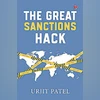 "The Great Sanctions Hack")
The Great Sanctions Hack
Listen to This Article
The Great Sanctions Hack
by Urjit Patel
Published by Rupa
Publications India
147 pages ₹380
Also Read

 "The Great Indian Brain Rot: Love, Lies & Algorithms in Digital India")
 "Unseen: The Untold Story of Deepinder Goyal and The Making of Zomato")
 "Ghost-Eye")
 "book review")
 "The Forgotten Indian Prisoners of World War II: Surrender, Loyalty, Betrayal and Hell By Gautam Hazarika")
Sanctions are increasingly complemented by secondary sanctions that escalate economic warfare. These measures threaten penalties not against the primary target, but against third parties, typically firms or financial institutions that continue doing business with the sanctioned entity. The United States (US) has deployed secondary sanctions extensively, leveraging the dollar’s reserve currency status and American dominance in global finance. Its imposition of additional tariffs on India for oil purchase from Russia is another example.
Notwithstanding their wide applications and diversity of measures, it is a stylised fact of foreign policy analysis that sanctions have fairly low effectiveness, with some estimates of success in achieving stated objectives ranging as low as 5 per cent. But that does not mean, the author argues, that sanctions do not have strong welfare effects on populations affected directly or indirectly, along with substantial increase in macroeconomic uncertainty in the global economy. These are aggravated by the hysteresis effect of sanctions that often preclude a return to the pre-sanction levels of economic activity and investor confidence. The author notes the example of India’s investment to develop the Chabahar port in Iran starting in 2003 with a planned investment of $500 million. The project proceeded and halted in sync with the intensity of US sanctions on Iran, signing of the nuclear deal under the Obama administration, and withdrawal from it under the next administration. The author’s quick calculations suggest the cumulative financial cost of the project due to the start-stop impact of the sanctions exceeded $1.1 billion.
The book is organised in seven chapters. Following an overview introduction, the author introduces a heuristic model to explore why sanctions are used so frequently despite their perceived lack of effectiveness. Several answers to this have been proposed in the literature: They satisfy domestic political optics, are a relatively easy option between “doing nothing versus going nuclear”, and their ability to impose costs on adversaries even if not achieving success, through constraining military spending or technological development.
The author’s analysis highlights another factor, namely, overestimating benefits and understating or ignoring the welfare costs of sanctions, including to third parties. Chapter 3 applies this framework to examples of sanctions on Russia and Belarus while Chapter 4 introduces a game-theoretic framework to explore issues related to secondary sanctions, counter measures by the target country, hysteresis effects and a role for a third party saviour (a “white knight”) who helps the target mitigate adverse impacts; this role is increasingly visible on the part of China, for example.
Chapter 5 evaluates how multilateral institutions have approached the effects of sanctions in their analytical undertakings (short answer is they have not). In chapter 6, one of the best in the book for me, the author provides a nuanced and balanced assessment of the potential for renminbi to grow into an international currency against the backdrop of an increased Chinese role in global sanctions regimes. The last chapter offers concluding remarks.
The author, who has had a distinguished career as Governor of the Reserve Bank of India, a vice-president in the Asian Infrastructure Investment Bank, and currently as India’s Executive Director at the International Monetary Fund, has had a ringside view into many of the issues raised in the book. More importantly, he is not shy about calling out hypocrisies in the literature on sanctions that are typically imposed and led by the US and the European Union, such as calling the imposing country “sender” and the recipient country “target or sanctioned” rather than victim. He is equally blunt in taking multilateral institutions such as the G20, World Bank and the IMF to task for soft-balling or, worse, ignoring the welfare costs and distribution of welfare losses globally from proliferating sanctions and secondary sanctions. They are a growing source of macroeconomic uncertainty and touching the global investment climate, with potential for long-lasting harm. The author unambiguously calls on the IMF to incorporate sanctions, counter-sanctions and secondary sanctions as drivers of policy spill-overs in an interconnected world. He also highlights the growing concern around efforts by countries ?"? both targets and allies of the US ?"? to escape potential stranglehold of US dominance on the global financial and payments system. Already in July this year, the US threatened Brics countries with exorbitant tariffs against pursuing any “de-dollarisation”.
This book provides a welcome addition to the literature on sanctions. As the author notes: “The proclivity of the academic discussion on economic sanctions is US/G7-centric. A neo-colonial mindset — that it is natural to control the periphery’s destiny — is betrayed”. The Great Sanctions Hack will certainly not face that accusation.
The reviewer is a development economist and former director,Asian Development Bank
More From This Section
 "Finding My Way")
 "The Case for American Power")
 "Dark Squares: A cult leader, a child prodigy, and the chess revolution")
 "The Caste Con Census")
 "The Serpent's Tale: Kundalini, Yoga, and the History of an Experience")
Topics : Book BS Reads Book reading BOOK REVIEW
Don't miss the most important news and views of the day. Get them on our Telegram channel
First Published: Dec 23 2025 | 11:16 PM IST