


Budget 2026 plans seven high-speed rail corridors at ₹16 trillion outlay
Massive indigenisation has occurred in high-speed tech, detailed plan may not need foreign funding
 "Ashwini Vaishnaw, Ashwini, Vaishnaw")
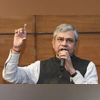
Railways Minister Ashwini Vaishnaw
Listen to This Article
The construction of seven high-speed rail corridors, announced by Finance Minister Nirmala Sitharaman on Sunday, will cost around ₹16 trillion, and the ministry will come out with a detailed plan regarding this in the next few months, Railways Minister Ashwini Vaishnaw said.
The minister said that the detailed plan will look at increased levels of indigenisation in these seven corridors, and the work is likely to happen at a much faster pace than the first one, which is under construction currently.
“The country has gone up the learning curve during the first Mumbai-Ahmedabad corridor. Today, our engineers understand the technology – civil, overhead equipment, signalling systems, rolling stock, station construction, and others. This is a significant change. We have to build upon that experience,” Vaishnaw told Business Standard during the post-Budget press briefing here.
The government has done a chunk of work in standardising the requirements towards building a successful high-speed corridor, and it will consider questions of whether it wants to go fully indigenously, including funding and manufacturing, when the detailed plan will be worked out.
The first corridor is being constructed in collaboration with Japan International Cooperation Agency (JICA), which is funding over 80 per cent of the project.
Also Read

 "Budget 2026")
 "Indian Railways")
 "Finance Minister Nirmala Sitharaman outside the Ministry of Finance before the presentation of the ‘Union Budget 2026-27', in New Delhi")
 "Education loan")
 "tax, tax kitty")
The new corridors will be fully elevated to enable seamless movement, Vaishnaw said. In South India, the Chennai–Bengaluru–Hyderabad high-speed network will form a South High-Speed Triangle (or Diamond), connecting major economic and IT hubs, he said.
Work on all the seven corridors will happen simultaneously, the minister added.
Vaishnaw said that the most complex aspect of the bullet train is the propulsion system, and India has done a lot to indigenise it. “Propulsion systems designed and manufactured in India are now being exported to top countries, including the US, Switzerland, Germany, France and Spain,” he said.
The new Dedicated Freight Corridor, connecting Dankuni in West Bengal with Surat in Gujarat, passing through Odisha, Chhattisgarh, Madhya Pradesh and Maharashtra, will increase economic output through the route, said Vaishnaw.
“This 2,052-km corridor will integrate with the existing Western Dedicated Freight Corridor, enabling seamless movement of goods to ports along the west coast,” he added.
More From This Section
 "semiconductors chipmakers")
 "Union Finance Minister Nirmala Sitharaman")
 "Investors in higher tax brackets stand to gain, especially if they have held the shares for more than a year. | Image: Shutterstock")
 "Budget 2026")
 "Long-term capital gains (LTCG) tax on equity funds increased from 10 per cent to 12.5 per cent in the budget while short-term capital gains (STCG) tax increased from 15 to 20 per cent. “While the 33 per cent increase in STCG tax may seem high, it sho")
Don't miss the most important news and views of the day. Get them on our Telegram channel
First Published: Feb 01 2026 | 9:06 PM IST