


L&T looks to build on defence and data centre foundation in India
To invest in nuclear, thermal power generation
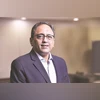 "S N Subrahmanyan, Chairman and Managing Director, Larsen & Toubro (L&T)")
S N Subrahmanyan, Chairman and Managing Director, Larsen & Toubro (L&T)


Listen to This Article
Larsen & Toubro Ltd (L&T) is deepening its push into data centres and defence manufacturing while keeping an eye on emerging opportunities in nuclear and thermal power, Chairman and Managing Director SN Subrahmanyan said.
The engineering and construction conglomerate has invested around ₹2,200 crore in data centres, with 32 megawatts (Mw) already operational. This includes a 30 Mw site in Kanchipuram, Tamil Nadu — one of the largest of its kind in India.
The company plans to scale this to about 100 Mw, betting on the rising demand for third-party storage and Cloud infrastructure.
“Most Indian companies have been storing data on premises. Now, the option is to store on third-party data centres and use Cloud services from Amazon, Google or Microsoft,” Subrahmanyan said in an interview on Sunday.
He added, “We have about 32 Mw of data centres for third parties, and the one in Kanchipuram is the biggest at 30 Mw.”
Also Read

 "L&T, larsen and toubro, larsen and toubro")
 "Larsen & Turbo, L&T")
 "Larsen & Toubro")
 "Larsen & Toubro")
 "Larsen and Toubro (L&T)")
The company has also entered into graphics processing unit (GPU)-based Cloud services through a stake in E2E, an Indian startup working with US chipmaker NVIDIA.
“We have two or three floors of a data centre in Chennai with NVIDIA GPUs, providing Cloud services to customers. It’s still a very nascent business, but we’ve put in close to ₹2,200 crore, and we’re backing it with strong leadership,” Subrahmanyan said.
L&T is also positioning itself to benefit from the boom in global capability centres (GCCs), as global firms expand technology operations in India. “Earlier, companies delegated work to IT service providers. Now, many chief investment officers (CIOs), especially Indians in the US, are telling their management: why depend on third parties? Let’s build our own GCCs,” Subrahmanyan said.
He added that L&T could go beyond just construction and co-develop such centres. “Sometimes, we collaborate to help them set up a GCC, and over time, they may take it over or run it jointly with us. These are business models that are emerging, and we hope to capitalise on them.”
The chairman said defence and aerospace remain central to L&T’s growth strategy.
The company has rebranded its defence arm as “precision engineering” to reflect its involvement not just in military programmes but also in India’s space missions. “We are in four broad areas,” Subrahmanyan said.
He added, “Land systems, such as modular bridges and the K9 Vajra gun, naval systems, including submarines and surface ships, contributions to space, and indigenisation through R&D.”
The K9 Vajra, an artillery system built in collaboration with South Korea’s Hanwha, has become a success story. “We delivered about 100 units for the deserts of Punjab, and then acclimatised them for Ladakh. The feedback is that it’s an excellent weapon system,” he said, adding that L&T is now preparing to deliver another 100.
On the naval side, L&T has fabricated parts for India’s strategic submarines and builds offshore patrol vessels and anti-submarine warfare ships.
Still, Subrahmanyan acknowledged challenges. “The surface ships business is not doing well. We invested more than ₹2,500 crore in the yard, but the client is only one, the Navy. We have to compete with five public sector yards. We need to be very lucky to win orders. The yard should break even this year.”
Nuclear constraints
While India has signalled interest in opening nuclear power to private participation, Subrahmanyan said current laws remain a roadblock. “At present, nuclear plants can only be set up by the Nuclear Power Corporation. The law includes a liability clause which makes it impossible for any private balance sheet to bear the risk,” he said.
He added that reforms are under discussion but remain uncertain. “The only entity that can take on that liability is the government. We’ve given our suggestions, others have too, and the government is working on it. Hopefully, it will happen, but as of now it hasn’t.”
Thermal power, once sidelined in favour of renewables, is making a comeback as electricity demand rises in India. L&T, which had been preparing to exit the sector, is now ramping up again.
“We were persuaded to continue in this business,” Subrahmanyan said. “Bhel was overloaded, and we won projects at Gariyawal and Napanagar, and then another eight boilers and turbines for the Adani Group. Suddenly, the business that was supposed to be closed down is looking attractive again.”
L&T’s earlier venture — the Nabha power plant in Punjab —remains one of India’s most efficient. “It’s probably the best operating power plant in the country, with a plant load factor of over 90 per cent. But it doesn’t quite fit our long-term vision, so we’re open to divesting it if there’s interest,” he said.
More From This Section
 "Godrej, Godrej properties")
 "B Thiagarajan, MD, Blue Star")
 "Anil Ambani")
 "royalty payments")
 "S N Subrahmanyan, Chairman and Managing Director, Larsen & Toubro (L&T)")
Don't miss the most important news and views of the day. Get them on our Telegram channel
First Published: Aug 25 2025 | 9:39 AM IST