


US trade body proposes 12.5% duty on India, others on forced labour gaps
The USTR move comes as India and the US work through an interim trade pact, raising compliance questions for exporters in textiles, apparel and other supply chains
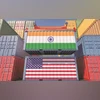 "India US trade deal")
A US delegation headed by chief negotiator Brendan Lynch is in New Delhi for trade talks with Indian officials from June 1-4.
Listen to This Article
The United States Trade Representative (USTR) has proposed imposing additional duties on imports from 60 economies, including India, citing their failure to ban and adequately enforce restrictions on products made using forced labour.
The proposal has been made under Section 301 of the US Trade Act, 1974, which authorises the US government to take action against foreign policies or practices that it views as unfair or harmful to American trade and commercial interests.
What has USTR proposed?
USTR said it had determined that the acts, policies and practices of 60 economies were “unreasonable” and burdened or restricted US commerce because they did not adequately prevent the import of goods made with forced labour.
The agency has proposed additional duties on all products from the investigated economies, subject to exclusions listed in its Federal Register notice. Economies that already have a forced labour import prohibition, have committed to one through an Agreement on Reciprocal Trade, or have a partial regime to block certain forced labour goods, face a proposed additional duty of 10 per cent. For all other economies, the proposed rate is 12.5 per cent.
India is among the 54 economies that USTR said had failed to impose and effectively enforce a prohibition on the importation of goods produced with forced labour. Others in this category include Australia, Bangladesh, Brazil, China, Japan, South Korea, Sri Lanka, Switzerland, Turkiye, the United Arab Emirates, the United Kingdom and Vietnam.
Also Read

 "Securities and Exchange Board of India, Sebi")
 "Life Insurance Corporation")
 "Fifa, football, fifa world cup 2026")
 "South Korea flag")
 "Smog, Delhi Pollution, Delhi Air Quality, Pollution")
USTR has also proposed a textile mechanism that would allow a certain volume of apparel and textile imports from some economies to enter the US at a reduced Section 301 tariff rate.
“The failure of our most important trading partners to address the importation of goods made with forced labor is unacceptable. This creates a dynamic where American workers are forced to compete globally on an unlevel playing field,” US Trade Representative Jamieson Greer said in the USTR statement.
What USTR report says about India
In its report, USTR said India had failed to impose and effectively enforce a forced labour import prohibition. It concluded that India’s acts, policies and practices related to the absence of such a prohibition were “unreasonable” and burdened or restricted US commerce.
The report places India in the category of economies where USTR said available information did not show a legal measure that expressly forbids the importation of goods produced with forced labour. USTR also said that the mere existence of an authority that could be used to disallow such imports was materially different from a measure that legally forbids the importation of goods made with forced labour.
This is important for India because the US case is not framed only around labour standards inside India. USTR’s argument is about whether India has a legal and enforceable import ban that can stop goods made with forced labour from entering the Indian market and distorting competition.
USTR’s appendices map where investigated economies imported certain inputs that the agency treated as linked to forced labour concerns and also traded in similar or downstream products with the US.
For India, USTR’s Appendix B shows exposure across aluminium, cotton, electronics, lithium-ion batteries and rice. In these categories, the report says India imported the relevant forced labour-linked inputs and also imported the same product from the US during 2021-2025.
Appendix C, which looks at whether an investigated economy imported forced labour-linked inputs and exported downstream products to the US, flags India across aluminium, cotton, cocoa, fish, coffee, nickel, palm oil and rice.
Why this matters for India
The timing matters because India and the US are trying to close an interim trade agreement under the broader bilateral trade agreement framework. A US delegation headed by chief negotiator Brendan Lynch is in New Delhi for trade talks with Indian officials from June 1-4
The two countries had announced a framework for an interim agreement in February 2026, reaffirming their commitment to the wider bilateral trade negotiations.
For India, the USTR move adds a new compliance layer to trade talks that have already focused on tariffs, market access, non-tariff barriers and sectoral sensitivities. It also places labour-linked supply chain rules more firmly on the negotiation table.
Lekha Chakraborty, professor at the National Institute of Public Finance and Policy (NIPFP), said a trade deal could include commitments on supply-chain transparency and enforcement mechanisms that help India secure exemptions or phased implementation of the proposed duties.
"The timing strengthens Washington’s negotiating position by creating incentives for quicker alignment on labour standards and traceability. While it functions partly as a pressure tactic -- using Section 301 authority to signal priorities -- it also reflects a systemic US push for higher global labour norms across multiple trading partners, not India alone," she told Business Standard.
She further said, "For India, sustained duties could raise costs and slow export growth in key sectors like apparel, gems and pharmaceuticals."
The proposal, she said, is likely to prompt India to recalibrate aspects of its import strategy, though the shift will be gradual and targeted rather than sweeping. Indian companies exporting to the US market will face greater scrutiny, pushing regulators and firms to strengthen due diligence and traceability in supply chains.
"This could lead to selective diversification of sourcing -- favouring suppliers with verifiable labour standards in categories such as palm oil, minerals, garments and electronics components," she said.
What is Section 301?
Section 301 is a provision of the US Trade Act of 1974 that gives the USTR authority to investigate and respond to foreign government acts, policies or practices that are unjustifiable, unreasonable or discriminatory, and that burden or restrict US commerce.
The tool can be used even when the act or policy is not necessarily a violation of international legal obligations. USTR’s report says an act, policy or practice can be considered unreasonable if it is “otherwise unfair or inequitable”.
Once USTR determines that a practice is actionable, it can recommend measures such as additional tariffs, trade restrictions or other responses aimed at securing a change in the foreign policy or practice.
In this case, USTR says the absence of forced labour import prohibitions distorts market conditions, allows firms using forced labour inputs to lower costs, hurts companies that do not use forced labour, and contributes to the circumvention of existing US forced labour import bans.
Why USTR says forced labour rules affect trade
The US has prohibited imports of goods made with forced labour under Section 307 of the Tariff Act of 1930 for nearly a century. USTR’s report argues that many other economies have not adopted comparable import restrictions, allowing goods made wholly or partly with forced labour to circulate in global markets.
According to USTR, this creates unfair competition for US producers in both export markets and the US market. It also says goods made without forced labour can be displaced in foreign markets and pushed into the US or other markets.
The investigations covered economies from which 99.40 per cent of US imports are shipped, according to USTR’s report.
More From This Section
 "crude oil")
 "Rajesh Agrawal, Amanda Brooks, India UK, India-UK")
 "Illustration: Binay Sinha")
 "Jay Shree Tea, Darjeeling tea, Darjeeling tea gardens, tea estates, Tea Exports")
Don't miss the most important news and views of the day. Get them on our Telegram channel
First Published: Jun 03 2026 | 9:33 AM IST