


After Op Sindoor, India plans major procurement of Israeli Rampage missiles
Post Operation Sindoor in May, the IAF plans to order a large number of Israeli Rampage air-to-ground missiles, already used successfully in precise strikes on Pakistan
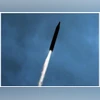 "Missile, missile test")
The IAF is also considering producing Rampage missiles domestically under the Make in India initiative. (Photo: X/ANI)


Listen to This Article
The Indian Air Force (IAF) is moving ahead with plans to place significant orders for Rampage air-to-ground missiles from Israel, after successfully using them in precise strikes on Pakistani air bases and terrorist headquarters, news agency ANI reported.
Defence sources told ANI that the orders are expected soon under fast-track procedures. “The missiles were used with very high precision to take out the terrorist headquarters in Pakistan's Muridke and Bahawalpur in Punjab province of Pakistan,” they said.
Known in India as the High-Speed Low Drag-Mark 2 missile, the Rampage is already integrated with the Su-30 MKI, Jaguar, and MiG-29 fleets. The IAF plans to equip all these aircraft with the missiles and is exploring integration with other platforms as well.
“The successful integration of the Rampage missiles with the Su-30 MKI has significantly enhanced the Russian aircraft fleet's firepower,” sources told ANI. “This allows for firing multiple long-range air-to-ground missiles, including BrahMos supersonic missiles with a strike range of over 400 kilometres.”
Also Read

 "modi, rally, modi speech")
 "terrorist, terrorism, crime")
 "Donald Trump, Trump")
 "Lt General Rajiv Ghai, Rajiv Ghai, AK Bharti, AN Pramod, Operation Sindoor")
 "Marco Rubio")
History and performance
India first acquired the Rampage in 2020–21. Its combat performance was highlighted during Operation Sindoor, when Su-30 MKI jets fired the missiles against targets deep inside Pakistan. The precision and speed of the missile have made it a key addition to India’s arsenal.
The IAF is also considering producing Rampage missiles domestically under the Make in India initiative, which could lead to their large-scale induction into service.
In addition to Rampage, the IAF tested the ROCKS (Crystal Maze-2) missile last year in the Andaman and Nicobar Islands.
India tests missile-capable drones
Last month, the Defence Research and Development Organisation (DRDO) completed flight trials of the UAV-Launched Precision Guided Missile (ULPGM) V3, a next-generation missile designed for drones. The trials took place at the National Open Area Range (NOAR) in Kurnool, Andhra Pradesh.
Defence Minister Rajnath Singh confirmed the trials on X, calling it “a major boost to India’s defence capabilities". He congratulated DRDO and its partners — defence PSUs, MSMEs, and startups — for their contribution to the missile system.
Features of ULPGM V3
The ULPGM V3, also known as ULM-ER (Unmanned Launched Munition – Extended Range), is designed for precision strikes from drones. It weighs 12.5 kg and uses a small dual-thrust solid propulsion system, giving it a range of up to 4 km in daylight and 2.5 km at night.
The missile uses a passive imaging infrared (IR) seeker for “fire-and-forget” targeting, day or night. It can carry multiple warhead types and engage both moving and stationary targets with high accuracy.
Domestic manufacturing and trials
DRDO led the design and development, with Adani Defence and Bharat Dynamics Limited (BDL) serving as key manufacturing partners. A DRDO-secured hexacopter UAV was used as the launch platform during the trials.
The tests come as the Indian Army ramps up domestic defence capability through live exercises. Between May and July 2025, drills at Pokhran, Babina, and Joshimath involved near-combat scenarios with loitering munitions, runway-independent drones, counter-UAS systems, and advanced infrared missiles.
The successful ULPGM V3 trial strengthens India’s Aatmanirbhar Bharat and Make in India defence initiatives, demonstrating a clear step forward in homegrown military technology.
More From This Section
 "S Jaishankar, Jaishankar")
 "Donald Trump, Sergio Gor")
 "Modi, Narendra Modi")
 "modi, xi jinping, sco summit")
Topics : Operation Sindoor Indian Air Force BS Web Reports israel Missile Test Missile deal Indian missile defence
Don't miss the most important news and views of the day. Get them on our Telegram channel
First Published: Aug 23 2025 | 1:25 PM IST