


What is hyperbaric oxygen therapy, and can it really speed up healing?
From carbon monoxide poisoning to sports injury recovery, hyperbaric oxygen therapy is drawing attention, but doctors warn it is not suitable for all and can carry serious risks
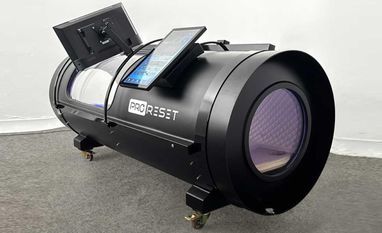 "Hyperbaric oxygen therapy chamber")
TROJAN, a hyperbaric oxygen therapy machine by İstanbul-based medical & wellness hyperbaric & hypobaric chambers manufacturers HPO.TECH Hyperbaric Solutions. (Photo: X | @hpotech_medical)
Listen to This Article
Imagine lying inside a clear, pressurised chamber, breathing pure oxygen at two to three times normal atmospheric pressure. It sounds refreshing and almost therapeutic. From deep-sea divers with decompression sickness to elite athletes and wellness influencers, hyperbaric oxygen therapy (HBOT) is gaining popularity.
Recently, a widely shared post showed cricketer Rishabh Pant using an HBOT chamber as part of his recovery routine.
According to Dr Akhilesh Yadav, Director – Orthopaedics & Joint Replacement, Max Super Speciality Hospital, Vaishali, hyperbaric oxygen therapy has long been used in highly specific medical emergencies.
“Hyperbaric oxygen therapy is officially approved for decompression sickness, arterial gas embolism, carbon monoxide poisoning, various diabetic non-healing wounds, radiation-induced soft tissue injury, and necrotising infections,” says Dr Yadav.
Dr Ankit Kumar Sinha, Senior Consultant and Unit Head – Pulmonology, Respiratory & Sleep Medicine, Max Super Speciality Hospital, Vaishali, adds that international medical guidelines support its use in conditions such as gas gangrene, severe anaemia when transfusion is not possible, radiation injury and chronic diabetic foot ulcers. “In these cases, the evidence shows that it works well along with standard treatment.”
Also Read

 "Mukesh Ambani")
 "nominees for all accounts and lockers")
 "US visa, US immigration, green card")
 "Sam Altman")
 "Crohn's disease")
However, using HBOT for trauma recovery, sports injuries, stroke rehabilitation, autism, concussions or general brain healing remains experimental.
“There is little evidence regarding the use of hyperbaric oxygen therapy for recovery from trauma, sports injuries, concussions, strokes, or spinal cord injuries,” Dr Yadav explains. “Many providers consider this treatment as adjunctive therapy that is still experimental rather than standard therapy for musculoskeletal or neurological healing.”
So when an elite athlete uses it, as in Pant’s case, it is typically as an adjunct, not a replacement for surgery, rehabilitation or evidence-based sports medicine protocols.
How does hyperbaric oxygen therapy work under high pressure?
HBOT works by placing a patient inside a chamber pressurised to about two to three times normal atmospheric pressure, where they breathe 100 per cent oxygen.
“The therapeutic effects are achieved by pulling oxygen into a patient’s plasma at increased pressure,” says Dr Yadav. “This enhances the amount of oxygen delivered to the body’s tissues above what would normally be available through haemoglobin.”
Dr Sinha explains that during this therapy oxygen dissolves directly into the blood plasma, delivering far higher concentrations to tissues, especially areas with poor blood supply.
What benefits of HBOT are scientifically validated?
- Improved oxygen delivery to damaged tissue
- Promotion of new blood vessel formation (angiogenesis) in chronic wounds
- Reduced swelling (oedema)
- Enhanced infection control, particularly against anaerobic bacteria
- Support of immune cell function
- Some reduction in inflammation
What remains under investigation in HBOT research?
Stem-cell mobilisation and nerve regeneration. While these effects have been observed biologically, Dr Yadav notes that whether they translate into meaningful recovery in sports or neurological injuries “still requires further research.”
What does a typical hyperbaric oxygen therapy treatment plan involve?
The doctors stress that HBOT is not a casual wellness add-on or a spa session; it is structured medicine.
“A standard session is done at a pressure of 1 to 2.5 ATA for a period of 60 to 120 minutes, every day,” says Dr Yadav.
The number of sessions varies according to conditions:
- Acute emergencies like carbon monoxide poisoning may require 5–20 sessions
- Chronic wounds or radiation injuries may need 30–40 sessions
- Long-term wound cases often involve 60–90 minute sessions, five days a week
Doctors assess progress carefully.
Dr Yadav explains that clinicians evaluate decreasing wound size, reduction in pain, imaging findings, and functional improvement. If measurable progress does not occur after a defined number of sessions, treatment is discontinued.
Who should and should not undergo hyperbaric oxygen therapy?
“The only absolute contraindication to hyperbaric treatment is an untreated pneumothorax,” says Dr Yadav. In simple terms, trapped air around the lung can expand dangerously under pressure.
Relative contraindications include:
- COPD with air trapping
- Uncontrolled asthma
- Upper respiratory infections
- Seizure disorders
- Ear or sinus problems
- Severe claustrophobia
Dr Sinha emphasises that careful screening is essential before starting therapy. Pulmonary evaluation and proper medical clearance are critical.
Ideal candidates are patients with chronic non-healing wounds, selected crush injuries, compromised grafts, and other clearly defined medical indications.
What are the risks and side effects of HBOT?
HBOT is generally safe when delivered in a hospital setting, but it is not entirely benign.
Short-term risks include:
- Ear barotrauma
- Sinus pressure
- Temporary vision changes
- Fatigue
- Oxygen-induced seizures (rare)
Long-term complications are uncommon. However, prolonged exposure over time may increase cataract risk.
There is also a fire risk in oxygen-rich environments, though strict medical protocols make this extremely rare.
“Serious complications from HBOT are rare and occur in approximately 1 per cent to 2 per cent of patients who receive HBOT in a properly supervised hospital or clinic setting,” says Dr Yadav.
What is the cost and availability of HBOT in India?
HBOT is not widely available everywhere.
“In India, hyperbaric oxygen therapy is primarily found in secondary and tertiary facilities, military and defence hospitals or clinics, and selected private wound and sports rehabilitation clinics, in cities such as Delhi, Mumbai, and Chennai,” says Dr Yadav.
Patients should ensure:
- Direct supervision by a physician trained in hyperbaric medicine
- Preferably a specialist with critical care or diving medicine training
- National Accreditation Board for Hospitals & Healthcare Providers (NABH) accreditation or equivalent
- Chambers meeting international safety standards
Dr Sinha cautions patients to ensure the facility is medically certified and not a wellness spa offering unregulated oxygen treatments.
Costs vary widely depending on facility type and location.
Typically, sessions range between ₹3,000 and ₹8,000 per session in many centres. Chronic conditions requiring 30–40 sessions can push total expenses into several lakhs.
“Financial coverage may also be limited to prescribed or mapped-out uses of HBOT,” Dr Yadav explains. Patients must confirm with their insurer whether the indication qualifies.
HBOT versus conventional treatment: Where does it fit?
“For patients with chronic non-healing wounds, the application of HBOT as an adjunct to advanced wound care or improving blood flow can enhance wound healing. But for most acute sports injuries, standard physical therapy, rehabilitation, and surgical repair methods will continue to be the primary methods of treatment,” says Dr Yadav.
Dr Sinha stresses that HBOT should be a focused supplement, not a quick fix.
As Dr Sinha notes, it works “only if it’s used for the correct reasons and with close monitoring.”
In a time when wellness trends spread far quicker than solid clinical evidence, Dr Yadav reminds readers that understanding the physiology behind any popular therapy matters more than ever. Strip away the marketing, and ask what the body is actually doing. And when it comes to hyperbaric oxygen therapy, Dr Sinha emphasises that it works best when guided by evidence, careful screening and medical supervision.
More From This Section
 "India heart attack deaths")
 "cancer test, blood test")
 "ageing")
 "kidney health")
 "screen time and children")
Topics : Health with BS BS Web Reports health news Most Popular Alternative Healing Therapies Oxygen sports injury
Don't miss the most important news and views of the day. Get them on our Telegram channel
First Published: Feb 19 2026 | 2:34 PM IST