


GST 'savings festival' begins tomorrow; PM pushes swadeshi, self-reliance
Urges citizens, state govts to embrace, promote 'swadeshi'
 "Narendra Modi")
The PM appealed to the people to “liberate” themselves from such dependence, and that they should buy products made with the hard work and sweat of the country’s youth.
Listen to This Article
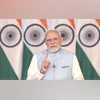
Amid choppy trade ties with the US, Prime Minister Narendra Modi on Sunday said that the next day’s dawn would bring with it a “savings festival”, making 99 per cent of products of daily need more affordable, and exhorted citizens to embrace “swadeshi”, that is buy and sell goods manufactured in India. The prime minister reiterated his government’s commitment to ‘Aatmanirbhar Bharat’.
In his 19-minute address to the nation, Modi implored the state governments to promote local manufacturing and ‘swadeshi’, stressing that only ‘Centre-states’ synergy would help fulfil the dream of a self-reliant India.
Modi said the country’s micro, small and medium enterprises (MSMEs) will be the driver to make India self-reliant, a prerequisite for attaining the objective of a ‘developed and a prosperous India’. He said reduced goods and services tax (GST) rates and simplified procedures will benefit MSMEs, boost their sales and reduce their tax burden, but the quality of their products must meet the highest global standards.
The PM said any products that people need, and which can be manufactured within the country, must be produced domestically.
Modi said the “double bonanza” of slashing of income tax and GST rates would lead to savings of ₹2.5 trillion for the people, which is an evidence of his government’s commitment to the mantra “nagarik devobhava” (citizen is god).
ALSO READ: GST 2.0 is 'bachat utsav' for citizens, will boost India's growth: PM Modi
Also Read

 "Jairam Ramesh, Jairam, Pawan Khera")
 "PM Modi")
 "Akhilesh Yadav, Akhilesh")
 "Modi, Narendra Modi")
 "Prime Minister Narendra Modi")
Modi said these “next generation GST reforms” will “accelerate India’s growth story, simplify business operations, make investments more attractive, and ensure that every state becomes an equal partner in the race for development”. He said reform is a continuous process, and as times change and national needs evolve, next-generation reforms become equally essential.
With the US imposing stiff tariffs on Indian goods, the PM had first announced the GST rate cuts in his Independence Day speech, spoken of his government’s commitment to Atmanirbhar Bharat, and appealed to people to buy ‘swadeshi’.
Modi said that before July 2017, citizens and traders were entangled in a complex web of taxes—Octroi, Entry Tax, Sales Tax, Excise, VAT, and Service Tax—amounting to dozens of levies across the nation.
The PM recalled that a foreign newspaper had at the time published a report that bemoaned the rigmarole that business people suffer in India. It described, Modi said, the challenges faced by a company that found it extremely onerous to send goods from Bengaluru to Hyderabad--distance of just 570 kilometres-- and instead preferred to ship the goods from Bengaluru to Europe and then back to Hyderabad. The general public, the customers, including the poor, bore the brunt of the increased cost of transporting goods within India, Modi pointed out.
The PM spoke of the extensive consultation process, which heard and redressed the concerns of all stakeholders, especially the states, and acknowledged the contribution of the states, which led to turning the dream of ‘one nation, one tax’ into reality.
Under the new structure, Modi said, only 5 per cent and 18 per cent tax slabs will remain, making food items, medicines, soap, toothbrushes, toothpaste, health, and life insurance among the many goods and services that will either be tax-free or attract only a 5 per cent tax. He said travelling will become cheaper as the GST rate on hotel rooms has been slashed, as would fulfilling other dreams, such as building a house, purchasing a television or refrigerator, or buying a scooter, a bike, or a car.
Modi said shopkeepers are keen to pass on the benefits of GST reductions to customers with signboards displaying price comparisons, before and after the reforms, being prominently displayed.
The PM said just as the mantra of ‘swadeshi’ empowered India’s freedom struggle, it would now energise India towards prosperity. Modi bemoaned that many foreign items have unknowingly become part of daily life, and citizens often do not even realise whether the comb in their pocket is foreign or locally made.
The PM appealed to the people to “liberate” themselves from such dependence, and that they should buy products made with the hard work and sweat of the country’s youth. He called upon every household to become a symbol of ‘swadeshi’ and every shop to stock goods made in India.
Citizens should proudly declare “I buy swadeshi”, “I sell Swadeshi”. He appealed to all state governments to actively support the ‘Aatmanirbhar Bharat’ and ‘swadeshi’ campaigns by creating a conducive environment for investment.
Modi said the poor, middle class, neo middle class (the 250 million people that have come out of poverty), youth, farmers, women, shopkeepers, traders, and entrepreneurs will benefit from this “bachat festival”.
More From This Section
 "Mamata Banerjee, Mamata")
 "Nitish Kumar, Nitish")
 "Noida Airport")
 "Dharmendra Pradhan")
 "ECI, election commission of india, election commission")
Topics : Narendra Modi GST rate cuts GST Revamp
Don't miss the most important news and views of the day. Get them on our Telegram channel
First Published: Sep 21 2025 | 7:29 PM IST