


From farm to follicles: How toxic wheat led to mass baldness in Maharashtra
Over 300 villagers in Maharashtra's Buldhana suffer sudden hair loss, with tests revealing high selenium levels in Punjab-sourced ration wheat as the likely cause
 "wheat,agriculture")
Photo: Reuters
Listen to This Article
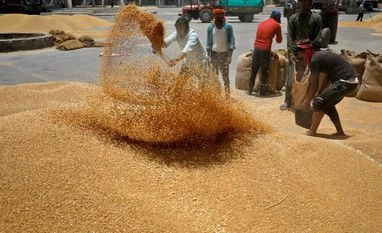
Dr Himmatrao Bawaskar, a Padma award-winning physician known for his work on scorpion bite treatment, conducted a month-long scientific study on an unexplained surge in severe hair loss cases in Maharashtra's Buldhana district. His investigation pointed to an alarming presence of selenium in wheat distributed through India's public distribution system (PDS), particularly sourced from Punjab, according to a report by Times of India.
Over 300 individuals across 15 villages reported sudden baldness, prompting concerns about the quality of rationed wheat.
Tracing source of contamination
Buldhana's residents largely rely on government-supplied wheat, leading Bawaskar to collect samples from households, including that of the Bhongaon village sarpanch, who also experienced hair loss. Lab tests confirmed elevated selenium levels in the wheat, establishing a possible link to the outbreak. Fortunately, since the hair follicles remained intact, many affected individuals have begun regrowing their hair, the news report said.
Understanding selenium’s role on health
Selenium, a metalloid with properties of both metals and non-metals, is essential for various bodily functions, but can be harmful in excess. Bawaskar’s study revealed that affected individuals also had low zinc levels, a nutrient critical for hair growth. While previous investigations by the Indian Council of Medical Research (ICMR) had similarly detected high selenium concentrations in blood samples, the agency refrained from definitively attributing the problem to ration shop wheat, the news report mentioned.
Bawaskar sent wheat samples to Varni Analytics lab in Thane, where tests showed selenium levels at 14.52 mg/kg in unwashed wheat — significantly above the normal range of 0.1 to 1.9 mg/kg. Even after washing, selenium content remained high at 13.61 mg/kg. Gunny bags examined in ration shops were traced back to Punjab, as confirmed by markings indicating the crop year and commodity details.
Similar incidents in Punjab
This is not the first time selenium contamination has been linked to health issues. In the early 2000s, residents of Punjab’s Hoshiarpur and Nawanshahr districts experienced sudden hair loss due to selenium-laden floodwaters from the Shivalik mountain range, affecting local crops. Bawaskar suspects that wheat from similarly contaminated farmlands may have unintentionally entered the PDS supply chain.
History of investigating public health crises
Bawaskar’s interest in the Buldhana case extends beyond this recent outbreak. In 2010, he conducted an independent investigation into a surge of kidney disease cases across 200 villages in the district. His research linked the illnesses to high cadmium and lead levels in local water sources. Committed to public health, he personally funded Rs 92,000 for lab tests to uncover the truth behind the recent hair loss epidemic.
More From This Section

 "Delhi CM Rekha Gupta with PM Narendra Modi")
 "forest cover, forest, India's green cover")
 "Election, Punjab Election, gram panchayat elections")
 "PM Narendra Modi, PM Modi")
 "Manik Saha, Manik, Tripura CM")
Topics : Punjab wheat Maharashtra BS Web Reports
Don't miss the most important news and views of the day. Get them on our Telegram channel
First Published: Feb 22 2025 | 4:55 PM IST