


India's power grid race: Can supply keep pace with surging demand?
India's power grid handled record demand this summer, but rising heat, renewable growth and industrial expansion are testing whether its infrastructure can keep pace
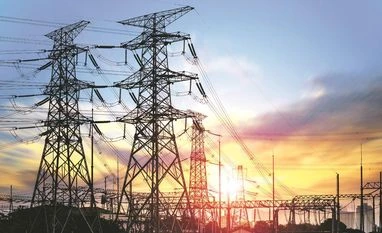 "power, electricity")
India's peak demand could rise to 459 GW by 2035-36, requiring total installed capacity of 1,121 GW.
Listen to This Article
On April 25, India’s electricity demand touched a record 256 gigawatts (GW), surpassing the previous day’s 252 GW peak as extreme heat drove cooling demand sharply higher across multiple regions. Unlike past periods of grid stress, the system held steady, with solar contributing nearly 22 per cent of total supply.
This operational success reflected years of structural upgrades. Faruk G Patel, founder and CMD, KPI Green Energy, told Business Standard, “The country has significantly expanded transmission infrastructure, reduced energy shortages to near-zero levels and strengthened coordination between generation and grid operators.”
Yet the milestone also exposed a deeper structural reality: India’s grid is increasingly operating closer to its limits during climate extremes.
With operational margins narrowing, the central question is no longer whether India can meet current peak demand, but whether generation, transmission and distribution systems can scale rapidly enough to support the next era of industrialisation, electrification and climate volatility.
Grid growth is accelerating, but demand is rising faster
India’s installed power generation capacity reached about 520 GW by early 2026, more than doubling over the past decade. More than half now comes from non-fossil fuel sources.
Also Read

 "Dark clouds, clouds, Black Clouds, monsoon")
 "Trade, Ship")
 "Donald Trump,Trump")
 "workspace, retirement, empty office, desk, work")
 "japan skyline, city")
According to Central Electricity Authority (CEA) projections, peak demand could rise to 459 GW by 2035-36, requiring total installed capacity of 1,121 GW.
Anujesh Dwivedi, partner at Deloitte India, told Business Standard that this would require annual capacity additions of roughly 60 GW -- significantly above historical averages.
Patel argued India’s trajectory remains adaptive, stating, “With demand expected to grow steadily at around 5-6 per cent annually, India is proactively expanding generation, transmission, and renewable integration in parallel.”
But experts caution that system-wide readiness remains uneven.
“While generation capacity is growing rapidly driven by solar, wind, and hybrid projects, the grid's absorption capacity and interregional transmission infrastructure still lag behind,” Srinivas Suthram, senior vice-president, Kshema Power India, told Business Standard.
Gaurav Tripathi, vice-president, solar business & EPC, Agastya Energy, added, “The challenge is no longer about adding megawatts; it’s about managing intermittency, peak volatility, and climate stress.”
How climate stress is reshaping power demand
India’s recent electricity surges are increasingly linked to heatwaves, rising cooling needs and urbanisation rather than conventional industrial cycles.
This creates shrinking grid buffers and greater exposure to outages, transmission bottlenecks and renewable intermittency.
Rakesh Malhotra, founder of SAR Group, told Business Standard that climate-driven demand spikes are increasingly outpacing conventional planning models, adding that without faster progress in storage, transmission and grid flexibility, future peak loads may become harder to manage reliably.
Structural bottlenecks
To support projected renewable integration, India will require 137,500 circuit km of additional transmission lines and ₹7.9 trillion in transmission investments by 2035-36.
While generation expansion remains substantial, experts increasingly see transmission as the system’s weak link.
"Three vulnerabilities stand out: inadequate last-mile transmission infrastructure, land and right-of-way bottlenecks that delay grid expansion and the intermittency risk of a rapidly renewables-heavy generation mix without commensurate storage,” Suthram said.
Dwivedi similarly warned that transmission bottlenecks could become one of India’s most significant structural vulnerabilities if network growth does not keep pace with generation additions.
Malhotra added that the widening mismatch between renewable expansion and grid rigidity is creating growing systemic stress, especially during post-sunset periods when solar output falls sharply.
Why India handled 2026 better than before
Despite vulnerabilities, India’s grid performance this summer marked a major operational shift.
Experts attribute this to improved forecasting, stronger interstate transmission corridors, expanded market mechanisms like Green Day Ahead Markets, better thermal fleet performance and rising solar penetration.
Tripathi said India’s grid is moving “from being reactive to becoming predictive and coordinated".
Sampriti Bhattacharjee of Nation First Policy Research and Change Foundation (NFPRC) told Business Standard that stronger coal and gas readiness, diversified generation and expanded transmission have all improved system reliability, though storage deployment remains limited.
China offers lessons -- but not a direct blueprint
China offers the most relevant global comparison. Over the past two decades, China transformed its grid through ultra-high-voltage (UHV) transmission corridors, massive state-led capital investment, rapid renewable integration, advanced digital load balancing and large-scale storage deployment.
China’s UHV system allows renewable and thermal power to move efficiently across vast geographies, linking western generation centres to eastern industrial demand hubs.
This integrated model has allowed China to industrialise, electrify and expand renewable energy simultaneously at an unprecedented scale.
However, India cannot fully replicate this due to its federal governance model, private participation and land constraints.
Still, several lessons remain relevant. "The key lesson from China is the importance of long-distance transmission and grid intelligence, both of which India is already adopting through initiatives like Green Energy Corridors," Dr Patel said.
Rather than replicating China entirely, "India is building a more adaptable system" suited to its federal structure and diverse energy landscape, he said.
Suthram emphasised that India should “invest ahead of demand, not behind it”, through faster HVDC corridor development, smarter grids and decentralised digitalisation.
Tripathi said India’s opportunity lies in building “a smarter and more adaptive” system rather than directly copying China’s model.
The next 10-20 years will demand structural transformation
By 2035, India may require over 600 GW of additional generation capacity, major storage deployment, smarter transmission systems and deep distribution reform.
By 2045, the grid may also need to support EV charging, green hydrogen, AI-driven data centres, advanced manufacturing and cooling-intensive urban economies.
This scale of transition will require not just capital, but deep policy reform.
“The policy foundation exists: what's needed now is consistency, speed of implementation, and crossministerial coordination,” Suthram said.
Dr Patel maintained that India needs “sustained, targeted policy evolution” rather than a complete overhaul.
Bhattacharjee argued reforms must include transmission-first planning, storage frameworks, smart metering, demand flexibility and climate-resilient planning standards.
Tripathi stressed execution at scale, with storage, market pricing and grid reliability becoming central to economic competitiveness.
Why this matters
Reliable electricity will define India’s manufacturing competitiveness, energy security, climate resilience and investment attractiveness over the coming decades.
India has demonstrated it can meet record demand today. But sustaining that growth over the next two decades will require one of the largest infrastructure transformations in modern Indian history: a shift from simply expanding supply to building a far more flexible, resilient and digitally intelligent power ecosystem.
More From This Section
 "merger and acquisition (M&A)")
 "crude oil, oil prices")
 "pharmaceutical sector, pharma sector, medicines, meds")
 "d-industry1")
 "LPG, LPG cylinders, cylinder, cylinders")
Don't miss the most important news and views of the day. Get them on our Telegram channel
First Published: May 02 2026 | 11:53 AM IST