


Samsung flags possible losses in phone business on rising memory costs
Rising DRAM and NAND prices could push Samsung's smartphone business into losses, even as its semiconductor division posts strong growth, according to a report
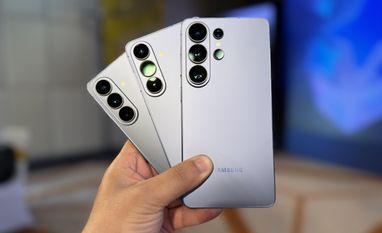 "Samsung Galaxy S26 Series")
Samsung Galaxy S26 Series (Image: Khalid Anzar)
Listen to This Article
Samsung may report losses in its smartphone business for the first time, as rising DRAM and NAND prices sharply increase production costs despite steady demand for flagship models.
According to an Ars Technica report citing Korea’s Money Today, Samsung MX (mobile experience) head TM Roh has warned the company’s leadership that the division could record losses on smartphone sales. The company has historically remained profitable in smartphones even during periods of economic stress and the pandemic, but the surge in memory costs could reverse that trend.
This pressure is expected despite strong sales of the Galaxy S26 series.
Memory costs reshape smartphone economics
Traditionally, the most expensive component in a smartphone has been the application processor, followed by the display. However, rising memory prices are changing that structure.
According to Counterpoint Research data cited in the report, memory could account for more than one-third of the cost of building a budget smartphone by mid-2026. In premium devices, memory may still make up around 20 per cent of total costs.
Also Read

 "Windows now lets users shut down or restart their PC without being forced to install updates.")
 "Alphabet")
 "YouTube TV")
 "WhatsApp introduces prepaid mobile recharge feature in partnership with PayU (Image: X/@PayUindia)")
 "Samsung Galaxy Book6 Pro (Image: Harsh Shivam)")
This shift reflects the scale of the increase in DRAM and NAND prices, which are critical components across all smartphone segments.
READ: Google strengthens AI push with $40 billion investment in Anthropic
Why memory supply remains tight
The surge in memory prices is linked to a broader global shortage of DRAM and NAND chips.
According to Nikkei Asia, supply is likely to remain constrained until around 2027. Even with planned capacity expansions, global DRAM production may meet only about 60 per cent of demand, with shortages of up to 40 per cent in some scenarios.
A key factor behind this imbalance is the shift towards high-bandwidth memory (HBM), which is used in artificial intelligence infrastructure and offers higher margins. This has diverted manufacturing capacity away from standard memory used in smartphones and PCs.
At the same time, new fabrication facilities will take time to reach full output, further delaying supply recovery.
Memory prices in early 2026 are estimated to be up about 90 per cent quarter-on-quarter, significantly increasing costs for device makers.
Smartphone prices already rising
The impact of higher component costs is already visible in retail pricing.
Smartphone brands have begun raising prices after launch, a practice that was earlier uncommon. Devices now cost about Rs 2,000 to Rs 3,500 more within months of release in several cases.
For instance, Samsung’s Galaxy M36 5G, launched at Rs 17,499, is now priced at Rs 20,999. Similar increases are visible across brands. The OnePlus 15R has risen from Rs 47,999 to Rs 50,499, while the Vivo V70 has moved from Rs 45,999 to Rs 49,999. The Nothing Phone 3a Lite base variant has increased from Rs 20,999 to Rs 21,999.
New launches are also seeing higher starting prices. Samsung’s Galaxy A56 launched at Rs 41,999 and the Galaxy A36 at Rs 32,999. Their successors, the Galaxy A57 and Galaxy A37, now start at Rs 56,999 and Rs 41,999, respectively.
These increases, despite largely incremental upgrades, show how rising memory costs are being passed on to consumers.
What to expect
In the near term, pricing pressure is unlikely to ease.
With memory supply expected to remain tight until at least 2027, smartphone makers may continue to face higher costs, even as they raise prices. For Samsung, this could mean sustained pressure on margins in its mobile business, even as its semiconductor arm benefits from the same trend.
More From This Section
 "Reddit")
 "Technology, IT services, data centre")
 "Anthropic")
 "Artificial intelligence, AI")
 "Meta Accounts upgrade")
Topics : Samsung Latest Technology News smartphones
Don't miss the most important news and views of the day. Get them on our Telegram channel
First Published: Apr 27 2026 | 12:07 PM IST