


Wildfire smoke blankets US cities as Canada fires rage, air turns hazardous
Canada's wildfire smoke has spread across large parts of the US, leading to hazardous air quality, cancelled outdoor events and health advisories in several major cities
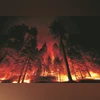 "wildfire")
More than 800 wildfires are currently burning across Canada. (Photo: Representative image)
Listen to This Article
Smoke from hundreds of wildfires burning across Canada has spread across large parts of the United States, turning skies orange and yellow, reducing visibility, and prompting health warnings from the Midwest to the East Coast.
Officials in several US cities urged residents to stay indoors or wear masks outdoors as air quality reached unhealthy and, in some places, hazardous levels. The smoke is mainly coming from wildfires in Canada, although some fires are also burning in northern Minnesota. A lingering high-pressure system has trapped the smoke close to the ground, worsening conditions in many cities, according to the Associated Press.
BBC reported that more than 800 wildfires are currently burning across Canada, with most of them out of control. The smoke has spread from Ontario across the Great Lakes and into several US states, leading to widespread air quality alerts.
What is causing the smoke?
The smoke is being driven south by winds from a large cluster of wildfires burning in northwestern Ontario, near Thunder Bay, close to the US border.
A heat dome has trapped both high temperatures and smoke close to the ground from the Midwest to New England, worsening air quality across the region. Although thunderstorms are expected in parts of Ontario, forecasters said the rainfall is unlikely to significantly reduce the fires. Smoke is expected to continue drifting into northern US states through the weekend before shifting towards Quebec early next week as winds change direction.
Also Read

 "BSE, Stock Markets")
 "d-money-woman")
 "donald trump, trump")
 "Books")
 "AC, air conditioner, inflation")
Even if winds temporarily improve conditions, smoke is likely to keep returning until the fires are brought under control—something officials say may not happen until snowfall later this year.
Which areas are worst affected?
Michigan, Minnesota, Illinois, New York, Pennsylvania and Ohio are among the states facing poor air quality.
According to the Associated Press, all of Michigan and much of Minnesota were placed under hazardous air quality alerts, while air quality in the Chicago area ranged from very unhealthy to hazardous. In St. Paul, Minnesota, residents described the sky as glowing yellow as thick smoke settled over the city. Experts warned that smoke could continue affecting the region for weeks or even months, depending on changing wind patterns and the duration of the fires.
BBC reported that Detroit had the worst air quality among major cities globally, followed by Minneapolis, Chicago and Toronto, according to Swiss air quality tracker IQAir.
Are the fires spreading?
The fires continue to expand in parts of Minnesota and Canada despite ongoing firefighting efforts.
Officials have closed Minnesota's Boundary Waters wilderness after the fires spread through the area. Rescue teams have been searching for visitors who remained inside, while heavy smoke has made helicopter operations difficult. Authorities warned that some fires are expected to keep burning until snowfall later this year.
The Royal Canadian Air Force also evacuated 15 people stranded in an Ontario provincial park because of the fires.
BBC reported that in northern Ontario, several First Nations communities have been forced to evacuate.
How are cities responding?
New York City woke up to a thick haze that partly obscured landmarks including the Manhattan skyline, the Empire State Building and the Statue of Liberty.
ity agencies shifted activities indoors, rescheduled events and opened cooling centres while health officials advised people to avoid prolonged outdoor activity. State authorities also distributed tens of thousands of face masks at transport hubs and other public locations, Associated Press reported.
BBC said New York extended its heat emergency plans and activated air quality emergency protocols. Hundreds of cooling centres were opened across the city, while KN95 masks were made available for residents. Governor Kathy Hochul warned that the smoke was making it "very unhealthy" to be outdoors in many areas of the state.
Philadelphia advised residents to stay indoors or wear N95 or KN95 masks if they had to go outside, while several outdoor events, children's summer camp activities and concerts were cancelled because of the poor air quality, the BBC reported.
More From This Section

 "US President Donald Trump and Chinese President Xi Jinping in Beijing on May 14, 2026")
 "New York Mayor Zohran Mamdani")
 "Truth Social")
Don't miss the most important news and views of the day. Get them on our Telegram channel
First Published: Jul 17 2026 | 9:44 AM IST