


How China's CIPS could gain from Iran war and challenge dollar grip
As Iran crisis disrupts key trade routes, China's expanded payment system now offers a pathway to settle transactions outside the dollar system, though its scale remains limited
 "us china, china us, china flag, us flag")
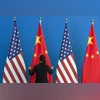
China has changed the rules governing its Cross-border Interbank Payment System (CIPS), widening its scope beyond yuan-only transactions and opening the door to handling other currencies and payment channels. | Image: Bloomberg
Listen to This Article
China has changed the rules governing its Cross-border Interbank Payment System (CIPS), widening its scope beyond yuan-only transactions and opening the door to handling other currencies and payment channels. The revised framework, which came into effect earlier this year, signals Beijing’s intent to position CIPS not just as a settlement tool for the renminbi but as a broader cross-border payments platform that can both compete and work alongside existing global systems, according to a report by the South China Morning Post.
The changes come as tensions in West Asia reshape financial flows and countries increasingly explore alternatives to dollar-based infrastructure.
What is China’s CIPS payment system and how does it work?
Launched in October 2015 by the People’s Bank of China, CIPS is China’s official cross-border payment system built to facilitate international use of the renminbi by allowing banks to clear and settle cross-border transactions directly within China’s financial system.
Unlike networks that only transmit payment instructions, CIPS combines messaging, clearing and settlement into one system. Banks that are part of the network can send payment instructions, match transactions and complete fund transfers through accounts maintained within the system. Participation is structured through direct members, which hold settlement accounts, and indirect members that route transactions through them.
Initially, the CIPS functioned as a yuan settlement mechanism and continued to connect to global messaging systems like SWIFT. However, the CIPS network has grown significantly and now comprises hundreds of direct and indirect participants in various jurisdictions, reflecting the increasing use of the yuan in trade settlement.
Also Read

 "Mark Carney, Canada")
 "Inheritance tax")
 "Donald Trump")
 "US green card, US Passport, US immigration")
 "Trade, ports, export")
How does it compare with dollar-based payment channels?
CIPS remains significantly smaller than the dollar-based financial system, which is anchored in deep capital markets, widespread reserve holdings and global banking networks.
The dollar system operates through a combination of messaging platforms like SWIFT and settlement systems such as CHIPS in the United States. These systems are embedded in a broader ecosystem where most international trade, borrowing and reserves are still denominated in dollars. That creates a reinforcing cycle, making it difficult for alternative currencies to displace the dollar at scale.
By contrast, CIPS is still largely tied to yuan-denominated transactions and continues to co-exist with Western infrastructure. In many cases, transactions routed through CIPS have historically relied on SWIFT for messaging, even if settlement occurs within China’s system.
However, a shift is being observed - not the scale but the dependence. As more banks join CIPS as direct participants, a greater share of transactions can be processed without relying on external messaging networks. That reduces visibility within the Western financial system and, over time, can alter how cross-border payments are routed.
How does the Iran war present an opportunity for CIPS?
The ongoing tensions in and around Iran, particularly around energy flows through the Strait of Hormuz, have brought renewed attention to alternative payment channels.
Several reports have indicated that Iran may allow limited tanker passage under specific conditions, including payments being made in Chinese yuan. If such arrangements take place, they will lead to the creation of a pathway for transactions to be settled outside the US dollar system.
And it is in this context that CIPS will find its relevance because it allows participating banks to complete yuan transactions entirely within China’s financial system. A payment routed through CIPS between two banks does not need to pass through US correspondent banks, which are central to the enforcement of American financial sanctions.
However, it is important to remember that this does not change the broader dominance of the dollar. It does provide a mechanism, in specific cases, for countries to continue trade without exposure to US financial jurisdiction. For example, when Russian banks were cut off from parts of the global financial system in 2022, it prompted greater use of alternative settlement channels.
Why is there renewed global interest in CIPS now?
Recent developments suggest a cautious yet steady expansion in participation. Georgia’s central bank said earlier this month that four of its commercial banks are interested in joining CIPS. The move is linked to growing trade ties with China and a need for more efficient settlement in yuan. Officials indicated that joining the system could reduce reliance on intermediary banks and streamline cross-border payments.
Across parts of Asia, Central Asia and eastern Europe, financial institutions are exploring closer integration with China’s payment infrastructure, often driven by trade flows rather than geopolitical positioning.
At the same time, these countries continue to use existing global systems, reflecting a dual-track approach rather than a wholesale shift.
What does this signal for the global payments landscape?
CIPS does not appear to be displacing the dollar-based system any time soon. Its scale, currency reach and financial backing remain limited compared to the entrenched position of the US dollar.
However, what is changing is the structure of global payments at the margins. As more transactions find routes that do not pass through dollar clearing systems, the ability of any one country to monitor or restrict those flows will grow weaker.
More From This Section
 "Pakistan Army Chief General Asim Munir")
 "Bank of England, England")
 "federal reserve chair Jerome Powell")
 "Anutin Charnvirakul")
 "trade, import, export, container, shipping")
Don't miss the most important news and views of the day. Get them on our Telegram channel
First Published: Mar 19 2026 | 4:23 PM IST