


Ice cream burning holes in your pocket? The humble coconut is to blame
The causes behind the rally are a window into the interconnected world of commodities, where seemingly unrelated factors collide
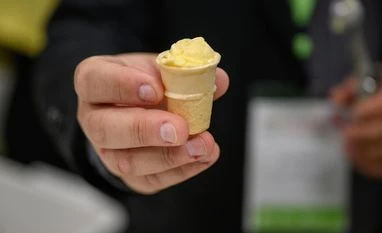 "ice cream")
If not in 2025, at least there’s the prospect of cheaper ice cream in 2026. Image: Bloomberg
Listen to This Article
By Javier Blas
First the price of olive oil zoomed to a record high; then the same happened to two of my other commodity pleasures — coffee and chocolate. Now that the English summer is arriving, we’re faced with pricier ice cream. Call it a first-world problem, but without a doubt, someone is pulling the strings in the global commodity market just to annoy me.
Sure, ice cream isn’t a commodity. But coconut oil, a key ingredient of industrial-made gelatos, is. And its price has gone parabolic in the wholesale market, setting fresh record highs every month so far in 2025. Worse, further price gains are likely as demand outstrips supply, making one of my guilty indulgences even more expensive. In a nutshell, fewer coconuts mean less oil, which is extracted from the fruit’s dried or fresh meat.
How bad is it? Last week, the benchmark wholesale price for Filipino coconut oil delivered in Rotterdam, an industry benchmark, rose above $2,700 a metric ton, nearly double from a year ago, and roughly 200 per cent higher than the 2000-2020 average. The previous record high was set in 2011 at about $2,300.
Also Read

 "Mayank Yadav")
 "SpaceX, Rocket, Rocket Launch")
 "market, stocks, stock market trading, stock market")
 "market, stocks, stock market trading, stock market")
 "SSC GD Result 2025")
The causes behind the rally are a window into the interconnected world of commodities, where seemingly unrelated factors collide. This explosive cocktail has it all: bad weather, biofuel policy, how Big Food fights to keep its profit margins and influencer-dominated beauty trends.
First, a few basics about making an ice cream: For the food industry, coconut oil is handy because of its high melting point, helping to keep gelatos solid for longer at room temperature, and crucially managing to do so without affecting their flavor and texture. That’s even more important for ice cream with hard-shelled coatings. Look at the ingredients that go inside a Magnum, a popular brand made by food giant Unilever Plc, and you’ll see coconut fat features prominently. In another corner of the business, the fat is even more critical: Dairy-free (or vegan) gelatos wouldn’t exist without it. Ice cream isn’t small business: Last year, it generated almost $80 billion in sales worldwide.
Now, a few farming basics. An iconic symbol of the tropics, the coconut palm lives in coastal sandy lowlands, where it receives plenty of sunlight and regular rainfall. But that wasn’t the case from July 2023 to June 2024, when the El Niño weather cycle disturbed precipitation patterns in Southeast Asia. Rather than cool and wet, it was hot and dry. Since coconut production takes one year, the stressed palm trees in 2024 are now yielding significantly less than normal, reducing supply.
The Philippines, which produces 45 per cent of the world’s coconut oil, is the country to watch. Indonesia adds another 28 per cent and India 13 per cent. The rest comes from a dozen other countries clustered in other tropical countries, including Vietnam, Bangladesh, Sri Lanka, Mexico and Ivory Coast. The unfavorable weather in 2023-24 means that global production will fall to 3.6 million metric tons in 2024-25, down nearly 10 per cent from the previous season. Output is likely to stay low in the 2025-26 season, too, according to early forecasts.
It’s important to put the shock into perspective. Outside a few industries and a handful of producing nations, coconut oil is largely unnoticed. It accounts for a sliver of global edible-oil consumption. Last year, it represented just below 2 per cent of the global market, on par with my beloved olive oil. Palm and soybean oil together account for 65 per cent of the market; sunflower and rapeseed oil represent another 24 per cent combined
On its own, the output decline wasn’t large enough to trigger a massive price rally. But politicians decided to boost demand at the worst possible time. And the increase had nothing to do with food, but rather with another corner of the coconut market: biofuels.
In the Philippines, the government has mandated blending some diesel with coco methyl ester, a fatty derivative of coconut oil. Initially, the impact of the coconut-for-diesel policy was limited, with a blending target of 1 per cent in 2007 and 2 per cent from 2009. All that changed last year, when Manila hiked the target to 3 per cent in October, and announced a rapid escalation to 4 per cent by late 2025 and 5 per cent by the end of 2026. Each percentage-point rise means diverting about 900 million coconuts into the fuel market, away from other uses.
If the Filipino government follows through with its plan, the country will use 4.5 billion coconuts to generate the 500 million of liters of coco methyl ester necessary to meet the biodiesel target by late 2026 — nearly a third of its 15 billion annual crop. The US diverts about 40 per cent of its corn crop into the ethanol market. The Philippines isn’t the only big coconut producer aiming to use it to boost diesel supply: the Pacific nation of Papua New Guinea is too.
It's perhaps one of the most bizarre examples of how commodity policy decisions and markets ricochet: The need for cheap fuel in Asia means more expensive vegan ice cream in Europe and America.
Biofuel wasn’t the only unexpected source of demand. All along in 2024, two other forces were driving up consumption when supply was scarce. Both trends are still in force this year.
The first was the confectionary industry, which was contending with sky-high cocoa prices. In some chocolate recipes, corporate chefs can cut how much cocoa they use by slightly increasing the amount of coconut oil. Multiply the same process in hundreds of millions of products, and the impact can show up in the annual supply-and-demand balance. Even at current record prices for coconut oil, it’s cheaper to increase its use and reduce that of even more expensive cocoa.
The second was the influencers who dominate social media. On TikTok and Instagram, coconut oil is often portrayed as healthier — even if the claim is rather dubious. Enter the soap and beauty market, where it plays a greater role in dozens of products. Its growing popularity as a wholesome and more environmentally friendly alternative to palm oil means that demand for industrial consumption is rising steadily too. On its own it wouldn’t have a big impact, but it’s coming into an already tight market.
Over time, soaring prices encourage planting, elevating supply. But that’s not without its own problems. First, because deforestation policies would limit how much land can be allocated for new coconut production, particularly in Indonesia; second, it would take years for the new trees to mature and thus produce a steady flow of fruit. The good news is that the weather is back to normal in the Philippines, suggesting that more coconuts will flow into the market a year from now. If not in 2025, at least there’s the prospect of cheaper ice cream in 2026. The bad news is that competition between the frozen delight and diesel trucks will only intensify next year. (Disclaimer: This is a Bloomberg Opinion piece, and these are the personal opinions of the writer. They do not reflect the views of www.business-standard.com or the Business Standard newspaper)
More From This Section
 "Harvard University")
 "FBI, Federal Bureau of Investigation")
 "Christine Lagarde, WEF")
 "JD Vance, Vance")
 "Donald Trump, Trump")
Topics : ice creams Ice cream industry Ice Cream
Don't miss the most important news and views of the day. Get them on our Telegram channel
First Published: May 16 2025 | 11:08 AM IST