


Second-hand watch prices rebound as luxury timepiece market in upswing
The rollercoaster in secondary-market watch prices started during the pandemic, when consumers flush with crypto gains and stimulus payments started snapping up pre-loved models online
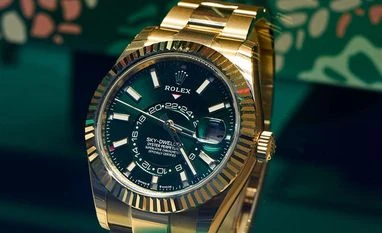 "rolex")
More buyers are realising that with average discounts of 30 per cent-40 per cent to new models for brands outside the top three, there are some good deals to be had | Image Credit: Bloomberg
Listen to This Article
By Andrea Felsted
Time’s up for the slump in second-hand watch values.
After five years of ups and downs, prices for used timepieces are now steadily on the upswing. Progress from here depends on whether two trends can continue: new watch prices rising and equity markets melting up. While there’s a good chance of the former, the latter looks less certain.
The rollercoaster in secondary-market watch prices started during the pandemic, when consumers flush with crypto gains and stimulus payments started snapping up pre-loved models online. But the bubble burst in spring of 2022, as Bitcoin slumped and rates rose, forcing speculators who’d borrowed to fuel their collections to sell.
The latest report from Morgan Stanley and research platform WatchCharts finds that prices for 300 models from 10 brands rose 1.9 per cent in the final quarter of 2025, compared with the preceding three months. That strength builds on improvement earlier in the year.
The Bloomberg Subdial Watch Index, which is based on the 50 most-traded timepieces by transaction value, has reached its highest level in more than two years.
This inflection point reflects the trend in the cost of new timepieces. Tariffs have forced watchmakers to raise prices in the US, with some also adjusting them globally. Rolex SA, which held off from hiking last autumn, joined in this month, with an estimated 6 per cent escalation. As prices climb, more buyers are turning to the secondary market, where — aside from the top three privately held names: Patek Philippe, Rolex and Audemars Piguet — most brands trade below retail.
Also Read

 "Vanatara watch, luxury watch, Anant Ambani")
 "Titan")
 "Swiss watches, watch")
 "Indulgence")
 "M3M group")
Add in the Bitcoin rally and the fact that global equities set a record last year, and it’s little wonder that secondary prices rose 4.9 per cent in 2025, the first increase since 2021.
The current recovery looks to be broader than the improvement we saw earlier in 2025. At that point, increases were led by Patek Philippe, Rolex, Cie Financiere Richemont SA’s Cartier and Swatch Group AG’s Omega, while prices continued to fall for other names. But in the final quarter, they gained for 21 of the 35 brands tracked by Morgan Stanley and WatchCharts.
More buyers are realising that with average discounts of 30 per cent-40 per cent to new models for brands outside the top three, there are some good deals to be had.
The revival may also echo what’s going on in the market for new timepieces. It, too, has seen a disparity between the outperformance of the most sought-after names and the rest of the market, according to Vontobel Equity Research.
But in an encouraging sign for the broader industry, sales in Richemont’s watchmaking division rose 7 per cent (excluding currency movements) in the three months to Dec. 31, well ahead of analysts’ expectations. This arm excludes Cartier but encompasses brands such as Jaeger-LeCoultre, A Lange & Sohne, Vacheron Constantin and IWC Schaffhausen.
Charging more no doubt played a part. But the volume sold also increased, with demand spread across brands and geographies, particularly the US and the Middle East. Strategic moves likely helped as well. Richemont is applying the playbook that helped Cartier become Gen-Z’s favorite timepiece by relaunching Jaeger-LeCoultre’s best known model, the Reverso, and it may be working. (Smaller sizes in particular are proving popular.)
Can the recovery in the secondary market be sustained?
That new watches are getting more expensive is one factor that could continue to strengthen second-hand values. While the tariff-related hikes shouldn’t be repeated this year — Switzerland’s levy fell from a punitive 39 per cent to 15 per cent in November — watchmakers face escalating costs from pricier gold and the dollar’s weakening against the Swiss Franc, which means they must sell more watches in the US or raise prices to generate the same value of sales.
There are also some quirks of the market that might contribute to keeping prices and interest high. Take Cartier’s Panthere, which has led the vogue for smaller, mostly gold, timepieces. Its popularity is helping boost other models, such as Rolex’s 26mm Lady Datejust, which was discontinued in 2015. The diminutive Rolex, which has the same old-money feel as the Panthere, can be picked up for around half the price of a similar new style from the brand. Consequently, several 26mm Lady Datejusts were the best-performing Rolex models last year, according to WatchCharts.
For watchmakers, a stronger secondary market is a double-edged sword. While price increases are a good indication of brand desirability, consumers buying used models siphons sales away from new releases. One way to counter that trend is for watchmakers to move into the resale business themselves, as Rolex has done. Sales through its so-called Certified Pre-Owned Program exceeded $500 million in 2025, up from $319 million in 2024, according to Morgan Stanley and WatchCharts.
Still, the strength of the used market remains fragile. While a fresh trade spat has been avoided, the jolts to stocks and bonds last week are a reminder that buyers’ confidence can quickly be shattered by economic and political turbulence. And even amid the resurgence, watch bros are less gung ho than a few years ago, when many bought timepieces to flip at a profit. Scarred by the collapse four years ago, more buyers are nervous about overpaying.
So, if you are contemplating investing in some serious wrist candy, there are still some bargains to be had. But the clock is ticking.
(Disclaimer: This is a Bloomberg Opinion piece, and these are the personal opinions of the writer. They do not reflect the views of www.business-standard.com or the Business Standard newspaper)More From This Section
 "Minnesota, Protest")
 "nickel")
 "Nepal Protest")
 "Photo: Reuters")
 "Flight cancellations in US")
Topics : watches luxury watches Watch Rolex
Don't miss the most important news and views of the day. Get them on our Telegram channel
First Published: Jan 26 2026 | 12:09 PM IST