


Senate confirms Ratcliffe to lead CIA, giving Trump second Cabinet member
Ratcliffe was director of national intelligence during Trump's first term and is the first person to have held that position and the top post at the CIA, the nation's premier spy agency
 "John Ratcliffe")
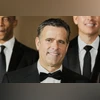
John Ratcliffe, President-elect Donald Trump's choice to be the Director of the CIA, poses for a photo with Cabinet picks | (Photo: PTI)


Listen to This Article
The Senate has confirmed John Ratcliffe as CIA director, giving President Donald Trump the second member of his new Cabinet.
Ratcliffe was director of national intelligence during Trump's first term and is the first person to have held that position and the top post at the CIA, the nation's premier spy agency.
The Texas Republican is a former federal prosecutor who emerged as a fierce Trump defender while serving as a congressman during Trump's first impeachment.
The vote was 74-25.
At his Senate hearing last week, Ratcliffe said the CIA must do better when it comes to using technology such as artificial intelligence to confront adversaries including Russia and China. He said the United States needed to improve its intelligence capabilities while also ensuring the protection of Americans' civil rights.
Also Read

 "Scott Bessent , Trump's Treasury secretary pick")
 "Donald Trump, Trump")
 "Jerome Powell and Donald Trump, Powell, Trump")
 "Justin Trudeau, Canada PM")
 "RENEWABLE ENERGY")
Ratcliffe said that if confirmed, he would push the CIA to do more to harness technologies such as AI and quantum computing while expanding use of human intelligence collection.
"We're not where we're supposed to be," Ratcliffe told members of the Senate Intelligence Committee.
Democrats raised questions about Ratcliffe's objectivity and whether his loyalty to Trump would prompt him to politicize his position and blind him to the duties of the job. Concerns from Sen. Chris Murphy, D-Conn., forced the Senate's Republican leaders to postpone Ratcliffe's confirmation vote, which originally was scheduled for Tuesday.
Former Florida Sen. Marco Rubio was confirmed earlier this week as secretary of state, the first member of Trump's Cabinet.
Ratcliffe has said he views China as America's greatest geopolitical rival, and that Russia, Iran, North Korea and drug cartels, hacking gangs and terrorist organizations also pose challenges to national security.
He supports the Foreign Intelligence Surveillance Act, a government spying programme that allows authorities to collect without warrant the communications of non-Americans outside the country. If those people are communicating with Americans, those conversations can be swept up, too, which has led to questions about violations of personal rights.
Trump and other Republicans have criticized the work of the CIA and other spy agencies, saying they have focused too much on climate change, workforce diversity and other issues.
The calls for a broad overhaul have worried some current and former intelligence officials who say the changes could make the country less safe.
Like other Trump nominees, Ratcliffe is a Trump loyalist. Aside from his work to defend Trump during his first impeachment proceedings, Ratcliffe also forcefully questioned former special counsel Robert Mueller when he testified before lawmakers about his investigation into Russian interference in the 2016 election.
As director of national intelligence, Ratcliffe oversaw and coordinated the work of more than a dozen spy agencies. Among other duties, the office directs efforts to detect and counter foreign efforts to influence US politics.
Trump picked Ratcliffe to serve in that position in 2019, but he quickly withdrew from consideration after lawmakers raised questions about his qualifications. He was ultimately confirmed by a sharply divided Senate after Trump resubmitted the nomination.
In that job, Ratcliffe was accused by Democrats of politicizing intelligence when he declassified Russian intelligence that purported to reveal information about Democrats during the 2016 election even as he acknowledged the information might not be accurate.
Trump's second-term nominee for director of national intelligence, Tulsi Gabbard, faces a tougher road to confirmation. Gabbard, a former Democratic congresswoman from Hawaii, has faced bipartisan criticism over past comments supportive of Russia and 2017 meetings with then-Syrian President Bashar Assad.
(Only the headline and picture of this report may have been reworked by the Business Standard staff; the rest of the content is auto-generated from a syndicated feed.)
More From This Section
 "Firefighters, California wildfire")
 "LGBTQ")
 "Donald Trump, Trump")
 "Donald Trump, Trump")
Don't miss the most important news and views of the day. Get them on our Telegram channel
First Published: Jan 24 2025 | 9:14 AM IST