


US Senator backs H-1B overhaul, plans bills to prioritise American workers
Senator Tom Cotton plans bills to overhaul the H-1B programme as the Labor Department rolls out Project Firewall to protect US jobs from visa misuse
 "US Senator Tom Cotton")
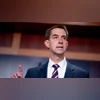
US Senator Tom Cotton (Photo/X)
Listen to This Article
US Senator Tom Cotton on Friday expressed strong support for overhauling the H-1B visa programme, which has become a flashpoint in the ongoing immigration debate in that country. Senator Cotton announced plans to introduce legislation aimed at tightening oversight and prioritising American workers.
In a post on X, Cotton wrote: “President Trump and @SecretaryLCD are absolutely right that the H-1B program needs reforms. Next week I’m introducing two bills that will bring badly needed changes to this program and put American workers first.”
President Trump and @SecretaryLCD are absolutely right that the H-1B program needs reforms. Next week I’m introducing two bills that will bring badly needed changes to this program and put American workers first. https://t.co/jXyh86kxrF
— Tom Cotton (@SenTomCotton) September 26, 2025
His comments coincided with the US Department of Labor unveiling Project Firewall, a new enforcement initiative described as one of the most aggressive oversight efforts in the H-1B visa programme’s history. Secretary Lori Chavez-DeRemer said: “By taking action to reform H-1B programs, @POTUS is protecting our workers and ensuring jobs go to Americans first.”
What is Project Firewall?
The Department of Labor earlier this week launched Project Firewall, an initiative designed to protect highly skilled American workers from abuse of the H-1B visa. The initiative is being projected as one of the most robust enforcement efforts in the visa programme’s history.
Also Read

 "us china, china us, china flag, us flag")
 "US-South Korea Flag")
 "Elon Musk, Tesla CEO")
 "Donald Trump, Trump")
 "Donald Trump")
Chavez-DeRemer described it as an initiative that will examine employers for potential misuse of the H-1B visa system. “Launching Project Firewall will help us ensure no employers are abusing H-1B visas at the expense of our workforce. By rooting out fraud and abuse, the Department of Labor and our federal partners will ensure that highly skilled jobs go to Americans first,” she said.
Key reforms under Project Firewall
The Department of Labor said Project Firewall will hold employers accountable and protect the rights of American workers. Key measures include:
• Proactive investigations: The Secretary of Labor will personally certify investigations of employers suspected of H-1B violations, rather than relying only on complaints
• Fair wages: Employers must pay H-1B workers at least the prevailing local wage or match pay for similarly qualified US employees
• Equal treatment: H-1B workers should receive the same benefits as their American counterparts
• Recruitment requirements: Companies may need to show they made “good faith” efforts to hire American workers before turning to the H-1B visa
• Penalties for violations: Employers found violating rules could face back wages, civil fines, or temporary bans from utilising the visa
• Inter-agency cooperation: The Labor Department will work with the Justice Department, EEOC, and USCIS to prevent fraud and discrimination
“Launching Project Firewall will help us ensure no employers are abusing H-1B visas at the expense of our workforce,” Chavez-DeRemer reiterated in a press release from her department.
India engaged on H-1B issue
The Ministry of External Affairs (MEA) on Friday said India continues to engage with the US administration and industry stakeholders regarding H-1B visas. The ministry stressed that skilled talent exchanges have benefited both countries and expressed hope that the recent restrictions may be eased.
“We have seen the notice by the US Department of Homeland Security regarding the proposed rulemaking. I understand that stakeholders, including the industry, have one month to provide their comments,” MEA spokesperson Randhir Jaiswal said on Friday.
“This is still an evolving situation and we remain engaged at various levels,” Jaiswal said on Friday. “Skilled talent mobility and exchanges have contributed enormously to technology development, innovation, economic growth, competitiveness and wealth creation in the US and India.”
Trump's H-1B visa fee hike
Last week, the Trump administration announced a major overhaul of the H-1B visa programme, introducing a $100,000 annual fee per visa. The change is expected to significantly alter how US companies hire skilled foreign workers, particularly affecting Indian IT professionals, who represent the largest group of H-1B beneficiaries.
Commerce Secretary Howard Lutnick announced the fee hike, stating: “A company that wants to buy an H-1B visa... it’s $100,000 per year."
The visa itself remains unchanged, valid for three years with a one-time renewal for a total of six years. Visa quotas are also unaffected, staying at 65,000 for regular applicants and 20,000 for holders of US advanced degrees.
However, officials anticipate fewer applications due to the steep cost. Lutnick noted, “Remember, these are the same cap, it’s the same visa. There’ll just be less of them issued because they used to be free, and now they cost $100,000.”
The move could heavily impact Indian IT firms like Infosys, TCS, and Wipro, which frequently deploy engineers to the US. Lutnick added, “If you have a very sophisticated engineer and you want to bring them in because they have expertise, then you can pay $100,000 a year for your H-1B visa.”
JPMorgan economists estimate the fee may cut as many as 5,500 work authorisations monthly, with technology companies and Indian talent facing the most pressure. Nearly two-thirds of H-1B approvals in FY24 were for computer roles, and 71 per cent of approved petitions went to Indian nationals, Bloomberg reported
(With agency inputs)
More From This Section
 "Iran, Iran flag")
 "Pro-Palestine protesters march in Auckland on Sept. 13")
 "Boeing")
 "Lisa Monaco")
 "The Oracle Corp. campus in Redwood City, California")
Topics : Donald Trump H1B Visa Trump administration H-1B programme H-1B Visa H-1B visa holders Indians in US BS Web Reports
Don't miss the most important news and views of the day. Get them on our Telegram channel
First Published: Sep 27 2025 | 2:04 PM IST