


New defence procurement policy cleared
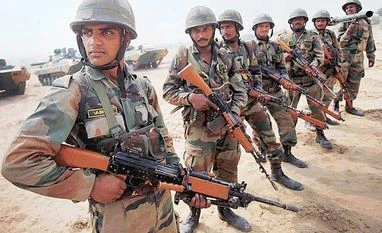 "Defence allocation lowest since 1962")
Defence Minister Manohar Parrikar announced on Monday the clearance of the long anticipated Defence Procurement Policy of 2016 (DPP-2016). This will replace the current DPP-2013, and govern all defence acquisitions initiated after April 2. He said the new policy would be accessible on the defence ministry's website with effect from March 28.
Speaking to the media in New Delhi after a meeting of the ministry's apex procurement body, the Defence Acquisition Council (DAC), Parrikar revealed that one chapter remains to be cleared, Chapter 6, which deals with the appointment of "strategic partners" in the private sector. It governs the selection of private industries as the ministry's priority partners in manufacturing equipment like aircraft, warships, helicopters, submarines, tanks, etc, based on technology from foreign vendors.
He said the policy on strategic partners required an "extensive exercise to be carried out. It would also require financial and Cabinet Committee on Security approvals." He estimated this would be finalised in 1-2 months. As this newspaper reported (January 13, Parrikar's proposed defence procurement policy breaks new ground), DPP-2016 includes bold changes, including a first-time emphasis on indigenously designed equipment. A new procurement class - termed Indian Designed, Developed and Manufactured (IDDM) category - has been created as the most preferred category for buying equipment. Parrikar stated that a new "penalisation provisions" policy was in the pipeline, to replace the reflexive "blacklisting" of arms vendors suspected of wrongdoing with a more appropriate range of penalties. He emphasised, however, that foreign vendors would not be allowed to get away with paying bribes. "I don't want to buy from a company that pays bribes. If you want to pay a bribe, put it on the table for the government and reduce the price," he stated.

Now IDDM would be the top category, to encourage defence industry to shift from licensed manufacture into the high-tech realm of designing and developing defence equipment. To qualify for this category, at least 40 per cent of a product would have to be manufactured in India.
Additionally, there is greater government assistance for the defence industry in the "Make" procedure. Currently, the ministry reimburses industry with 80 per cent of the cost of designing and developing indigenous equipment. In DPP-2016, the "Make" procedure will see the government reimbursing 90 per cent of the development cost.
There is also greater assurance for the defence industry to recover its costs. If, after successfully developing a prototype, the vendor does not get an order within 24 months, even his 10 per cent expenditure would be refunded.
Offset liabilities will be placed on vendors only in contracts worth over Rs 2,000 crore, up from Rs 300 crore earlier. The policy will require the reinvestment of at least 30 per cent of the contract value back into the Indian defence sector. Parrikar also revealed that DPP-2016 would liberalise the "fast track" procurement of urgently needed equipment. "The earlier impression was that fast track could only be done during war. Now, it will depend upon urgency of [the need]", he said.
Parrikar stated that a new "penalisation provisions" policy was in the pipeline, to replace the reflexive "blacklisting" of arms vendors suspected of wrongdoing with a more appropriate range of penalties. "We will have a mechanism to calibrate the weight of the punishment in accordance with the offence committed by the vendor", he stated. He emphasised, however, that foreign vendors would not be allowed to get away with paying bribes. "I don't want to buy from a company that pays bribes. If you want to pay a bribe, put it on the table for the government and reduce the price", he stated.
Don't miss the most important news and views of the day. Get them on our Telegram channel
First Published: Mar 22 2016 | 12:25 AM IST