


Swedish firms concerned about delays in reforms: Harald Sandberg
Interview with Ambassador of Sweden to India
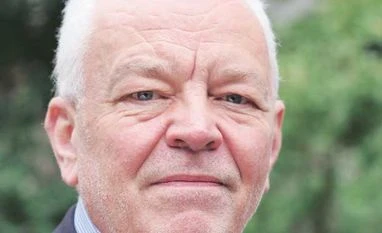 "Harald Sandberg")
Harald Sandberg, ambassador of Sweden to India, tells Subhayan Chakraborty that despite a slight dip in business confidence, Swedish companies are willing to increase investment. Edited excerpts:
According to a business climate survey of Swedish companies operating in India, fewer firms in 2015 considered India's business climate favourable compared to previous years...
The 141 companies which took part in the survey look at India as a growing place to invest in. The projections for investments and hiring are good. The slight dip in figures (in 2015) represent the anxieties businesses have on delays in implementation of key reforms.

What is the current profile of Swedish business in India?
There are 160 Swedish companies operating in the country, employing 160,000 direct jobs and 1.1 million indirect ones. Swedish firms in India increasingly want their voices to be heard. While only about 50 per cent of such companies participated in the survey two years ago, the figure rose to 90 per cent this year.
Are these firms looking to increase operations here?
Eight out of 10 Swedish companies are looking to raise investments, buoyed by increasing profits especially in the automotive and engineering products categories. One-third of such companies are into manufacturing and 70 per cent of them have started producing for the domestic Indian market as well as for foreign export purposes.
A significant share of Swedish businesses in India belong to the SME category. What is attracting these firms here?
Most of the SMEs have entered India in the past five years. They are far more sensitive to some of the reforms undertaken by the government especially in labour laws, infrastructure development and ease of business.
Since they don't have the infrastructure and resources available like their larger counterparts, those things matter to them more.
Not only SMEs, major companies such as H&M, Ikea, Saab, Volvo and Scania have also scale up their operations in India.
Are companies operating outside the traditional Swedish strongholds of information technology, electronics, and heavy engineering entering the Indian market?
We have just started seeing such firms coming in to India. Areas such as life sciences, bio-technology and retail are expected to grow significantly in the next few years.
Nearly 65 per cent of existing firms have complains about India's taxation policy. Why is that?
In the taxation space, we are really looking at the goods and services tax (GST) amendment kicking in to transform the way business is conducted.
Is the Swedish government looking to shore up investment from India into Sweden?
There's a growing presence of Indian companies in and around the capital region of Stockholm. Besides major companies such as Bharat Forge, L&T Infotech and Cadila Pharmaceuticals, around 20 Indian IT companies operate Sweden.
A large number of Indian students and professionals go to Sweden for education and employment. Will the European migration crisis impact Indians wanting to go to Sweden?
Absolutely not. Yearly, around 6,000 Indians get entry visas for working in Sweden. Also, Indians represent the largest non-European group of students in Sweden. We have one of the most liberal visa regimes in the world.
What is the perception of Swedish business moving out of the country among Swedish citizens?
We are a small free-trade nation based heavily on foreign investment and trade. As we a have a smaller population, Swedish people believe it is as important to have a business flourish in Sweden as it is in other parts of the world.
Swedish companies are mostly concentrated in the Delhi national capital region, Maharashtra and Karnataka. Any particular reason?
It's mostly due to historical reasons. Swedish industry first came to India when Ericson landed a hundred years ago. The second wave of industries came when Karnataka became a hub of automotive engineering.
Don't miss the most important news and views of the day. Get them on our Telegram channel
First Published: Feb 20 2016 | 12:03 AM IST