


World cup over, DTH brands acquire 4K shows
4K content for DTH players will comprise sports telecast and their repeat and acquired content
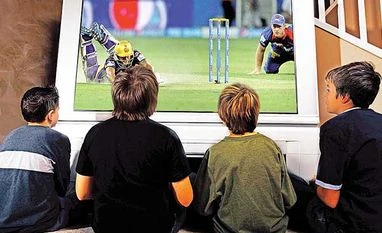)
The recently concluded ICC Cricket World Cup gave direct-to-home (DTH) operators an opportunity to launch their 4K technology, billed as the clarity level a step above high definition (HD). But the two operators are now left with the question of what next for their dedicated 4K channel that was airing the matches. Broadcast content shot in 4K on linear channels, after all, is yet to gain critical mass.
The two players that have rolled out their 4K offerings, Tata Sky and Videocon d2h, are, instead, beefing up their acquired content pipe-line.
Both the operators have dedicated channels to air 4K or ultra-high definition (UHD) content. While Tata Sky, for example, uses its channel number 400 for it.

"We are all looking for content to accumulate with the broadcasters across genres. If the past, i.e. HD, is any indicator of the future of 4K, then it will start with knowledge (infotainment) channels, sporadic sports events, English movies, followed by Hindi movies and then, the GECs (general entertainment channels). News will never happen," says Harit Nagpal, CEO, Tata Sky.
The company has signed contracts with the Discovery Network for infotainment and lifestyle content in 4K and is in talks with other infotainment networks.
Additionally, Tata Sky will show sports coverage in 4K (repeats of tournaments like FIFA World Cup 2014 and the Cricket World Cup) and has tied up with documentary film-makers who have shot on 4K.
"If tomorrow, we have adequate movies, my Showcase platform can venture into 4K. I will do a tie-up with anybody with content. If someone says they have 50 movies in 4K and they want to start a channel, then I shall give them space," says Nagpal.
Similarly, Videocon d2h CEO Anil Khera is in talks with studios for English movies in 4K and broadcast networks for fashion, lifestyle and infotainment content. "I see travel being a key category for 4K content along with English movies. We should be able to launch the new line-up by mid-April," says Khera.
Both Nagpal and Khera are bullish on the medium picking up speed in the next three to four years. "It would be just as it was with HD. We started with two channels, which became four, nine, 13, 22 and today 28. My guess is that there will be 80 in two years. It's all working parallel. The TV (television set) mass and the content mass are growing as of now. There will come a day when the two shall meet. That has already happened in HD. Fifty per cent of the new subscribers are choosing to go for HD connections. These are people who either own HD TVs, or are planning to do so in the near future," says Nagpal.
While still minuscule, the market for UHD TV sets is expected to reach 100,000 by May-June, 2015, according to estimates.
As for the HD market, Videocon sees 35-40 per cent of its new customers opting for HD, Tata Sky almost 50 per cent and Dish TV (the largest player) close to 30 per cent. Estimates say that 70,000-80,000 set-top boxes are upgraded to HD from existing SD connections every month.
Don't miss the most important news and views of the day. Get them on our Telegram channel
First Published: Apr 08 2015 | 9:39 PM IST