


Will Colgate repeat history and emerge as a winner?
Strong execution track record, continued market leadership and reasonable valuations currently place the company in good stead
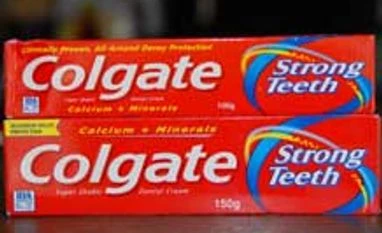 "Colgate")
The Colgate-Palmolive India (Colgate) scrip has lagged the Sensex over the past year as well as in the month gone by. In fact, it made a new 52-week low of Rs 791 on Friday, and there are multiple reasons for this. The first was the news about its parent Colgate-Palmolive undergoing restructuring and increasing the number of job cuts globally to 3,300-3,800 by December 2017. This number was earlier 2,700-3,200.
Although analysts believe the job cuts will not apply to India, the news had some impact on market sentiments. Also, the domestic business has been under pressure. Competition from Patanjali and Dabur has led to Colgate losing volume share in toothpastes. In the December quarter, Colgate’s volumes grew one per cent versus the segment’s 2.5 per cent.
Colgate is not new to competition. In fact, it has maintained leadership position in the Indian toothpastes market for many years now. The company has fought prolonged and costlier battles with Hindustan Unilever (Pepsodent and Close Up), P&G (Oral-B) and Anchor, and emerged stronger. This time, too, analysts believe Colgate is better placed.
“Patanjali, like Anchor, lacks a strong innovation culture and currently competes with Colgate based on a single major product, Dant Kanti (just like Anchor did in 1997). Once competitors introduce similar products in the herbal-ayurvedic space, Patanjali’s market share gains will be capped,” says Naveen Kulkarni, analyst at PhillipCapital research.
While Colgate's strong execution capabilities and record provide comfort, the company has been trimming advertising and promotional spends (as a percentage of sales, it has come down from 19.8 per cent in the June 2015 quarter to 15.6 per cent in the December 2015 quarter). This, along with softening input-cost inflation, has aided healthy margin expansion for Colgate. Given the company’s focus on premiumisation and better utilisation of expanded capacity, analysts expect Ebitda (earnings before interest, taxes, depreciation, and amortisation) margins to expand further by 80 basis points in FY17 over FY16 estimates. The ad spends could inch up as Colgate defends its market share.
Colgate’s shares trade at 32 times FY17 estimated earnings, lower than its historical average one-year forward price-to-earnings of 35.5. While the stock seems to capture most negatives, it is yet to be seen whether history will repeat itself, with Colgate emerging winner again.
Although analysts believe the job cuts will not apply to India, the news had some impact on market sentiments. Also, the domestic business has been under pressure. Competition from Patanjali and Dabur has led to Colgate losing volume share in toothpastes. In the December quarter, Colgate’s volumes grew one per cent versus the segment’s 2.5 per cent.
Colgate is not new to competition. In fact, it has maintained leadership position in the Indian toothpastes market for many years now. The company has fought prolonged and costlier battles with Hindustan Unilever (Pepsodent and Close Up), P&G (Oral-B) and Anchor, and emerged stronger. This time, too, analysts believe Colgate is better placed.
“Patanjali, like Anchor, lacks a strong innovation culture and currently competes with Colgate based on a single major product, Dant Kanti (just like Anchor did in 1997). Once competitors introduce similar products in the herbal-ayurvedic space, Patanjali’s market share gains will be capped,” says Naveen Kulkarni, analyst at PhillipCapital research.
Colgate’s shares trade at 32 times FY17 estimated earnings, lower than its historical average one-year forward price-to-earnings of 35.5. While the stock seems to capture most negatives, it is yet to be seen whether history will repeat itself, with Colgate emerging winner again.

Don't miss the most important news and views of the day. Get them on our Telegram channel
First Published: Mar 16 2016 | 10:21 PM IST