


 "Shekhar Gupta")
Shekhar Gupta
Shekhar Gupta
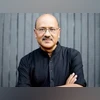
Shekhar Gupta is a senior journalist and author. He is the founder and current editor-in-chief of ThePrint. He was awarded the Padma Bhushan in 2009. He writes a weekly column for the Business Standard, which appears every Saturday. He has had long stints at The Indian Express and India Today.
Shekhar Gupta is a senior journalist and author. He is the founder and current editor-in-chief of ThePrint. He was awarded the Padma Bhushan in 2009. He writes a weekly column for the Business Standard, which appears every Saturday. He has had long stints at The Indian Express and India Today.


Page 7 - Shekhar Gupta/1000
Blue Revolution
Story of Indian cricket is that of a rise over two decades. It is no fleeting moment of glory like in 1983. The game has seen systemic changes, with pace attack, fitness, fielding as its key pillars

 "Blue Revolution")
Islam's struggle with nationalism
By reigniting West Asia just when we had begun to believe it had gone into deep sleep, Hamas has underlined the many contradictions within, and questions about, the Islamic world
 "Islam's struggle with nationalism")
Cup, country, club
Club sport and professionalism have softened hard nationalism. It began with football and is playing out in cricket - the ongoing World Cup is proof
 "Cup, country, club")
Israel & limits of military power
The last eight decades following WW-II and Israel's experience show that relying on military power, however formidable, is an ineffective approach to achieving a larger political, strategic objective
 "Israel & limits of military power")
No passion, no partisans, no sport
It's not a good idea to bring religion into the game, but all competitive sport is about passion. To expect a crowd not to be partisan when India and Pakistan play on each other's turfs is a fantasy
 "No passion, no partisans, no sport")
Beyond the war in Gaza
Netanyahu persisting with his sledgehammer approach where a scalpel might have worked is not wise. In the war of dead-baby pictures, the question of who's the real victim will be inevitably obfuscated
 "Beyond the war in Gaza")
What Bihar thinks today
Kanshi Ram was a genius and a political visionary, his ideas gave India an OBC Prime Minister. But Bihar-style caste census will be a very sad offering to the rest of the country
 "What Bihar thinks today")
Truce for Punjab's non-war
India must press on with its response to international questioning and criticism by Canada and allies
 "Truce for Punjab's non-war")
What do the Sikhs want?
About 95 per cent of Sikhs are proud to be Indian and there's no such thing as a Khalistan sentiment in Punjab
 "What do the Sikhs want?")
When INDIA gets angry
We must accept that the INDIA alliance has the right to boycott anybody it wishes. But the list of TV anchors is almost like painting a target on people's backs
 "When INDIA gets angry")
Congress, Modi, Team India
The Congress' support to critical elements of the Modi govt's foreign policy through Manmohan and Rahul's comments marks significant change for the better
 "Congress, Modi, Team India")
One nation, many elections
However one describes India, a union of states or unified federal nation, it would be tough for the Modi govt to exercise the power it has become used to if there are 18 or more states it doesn't rule
 "One nation, many elections")
Fallacy, fantasy, Global South
For India to think of leadership of the Global South, it needs a reality check. The odds of it becoming a Chinese Bloc in the emerging new bipolar world are high
 "Fallacy, fantasy, Global South")
Lifting Punjab's 'Kohrra'
Punjabis know how to weather adversity. They did so after Partition, and later after the phase of terror and militancy ended in 1993. Then, the state lost its way
 "Lifting Punjab's 'Kohrra'")
PM Modi reopens security debate
He has given us an opportunity to raise and explore one of the oldest questions in our national security debate: Which was the most dangerous decade in our history?
 "PM Modi reopens security debate")
Return of the 'big' state
India's latest laptop import restrictions are a matter of concern as nothing exemplifies the failures of the pre-1991 licence-quota raj more starkly than restrictions on electronic goods imports
 "Return of the 'big' state")
Run up to 2024: The BJP and INDIA seem to have skipped the semi-finals
Three factors make it a challenging election for Modi and BJP: Opposition alliance with a well-defined core, consolidation of the anti-BJP vote and a changed geopolitical situation
Confounded by Manipur
If the Congress made errors, the BJP should've given Manipur real change. Biren Singh's statements in the weeks leading up to the flare-up show the BJP persisted with the same policy of divisiveness
 "Confounded by Manipur")
Clueless in Imphal
Anarchy prevails in Manipur when India has its strongest central govt since Indira Gandhi's. Not even the writ of the omnipotent BJP high command runs there, as the Biren Singh drama suggests
 "Clueless in Imphal")
Phas gaye re Obama
Heads of state speak unfriendly things through proxies. Even as Modi and Biden met in the US, Obama made remarks on Indian democracy. But such interventions are short-lived excitement
 "Phas gaye re Obama")