


Every breath you take: Zimmer's Air-Borne explores mysteries of aerobiology
Air-Borne shows us how the scientific community came to understand that Covid-19 transmission was less akin to shots from a gun, and more like smog in a valley
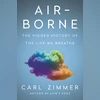 "AIR-BORNE: The Hidden History of the Life We Breathe")
AIR-BORNE: The Hidden History of the Life We Breathe
By Robert Sullivan
At the start of 2020, a small team of scientists tried and failed to convince public health organisations that Covid-19 was spread through the air we breathe. Why they failed, and how they ultimately won, is the subject of Carl Zimmer’s new book, Air-Borne.
AIR-BORNE: The Hidden History of the Life We Breathe
Author: Carl Zimmer
Publisher: Dutton
Pages: 466
Price: $32
Also Read

 "Learning from Silence")
 "CASTING THE BUDDHA: A Monumental History of Buddhism in India")
 "Meltdown: Greed, Scandal, and the Collapse of Credit Suisse")
 "The Red Emperor: Xi Jinping and His New China")
 "ALL OR NOTHING: How Trump Recaptured America")
Until 2020, explains Zimmer (a New York Times science columnist), scientists thought that respiratory diseases like Covid spread through droplets, and that these droplets had a limited range. Coughed up, they fell quickly to the ground — like “soggy raisins,” to use the vivid if disgusting terminology of a 1990s health official speaking about tuberculosis.
Thus the recommendation offered by the World Health Organisation (WHO): “Maintain at least one meter (three feet) distance between yourself and other people, particularly those who are coughing, sneezing and have a fever.”
Air-Borne shows us how the scientific community came to understand that Covid-19 transmission was less akin to shots from a gun, and more like smog in a valley. To explain, Zimmer takes us through the history of aerobiology, and in his detailed and gripping account, he ascribes the reluctance of both the Centers for Disease Control and the WHO to a bias born of an ancient battle between two factions known as “miasmatists” and “contagionists.”
According to miasmatists, bad air destroyed health. In the Middle Ages, swamps meant fever. And when Benjamin Rush looked for the cause of 1793’s deadly yellow fever outbreak in Philadelphia, he smelled bags of spoiled coffee: “Their sickness commenced with the day on which the coffee began to emit its putrid smell.”
In the 1800s, when contagionists began to see germs as culprits, their theories gained ground — partly beca–use tools had been invented to see their postulated micro-organisms. Starting in the 1870s, Robert Koch identified the bacterium that caused anthrax, then tuberculosis and cholera.
At the same time, still more micro–scopic organisms were shown to be airborne. The United States enlisted Amelia Earhart to track them by plane, while on the ground William Firth Wells and Mildred Weeks Wells, a brilliant if cranky couple, not known for winning over colleagues to their unorthodox way of thinking, mapped out the ways conta–gions spread through public spaces like schools. Their work indicated that tube–rculosis was airborne. Ditto measles, still among the most conta–gious diseases on record.
The Wellses hoped their research could protect the troops, warning that respiratory diseases killed more men than the Germans did in World War I. Their colleagues ignored them. The Army, however, became interested in weaponising airborne contagion, and the Wellses had shown how droplet nuclei could spread diseases over long distances.
“The bearing of these findings on bacterial warfare is far-reaching,” wrote Theodor Rosebury (in a report written with Elvin Kaba), a dentist recruited to run the Army’s secret Airborne Infection Project. Rosebury later renounced his work, which violated the Geneva Protocol’s biological weapons ban, but his writings, per Zimmer, encouraged the Soviets to build up their biological arsenal, further encouraging the United States to build up theirs.
It was a Catch-22 that endangered the world and coloured the way America managed public health threats. Bill Clinton, stoked in part by a fictional plot in The Cobra Event, took bioterrorism as a reason to further connect public health and national defence.
Under the George W Bush administration, Zimmer writes, billions of dollars went to fight abstract threats at the expense of actual ones — like HIV, tuberculosis, malaria, measles and cholera — that annually kill millions.
Through the 1990s, viruses were described in terms of war — the “single biggest threat to man’s continued dominance on the planet,” in the words of the Nobel laureate Joshua Lederberg. Slowly, researchers like Linsey Marr returned to the Wellses’ work, which was rooted in community.
An envi–ronmental engi–neer, Marr had shifted her focus from smog to the spread of influenza in 2009, a change inspired by her son, who regularly brought home sicknesses from day care. Marr was surprised at how little we knew about how viruses were transmitted, and she worked out the math. “Every year,” Zimmer writes, “she would turn to the chalkboard in her lecture hall and derive equations to show her students that particles much bigger than five microns can readily stay in the air for a long
time.” Winds, for instance, carry grains of sand.
The resistance to work like Marr’s was fierce: As Covid spread, The New England Journal of Medicine rejected her work, while Anthony Fauci discou–nted a warning by Lydia Bourouiba, an engi–neer at MIT who studied turbu–lence and whose research showed how breath followed the physics of aerosols, or clouds.
The debate could seem like miasmatists versus contagionists all over again. But researchers like Marr and Bourouiba were reframing public health generally, balancing the warlike defeat of a pathogen with a focus on building safe environments. “The Covid??'19 pandemic made the ocean of gases surrounding us visible,” Zimmer writes. Air-Borne shows us the ways seeing where we live means listening deeply — and being prepared to see what’s perhaps never been seen.
The reviewer is the author of the recently-published Double Exposure: Resurveying the West With Timothy O’Sullivan, America’s Most Mysterious War Photographer
©2025 The New York Times News Service
More From This Section
 "Narratives: The Stories That Hold Women Back at Work")
 "chart")
 "BOOK")
 "Chasing Salah: The Biography")
 "BOOK")
Topics : BS Reads BOOK REVIEW Book reading
Don't miss the most important news and views of the day. Get them on our Telegram channel
First Published: Mar 09 2025 | 11:26 PM IST