


Let My Country Awake: Miller's book omits nuances of the Ghadar movement
As Scott Miller writes in Let My Country Awake, the story of the anticolonial Ghadar movement, Indian migrant workers soon found themselves attracted to radical labour organisations
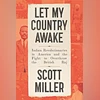 "LET MY COUNTRY AWAKE: Indian Revolutionaries in America and the Fight to Overthrow the British Raj")
LET MY COUNTRY AWAKE: Indian Revolutionaries in America and the Fight to Overthrow the British Raj


Listen to This Article
LET MY COUNTRY AWAKE: Indian Revolutionaries in America and the Fight to Overthrow the British Raj
by Scott Miller
Published by Farrar, Straus & Giroux
345 pages $30
Also Read

 "The Maker of Filmmakers: How Jagat Murari and FTII Changed Indian Cinema Forever")
 "Lo Bir Sendra: A Hunter in the Burning Forest")
 "DEVILS' ADVOCATES: The Hidden Story of Rudy Giuliani, Hunter Biden, and the Washington Insiders on the Payrolls of Corrupt Foreign Interests")
 "1929: Inside the Greatest Crash in Wall Street History — and How It Shattered a Nation")
 "Fly, Wild Swans: My Mother, Myself and China")
By Hari Kunzru
In the years before World War I, a wave of Indian immigrants arrived in the United States (US) seeking work. Many were Sikhs from the Punjab who took jobs in forestry and agriculture in the American West. Like the Chinese labourers lured to California decades earlier to help build the transcontinental railroad, Indian workers faced racism and violence. “The dusky Asiatics with their turbans will prove a worse menace to the working classes than the ‘Yellow Peril’ that has so long threatened the Pacific Coast,” read a 1906 article in The Puget Sound American.
The next year, in the town of Bellingham, about 90 miles north of Seattle, a huge mob of white residents chased hundreds of Indian loggers out of the barracks where they lived, destroying their property and beating anyone they could catch. Once news of the pogrom spread, it inspired similar rampages across the Western United States.
As Scott Miller writes in Let My Country Awake, the story of the anticolonial Ghadar movement, Indian migrant workers soon found themselves attracted to radical labour organisations like the Industrial Workers of the World, attending meetings that put them in contact with Indian students who were beginning to appear on American college campuses, especially at Stanford University and the University of California, Berkeley.
Along with other cultural imports, some Indian migrants brought with them an anti-imperialist fervour, and found it only further inflamed in their new country, where, Miller explains, they were derided as members of a subject people. “Many times kids will follow us in streets,” one Portland millworker recalled, “shouting ‘Hindoo slaves.’” It seemed that respect in America would only arrive with the end of British colonial rule in India.
The story of Ghadar (Urdu for “revolt”) is dizzyingly complex, and Miller, a former foreign correspondent for The Wall Street Journal, has excavated a fascinating trove of archival material. Uniting Sikh loggers with high-caste Hindu intellectuals, Ghadar was part of a larger diasporic movement dedicated to liberating India from British control. Members ran guns across the Canadian border, collected money for the cause in California and studied bomb-making at the University of Chicago. They were mostly based in North America, but Ghadarites also cultivated cells across the globe, from Singapore to London.
One centre of activity was Berlin, and when World War I broke out, expatriate Indians were quick to make common cause with Germans against the British. The government of Woodrow Wilson was determined to keep the US out of the conflict, even as US officials discovered that German spies were helping the Ghadar revolutionaries ship arms to India from the West Coast — and that British agents had descended on American soil to stop them.
One of the men doing the empire’s dirty work was William Hopkinson, whom Miller describes as an “immigration inspector turned self-taught spy.” Possibly of mixed Anglo-Indian descent, he sometimes wore a turban and false beard and went undercover in revolutionary circles, cultivating a network of informants and friendly media outlets on the Pacific Coast from British Columbia to the Bay Area.
Hopkinson spent several years tracking the activities of one Har Dayal, the intensely charismatic son of a prosperous family in Delhi. A polymath who studied Sanskrit at Oxford University, Dayal turned down a career in the Indian Civil Service to fight for national independence.
Driven and ascetic — he slept on the floor of his shabby Berkeley apartment — Dayal had all the attributes of a successful revolutionary leader. He was a canny operator, dodging traps set by Hopkinson’s contacts and adroitly exploiting the shifting American political terrain to avoid extradition to India, which would have meant execution or, at best, torture and hard labour in the feared British prison on the Andaman Islands.
After a run-in with American immigration authorities in 1914, Dayal slipped away to Switzerland. Later that year, Hopkinson was assassinated by a Ghadarite in a Vancouver courtroom where he was set to testify in the murder trial of a man who worked for him as an informant.
Many of the details are hair-raising, but some readers may be disappointed that Miller is not particularly interested in the nuances of revolutionary politics. The famous journalist and activist Agnes Smedley, who later embedded with Chinese Communist troops during the Second Sino-Japanese War, is patronisingly dismissed as a Dayal “groupie,” her political commitments reduced to a kind of sexualised fandom.
The reader also doesn’t learn much about the connections between Ghadar’s nationalist programme and its involvement in labour struggles among Punjabi agricultural workers in California and the Northwest. Nor is there a strong sense of the Pan-Asian intellectual and cultural networks cultivated by the Ghadar.
Let My Country Awake is at its strongest and most resonant when telling a very American story about immigration. By the start of World War I, foreign radicals had long been a source of concern in the United States, and British agents were keen to link Ghadarites like Dayal to Emma Goldman, the famous “Red” accused of involvement in the assassination of President William McKinley. After the war, the white supremacist historian Lothrop Stoddard decried a “rising tide of color” around the world, and such anxieties led to sweeping restrictions on Asian immigration to the US.
Nevertheless, as Miller shows, Dayal and his fellow freedom fighters occasionally won sympathy from the American public by invoking the nation’s own battle for independence. “I have come to the land of Washington,” one recent Indian arrival announced to his immigration officer, saying he wanted to learn from Americans how to throw off the yoke of British oppression. Much to his surprise, the officer waved him through: “Go, wish you success.”
The reviewer is the author, most recently, of the novel Blue Ruin.
©2025 The New York Times News Service
More From This Section
 "Waste Wars: Dirt Deals, International Rivalries and the Scandalous Afterlife of Rubbish")
 "After the Spike")
 "The Shortest History of AI")
 "UNABRIDGED: The Thrill of (and Threat to) the Modern Dictionary")
 "U Thant Book")
Topics : Book Reviews books Literature
Don't miss the most important news and views of the day. Get them on our Telegram channel
First Published: Nov 02 2025 | 11:02 PM IST