


STRONG ROOTS: Chef Olia Hercules' Ukraine memoir by way of her family tree
Strong Roots is its own kind of dam, against the rushing anguish of war and generational trauma
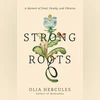 "STRONG ROOTS: A Memoir of Food, Family, and Ukraine")
STRONG ROOTS: A Memoir of Food, Family, and Ukraine
Listen to This Article
STRONG ROOTS: A Memoir of Food, Family, and Ukraine
By Olia Hercules
Published by Knopf
288 pages $30
By Alexandra Jacobs Also Read

 "Clouds over hiroshima")
 "BOOK")
 "Airstrip")
 "US flag, USA")
 "Vladimir Putin, Putin")
By now the therapeutic value of kneading bread dough is so well established as to be almost a cliché. But what of the psychic release from chopping cabbage?
“I often say that if I could do nothing else except chop for the rest of my days, I would be happy,” the chef Olia Hercules writes in Strong Roots, a memoir of her Ukrainian heritage.
Hercules lives in London, where she’s worked for Ottolenghi, the chain of restaurant-delis that made vegetables sexier than steak, and has written several delightful, conversational cookbooks, with recipes for dishes like Soviet goose noodles and watermelon skin jam.
Russia’s invasion of Ukraine in 2022 has fractured her family of origin. Her brother joined the Kyiv territorial defence forces. Her parents fled their home city of Kakhovka, where the destruction of the local dam in 2023 has been ecologically and economically devastating.
Strong Roots is its own kind of dam, against the rushing anguish of war and generational trauma.
Hercules’ maternal grandmother, Liusia, who died at 84 in the early aughts, emerges as a formidable heroine. During “holodomor,” Stalin’s intentional famine of Ukrainian peasants in the early 1930s, she was forcibly and most horribly “repatriated” with her siblings by cattle train to northern Russia. All of the terms for this are euphemisms.
“‘Deportation’ in English is too formal a word, which hints at something to do with law,” Hercules writes. “There was no law here. Just people who were robbed, murdered, deported or starved. The term they used in Russian was even worse, na poselenie, literally ‘to make a settlement.’ There was no settle in this settlement, more of an uprooting, a complete de-indigenization.”
On such trips many children froze to death and were “piled on top of each other, like logs.”
Liusia survived being pitched off the train into a snowy forest, found work as a nanny and later at a flower nursery and a vegetable canning factory. She met a man named Viktor at a dance. Soviet guidelines at the time mandated a distance of three centimeters between courting couples and forbade them to “dance in a distorted way,” but they managed, married and went on to have three sons and three daughters.
Viktor had won medals in World War II, but when he was caught scything a small amount of grain for the family cow during a famine, he was sent to a faraway gulag. When Stalin “croaked,” family members wet their eyes with saliva to hide their rejoicing from a compliant in-law.
Liusia sold fruit and eggs and educated herself reading Dumas and Hugo until the wee hours, then would wake early to milk the cow. She lived to try aerobics, cultivate a rose garden and, Hercules writes, “taught us to listen to our cooking.”
The author was also able to record tales of hardship from her Siberian paternal grandmother, Vera. Vera’s father, a cobbler, was taken away by Bolsheviks, never to be seen again; her mother fed her and three siblings sludge she scraped off a machine at the milk-processing plant where she worked.
Vera, too, almost perished in the snow, going to school. But she went on to marry three times. The second husband, one eye missing from nuclear testing, bringing some prosperity (though also corruption): stolen sausages swinging “like boxing bags” from the ceiling.
Can someone please cast and film the scene of Vera’s rebellious son Petro, Hercules’ father, sneaking snatches of “Stairway to Heaven” on a state radio in his small town through the static caused by government authorities jamming the enemy Western frequencies? And announcing in school that he preferred a James Bond spoof to the sanctioned Soviet war film?
Hercules is established as a food writer and has raised millions for her besieged country thanks to a #CookForUkraine initiative. But with Strong Roots she arrives on the map as an attentive nature writer too. Her passages about kayaking through waterlily-filled marshland; about walking along “the long living corridor” of grapevines; or about her young son’s teeth marks on the low-hanging apples in her mother’s abandoned orchard where the garden has five kinds of basil are a Technicolor dreamscape of what is being ravaged and lost. (Putin’s name appears but twice.)
“War is a beastly business,” wrote the food writer MFK Fisher in her revised introduction to “How to Cook a Wolf” (1942). “But one proof that we are human is our ability to learn, even from it, how better to exist.” Wending through wars past and present, hugging the family tree, Strong Roots shows a path.
The reviewer is a Times book critic and occasional features writer ©2025 The New York Times News Service
More From This Section
 "Mango: A Global History")
 "Why Your Strategy Sucks by Sandeep Das")
 "The Party's Interests Come First: The Life of Xi Zhongxun, Father of Xi Jinping")
 "Meet the Savarnas: Indian Millennials Whose Mediocrity Broke Everything")
 "Book")
Don't miss the most important news and views of the day. Get them on our Telegram channel
First Published: Aug 24 2025 | 9:14 PM IST