


Immigration raids: What rights migrants, US citizens have if ICE approaches
ICE is holding more than 68,400 people in detention. Here is what immigrants and US citizens should know if approached by officers
 "immigration raids")
US immigration detention: Immigrants should know if approached by US immigration officers
Listen to This Article
The number of people in immigration detention in the US has reached an all-time high, according to data published by US Immigration and Customs Enforcement (ICE). As of December 2025, ICE was holding more than 68,400 people in detention.
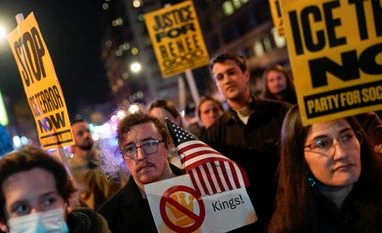
This figure breaks the previous record set earlier in December. The rise comes as immigration enforcement has widened across several cities. Minneapolis has emerged as a new focus of the Trump administration’s operations. In one incident, a woman was fatally shot during an ICE operation. While immigrants have been the primary target of enforcement, US media reports said the 37-year-old woman, Renee Nicole Good, was originally from Colorado and later moved to Minneapolis.
The case has raised questions about what immigrants and residents can do when approached by US immigration officers, particularly as enforcement actions extend beyond undocumented migrants.
What immigrants should know if approached by US immigration officers
Abhisha Parikh, a US-based immigration attorney, shared guidance in a social media post on how individuals should respond if stopped by ICE.
1. Remain calm and do not run.
Also Read

 "Dogs, Stray dogs, Street Dogs, Dog")
 "Employees Provident Fund Organisation, EPFO")
 "Australia's Adelaide")
 "Trump tariffs")
 "IDFC FIRST Bank")
2. If stopped by Immigration and Customs Enforcement, ask, “Am I free to leave?” If the answer is yes, walk away calmly.
3. Ask officers to show their badges. ICE agents sometimes wear uniforms that say “Police” even though they are not police officers, so it is important to confirm which agency they represent.
4. You have the right to remain silent, even if the officer has a warrant. Anything you say, including where you were born, your immigration status, or your criminal history, can be used against you.
5. Do not physically resist or reach for your belongings without permission, even if you believe ICE officials are acting unfairly or unlawfully.
6. You have the right to refuse searches of your car, house, phone, or person. 7. 7. You cannot be arrested for refusing consent. ICE may still search or frisk you if you are being arrested or if officers have a valid search warrant signed by a judge.
8. You do not have to discuss your immigration status or present immigration-related documents unless required. What you must provide depends on your status.
9. US citizens are not required to carry proof of citizenship while in the country.
10. Immigrants over the age of 18 with valid documents are legally required to carry them.
10. Never lie or present fake or fraudulent documents. If you do not have valid documents or only have identification from another country, say you want to remain silent and speak to a lawyer.
11. ICE cannot detain you without a reason to believe you are in the country without authorisation or have violated an immigration-related criminal law. Race or ethnicity alone is not a valid reason.
12. Make a plan in advance with family or friends in case of arrest. Memorise important phone numbers and emergency contacts.
13. Do not sign anything before speaking to a lawyer.
If arrested by ICE
• Request a lawyer.
• Tell officers you will remain silent.
• Say nothing else.
Legal options before undocumented immigrants, including Indians
Indian nationals should note that entering the US through illegal means can carry long-term consequences. Deportation can make future legal re-entry extremely difficult.
“There are not many legal pathways for those on illegal status, especially the ones with criminal records,” said Ajay Sharma, founder of Abhinav Immigration Services. “Even those without criminal records who try to file in any permitted category must leave the country once to get new status validated, and the probability of being denied re-entry is still very high.”
“The scope of entry and residency in other key destinations also gets restricted under the circumstances,” he added.
What US citizens can do if they witness ICE detention
If a neighbour, friend, or relative is targeted by ICE, Mariam Masumi Daud, an immigration attorney and owner of Johnson & Masumi, PC, shared guidance in a social media post on how bystanders can respond.
On the street or in a public place
Document everything
Use your phone to record. Capture statements, any aggression, and badge numbers or agency information.
Ask questions loudly
• “What is your name and badge number?”
• “What agency are you with?”
• “Why are you detaining this person?”
This creates public pressure and signals that the encounter is being watched.
Inform the detained person
Shout reminders of their rights:
• “You have the right to remain silent!”
• “Ask for a lawyer!”
• “Do not sign anything!”
Get contact information
If it is safe, ask the detained person for their name, date of birth, and who should be contacted. Ask loudly, “Do you want me to call someone?”
Do not physically interfere
Stay calm and do not obstruct officers. Recording and asserting rights is generally legal, but physical interference can be dangerous.
At a home or residence
Keep the door closed
Do not open the door. Even opening it slightly can be treated as consent.
Ask for a judicial warrant
Speak through the closed door and ask, “Do you have a judicial warrant signed by a judge?”
An administrative ICE warrant does not allow entry into a home.
Assert non-consent
State clearly that the person inside does not consent to questioning or entry.
Record and document
Note badge numbers, vehicle licence plates, and officers’ statements.
After a detention
Locate the person
Use the ICE Detainee Locator online. You will usually need the person’s full name and country of birth.
Gather documents
Collect immigration records, medical documents, tax filings, employment history, and proof of US citizen family members to support a bond request.
Contact a lawyer
If the person already has an immigration lawyer, share all available details immediately.
The Guardian has reported that immigrants with no criminal record continue to form the largest group in US immigration detention, despite repeated claims that enforcement targets “the worst of the worst” criminals. Being undocumented in the US is a civil, not a criminal, violation. The Trump administration has also moved to withdraw protections for many immigrants who were previously staying in the country legally.
More From This Section
 "Germany")
 "H1B visa")
 "Canada, Ottawa, Ontario")
 "education")
Topics : US immigration immigration BS Web Reports
Don't miss the most important news and views of the day. Get them on our Telegram channel
First Published: Jan 09 2026 | 4:16 PM IST