


SC raps states over illegal sand mining, flags risk to Chambal bridge
The Supreme Court criticised states over illegal sand mining after a forest guard's death, raising concerns over governance lapses and warning of risks to the Chambal bridge
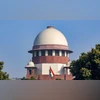 "SC, Supreme Court")
A Bench led by Justices Vikram Nath and Sandeep Mehta questioned the effectiveness of governance itself if officials could neither safeguard personnel nor protect natural resources. (Photo:PTI)
Listen to This Article
In the wake of a forest guard’s death, allegedly after being run over by a tractor linked to illegal sand extraction in Morena, Madhya Pradesh, the Supreme Court on Monday sharply criticised state authorities over their inability to control unlawful mining in the Chambal sanctuary belt.
A Bench led by Justices Vikram Nath and Sandeep Mehta questioned the effectiveness of governance itself if officials could neither safeguard personnel nor protect natural resources.
“It is happening under your nose. Affidavits say you don’t have weapons. Why at all the state government is existing? It’s a very peculiar thing. These excavators and bulldozers which mining mafia uses they are secular. They don’t see the caste of the person they are killing. As against… we should stop there. Extremely sad state of affairs. The State governments have totally failed. Or rather they are in connivance,” the Court remarked.
The observations came shortly after the Madhya Pradesh government acknowledged before the Court that its enforcement personnel were inadequately equipped to confront sand mining syndicates active in the Chambal region.
The proceedings form part of a suo motu case examining illegal sand mining across Rajasthan, Madhya Pradesh, and Uttar Pradesh.
Also Read

 "SC, Supreme Court")
 "Supreme Court, SC")
 "SC, Supreme Court")
During the hearing, the Court was also apprised of mining activity near critical infrastructure. It was informed that operations were underway around eight of the 34 pillars supporting the Ater-Fatehpur bridge, a route used daily by thousands.
Amicus curiae Senior Advocate Nikhil Goel flagged that extensive excavation beneath the structure had raised safety concerns.
“8 out of 34 pillars of the Chambal bridge have been affected, and about 25 to 50 feet of sand has been dug out from beneath the pillars,” he submitted. “We have seen the pictures. They are absolutely shocking,” the Bench responded.
Appearing for the State, Additional Solicitor General S V Raju said the guard’s death was under investigation and that a fact-finding panel had been tasked with examining mining beneath the bridge, with its report expected shortly.
The Bench, however, expressed scepticism: “That report will come after the bridge has collapsed and people have died?” In response, Raju assured that findings would be submitted within a week.
The Court also pressed the State on how such extensive activity had gone unchecked. “Why did you allow it to happen? Are the officials of the State blind?” it asked.
Flagging the urgency of intervention, the Bench indicated that immediate monitoring mechanisms were required. It suggested deploying high-resolution surveillance cameras on elevated structures in vulnerable zones and mandating GPS tracking devices in all vehicles involved in sand transport, including tractors and earthmoving equipment. “Any vehicle that passes through the area, it has to have a tracker,” the Court observed.
The Bench directed the Central Empowered Committee and concerned state authorities to examine the feasibility of these measures. The matter is scheduled to be taken up again on April 17.
More From This Section
 "Samvardhana Motherson")
 "Noida Protest, Protest")
 "Mathura boat tragedy")
 "Workers decorate a vehicle with flowers for carrying the mortal remains of singing legend Asha Bhosle, in Mumbai, Maharashtra, Monday, April 13, 2026")
 "Security personnel stand guard as factory workers stage a protest demanding a hike in wages, in Noida, Gautam Buddh Nagar district, Uttar Pradesh, Monday, April 13, 2026")
Topics : Supreme Court illegal mining Chambal
Don't miss the most important news and views of the day. Get them on our Telegram channel
First Published: Apr 13 2026 | 6:11 PM IST