


India's critical minerals demand set to surge 10 times by 2047: Report
Grant Thornton Bharat has called for faster investment in recycling, refining, traceability, and overseas assets as clean energy and electric mobility drive mineral demand
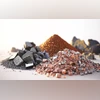 "critical minerals")
As renewable energy deployment accelerates, it said, demand for lithium, cobalt, nickel, graphite, copper, silicon and rare earth elements would rise sharply
Listen to This Article
As India rapidly transitions towards clean energy and electric mobility, demand for critical minerals and rare earth elements could increase four to ten times by 2047, according to a new report released by Grant Thornton Bharat on Thursday.
The latest report by the professional services and business consulting firm warned that India's push towards advanced manufacturing could be constrained by a looming shortage of critical minerals unless the country rapidly builds domestic capabilities beyond mining.
Stressing the need for a comprehensive overhaul of the critical minerals ecosystem, the report proposed a three-phase roadmap extending to 2047 that focuses on scaling recycling, refining, mineral traceability and domestic value addition, while calling for sweeping policy reforms across exploration, mining, processing, refining and downstream manufacturing.
It also suggested that strategic overseas partnerships and investments would be essential to secure long-term supplies of critical minerals, alongside targeted financing mechanisms to support capital-intensive projects across the value chain.
According to the report, Building a Critical Minerals Ecosystem in India, the country's critical minerals challenge has moved beyond simply securing raw resources. The country now needs to develop an integrated value chain that can support the government's clean energy targets, electric vehicle manufacturing, battery storage expansion and strategic sectors such as defence and semiconductors.
Also Read

 "India-myanmar")
 "Representative Image | Image Credit: Reuters")
 "mining")
 "A smelting plant that processes extracted copper ore, a critical mineral for India, into pure metal in Dahej, Gujarat. Photo: Hindalco")
 "critical minerals")
“India's target of installing 500 GW of non-fossil fuel power capacity by 2030, coupled with rapid electrification of transport, will trigger an unprecedented surge in demand for critical minerals. EV battery demand alone is expected to reach 110-130 GWh by 2030, while Battery Energy Storage Systems (BESS) could require around 145 GWh of storage capacity,” the report stated.
As renewable energy deployment accelerates, it said, demand for lithium, cobalt, nickel, graphite, copper, silicon and rare earth elements would rise sharply, making reliable access to these resources a strategic necessity rather than merely an economic issue.
Grant Thornton Bharat has projected that demand for key critical minerals could rise four to ten times as India moves towards its Net Zero 2070 commitment. Copper demand alone is expected to increase more than fivefold by 2047, while consumption of battery minerals such as lithium, graphite, nickel and cobalt is projected to multiply as renewable energy and electric mobility gain scale. Overall demand for select critical minerals could reach between 6 million and 8 million tonnes by the early to mid-2040s.
However, the report cautioned that India remains heavily dependent on imports for several strategically important minerals. While minerals such as copper, graphite, phosphorus, titanium and rare earth elements have identified domestic resources and offer scope for import substitution through enhanced exploration and downstream processing, others, including lithium, cobalt, gallium, platinum group elements, germanium and beryllium, continue to suffer from negligible domestic reserves or inadequate technological capabilities.
The report argued that traditional approaches such as mining or overseas acquisitions would not be sufficient because developing new mines can take between 10 and 20 years. “Circularity could be the faster and more sustainable alternative as recycling infrastructure can be established within two to four years while reducing emissions by nearly 80 per cent. Globally, recycling could reduce new mining requirements by 25-40 per cent by 2050, while the worldwide recycled critical minerals market is expected to expand from around $40 billion in 2020 to nearly $200 billion by 2050,” the report said.
Despite policy momentum through the ₹34,300 crore National Critical Mineral Mission (NCMM), the ₹1,500 crore Critical Mineral Recycling Incentive Scheme and customs duty exemptions on several critical minerals, the report pointed out that India's recycling ecosystem remains underdeveloped.
“Although India generates around 1.75 million tonnes of e-waste annually, which is expected to reach 54 million tonnes by 2040, its lithium-ion battery recycling capacity is only about 2 GWh against expected battery demand of around 115 GWh by 2030. Formal collection of end-of-life materials remains below 8 per cent, while nearly 95 per cent of dismantled materials continue to be handled by the unorganised sector,” it said.
The report proposed a three-phase roadmap extending to 2047. During the first phase, between 2026 and 2031, it recommended establishing Extended Producer Responsibility (EPR) mandates, developing Circular Mineral Processing Zones (CMPZs), introducing battery traceability systems, restricting scrap exports, incentivising recyclers and strengthening skill development.
The second phase, between 2031 and 2036, focuses on industrialising the ecosystem through expanded recycling infrastructure, large-scale traceability systems and mobilisation of green finance. The final phase, stretching from 2036 to 2047, envisages achieving strategic self-reliance by reducing import dependence, generating an annual recycling economy of $10-15 billion and contributing significantly to India's net-zero ambitions.
The report also recommended major policy reforms to improve investment in the sector. These include shifting auction criteria away from maximising government revenue towards ensuring long-term resource security, introducing exploration-led allocation of mineral blocks, adopting mineral-specific auction strategies, mandating domestic beneficiation and refining, expanding production-linked incentives for processing industries, rationalising royalty structures and speeding up statutory clearances.
“Despite seven rounds of critical mineral auctions covering 88 blocks, prolonged approvals have prevented any newly allocated mine from commencing commercial production,” the report pointed out.
Recognising India's dependence on overseas resources, the report called for a stronger global acquisition strategy. It recommended constituting a sovereign critical minerals fund, expanding public-private partnerships with international mining companies and leveraging government-to-government agreements with resource-rich countries, besides providing concessional finance and sovereign guarantees for overseas investments and securing refining and processing assets abroad.
Such measures, it said, would reduce India's dependence on a limited number of supplier countries while strengthening long-term supply security and positioning India as a globally competitive player in critical minerals over the coming decades.
More From This Section
 "Sun Pharma")
 "MSMEs")
 "gig workers social security scheme India 2026, accidental insurance gig workers India policy, Code on Social Security 2020 gig workers benefits, gig economy workers pension proposal India, EPFO 3.0 gig worker scheme India, NITI Aayog gig workforce es")
 "RPG GROUP")
 "fuel, petrol, diesel")
Don't miss the most important news and views of the day. Get them on our Telegram channel
First Published: Jul 30 2026 | 2:26 PM IST