


Pine Labs IPO: Tech-driven growth, hidden risks; what investors should know
Pine Labs IPO: comprises a fresh issue of 94.1 million shares aggregating to ₹2,080 crore, and an OFS with investors divesting up to 82.3 million shares worth ₹1,818.9 crore
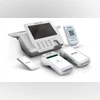 "Pine Labs IPO")
Pine Labs IPO | Photo: Company website
Listen to This Article
Pine Labs IPO: Indian merchant commerce platform Pine Labs is set to launch its maiden public issue on Friday, November 7, 2025. The public issue comprises a fresh issue of 94.1 million shares aggregating to ₹2,080 crore, and an offer for sale (OFS) with investors divesting up to 82.3 million shares worth ₹1,818.9 crore.
Pine Labs IPO will be offered at a price band of ₹210-221 per share. The minimum application size has been set at 67 shares per lot. The issue will remain open for subscription till Tuesday, November 11, 2025. The company’s shares are tentatively scheduled to make their D-Street debut on November 14, 2025.
Kfin Technologies is the registrar for the issue. Axis Capital, Morgan Stanley India Company, Citigroup Global Markets India, JP Morgan India, and Jefferies India are the book-running lead managers.
According to the red herring prospectus (RHP), the company plans to use ₹532 crore from the net fresh issue proceeds for repayment or prepayment of certain borrowings, and ₹60 crore for investments in subsidiaries, including Qwikcilver Singapore, Pine Payment Solutions Malaysia, and Pine Labs UAE, to expand internationally. Additionally, ₹760 crore will be allocated to IT assets, cloud infrastructure, technology development, and DCP procurement. The remaining funds will be used for general corporate purposes.
ALSO READ | Lenskart IPO GMP remains positive on final day, subscription surpasses 3x
Here are the key risks associated with investing in Pine Labs IPO:
Financial challenges: Pine Labs has incurred losses in recent periods, including a loss of ₹145.48 crore in fiscal year 2025 (FY25), mainly due to total expenses accounting for 104.29 per cent of total income during the same period. There is no guarantee that the company will not continue to experience losses in the future, the company said in its RHP. Additionally, Pine Labs has reported negative cash flows from operations, with net cash used in operating activities amounting to ₹281.19 crore for the three months ended June 30, 2025. The company may continue to generate negative cash flows going forward.
Also Read

 "Amrish Rau, CEO, Pine Labs")
 "B Amrish Rau, CEO of Pine Labs")
 "Pine Labs IPO")
 "IPO Calendar")
Customer concentration: As per the RHP, if Pine Labs is unable to retain existing customers or attract new ones, its business, financial condition, and operating results could be materially affected. The company’s revenue is concentrated among a few key clients, with the top 10 customers contributing 29.30 per cent and 30.95 per cent of total revenue for the three months ended June 30, 2025, and FY25, respectively. Any decision by these customers to reduce or discontinue business with the company could have a significant impact on its operations and financial performance.
Regulatory oversight: Pine Labs’ operations are regulated and monitored by the Reserve Bank of India (RBI) and Reserve Bank Information Technology Private Limited (ReBIT). Any adverse findings, proceedings, or notices from these authorities could negatively impact the company’s business, financial condition, results of operations, and future prospects.
Protection of proprietary assets: Pine Labs relies on its trademarks, patents, trade secrets, and proprietary technologies to maintain its competitive edge. The company and its material subsidiary currently hold 147 trademarks, 33 active domains, and 2 patents, with additional trademark and patent applications pending. Unauthorised use by others or claims of infringement could negatively affect the company’s business and competitive position.
Dependence on payment methods: The company said its future growth and financial performance could be adversely affected by a decline in the use of credit cards, debit cards, prepaid cards, UPI, wallets, or other payment methods on its platform, negative developments in the payment processing industry, or reduced demand for alternative financial services.
ALSO READ | Groww IPO opens for bidding: Check GMP, price band, key dates, review
Key competitive strengths of Pine Labs:
Expanding ecosystem: According to the RHP, Pine Labs connects merchants, consumer brands, enterprises, financial institutions, consumers, and software partners, creating a densifying ecosystem that enhances transactions, data insights, and solutions. This network effect attracts more participants, enabling multiple monetisation opportunities. As of June 30, 2025, the company’s ecosystem included 988,304 merchants, 716 consumer brands and enterprises, and 177 financial institutions, showing steady growth since FY22.
Platform scale and profitability: The company claims to be a leading provider across its digital infrastructure and issuing & acquiring platforms. In FY25, it was the largest in gift card issuances and digital affordability solutions in India, and a key Bharat Connect transaction processor. The platform processed ₹11,424.97 billion in GTV and 5.68 billion transactions, serving 988,304 merchants, 716 consumer brands, and 177 financial institutions as of June 30, 2025.
Scalable technology platform: Pine Labs operates a cloud-based, full-stack technology platform designed for scale, speed, and security in digital commerce. Its API-first, modular architecture enables rapid integration, customisation, and agile deployment, while supporting high transaction volumes and ensuring operational resilience.
Innovation and strategic acquisitions: As per the RHP, the company has introduced a broad range of commerce solutions through continuous innovation and strategic acquisitions. Leveraging its technology platform and understanding of partner needs, the company has enhanced its offerings through acquisitions, including Qwikcilver (Pine Labs Prepaid), Mosambee, Qfix, Setu, and Credit+.
Pine Labs IPO GMP
According to the sources tracking unofficial markets, the unlisted shares of Pine Labs were trading at ₹256 apiece in the grey market, commanding a premium of ₹35 or 16 per cent compared to the upper end of the price band of ₹557 to ₹585.
More From This Section
 "Lenskart IPO GMP")
 "Groww IPO opens today")
 "Studds Accessories IPO allotment")
 "SEBI")
 "Groww")
Topics : IPO Analysis Pine Labs Fintech IPOs IPO market IPO GMP Markets
Don't miss the most important news and views of the day. Get them on our Telegram channel
First Published: Nov 04 2025 | 11:58 AM IST