


Economic risks constrain Indian and Chinese banks, says S&P
Banks in India and China will continue to face pressures on their asset quality, profitability over next 12-24 years, report said
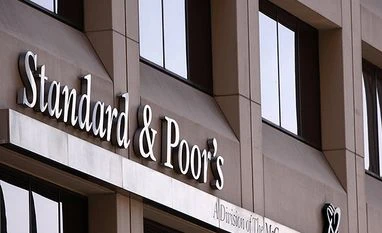 "Standard & Poor's office building in New York")
<a href="http://www.shutterstock.com/gallery-287167p1.html?cr=00&pl=edit-00">gary yim</a> / <a href="http://www.shutterstock.com/editorial?cr=00&pl=edit-00">Shutterstock.com</a>
Standard and Poor (S&P) on Tuesday said banks in India and China would continue to face pressure on their asset quality, profitability, and capitalisation in the next 12-24 months.
According to S&P Global Ratings Credit Analyst Geeta Chugh, economic risks would remain high for Indian and Chinese banks because of their constraining credit profiles. Non-performing loan ratios of Indian banks with high exposure to companies in troubled sectors would continue to rise. Whereas, for Chinese banks, continuing weak cash flows for companies were likely to worsen asset quality for lenders.
S&P on Wednesday had released a report, Economic Woes Cast a Shadow on Indian and Chinese Banks. The report claimed that asset quality for Indian and Chinese banks was likely to remain under pressure because of slow industrial recovery in India and overcapacity in many Chinese industries.

S&P said interest-rate liberalisation and deepening debt capital markets in India could weaken the banking sector's net interest margin (NIM). Likewise, China’s financial reforms, local government debt swaps, and deepening domestic debt capital market will shrink bank profitability and asset yield.
“NIMs will compress for Indian banks with corporate focus and higher bad loans. Banks are also likely to reduce lending rates further, after having cut base lending rates by 70-90 bps in the past few quarters. Also, continuing high credit costs will also limit any meaningful improvement in profitability.”
Indian banks would have sizable capital needs to support growth and meet Basel-III requirements, it said. Chinese banks were also likely to maintain strong momentum of capital-instrument issuance.
Most Indian public sector banks would have to rely on external capital infusion. Their ability to generate internal capital has been hit largely because of the pressure on asset quality in the past few years.
“In view of the potential shortfall in capital, India's public sector banks will need to continue to explore other funding options, including additional Tier-1 issuance, and funding from insurance companies or equity capital markets,” according to S&P.
Referring to credit growth in India, S&P said it had fallen sharply, reflecting the weak corporate credit demand as well as capital challenges that most public sector banks are facing. “We expect loan growth in India's banking sector to be 11 per cent to 13 per cent in the current financial year.”
Don't miss the most important news and views of the day. Get them on our Telegram channel
First Published: Aug 03 2016 | 12:35 AM IST