


There is no need for undue worry over banks' health: R K Bansal
Interview with CDR Cell Head & Executive Director, IDBI Bank
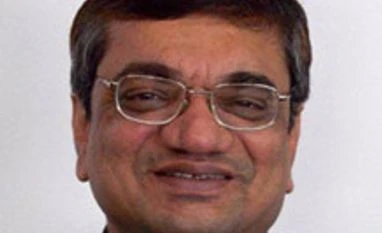 "R K Bansal")
R K Bansal
India's banking sector has become an ugly duckling for investors as high interest rates have resulted in a sharp build-up in stressed assets.
R K Bansal, head of the CDR (corporate debt restructuring cell) and also executive director, IDBI Bank, in an interview with Malini Bhupta and Abhijeet Lele defends restructuring done by banks, as he believes that corporates are genuinely in need of hand-holding at this point.
The first half of the fiscal has seen cases referred for restructuring to be twice that of last year at Rs 66,500 crore. Could you throw some light on the cases and approval rate?
In the first half of the fiscal (ended September) a total of 57 cases have been referred to the corporate debt restructuring cell, adding up to Rs 63,500 crore. Of this we have approved, 28 cases adding up to Rs 35,000 crore till September 25. At least three or four more would have been approved by the end of the month.
Can you share some specific names of the cases that have been approved?
Most of the cases of stress continue to be in the steel, power and infrastructure sectors
From the look of it, the velocity of restructuring is not ending as the market and investors had expected. What do you think?
It’s a function of when economic growth will pick up. Most companies or groups do not default deliberately or want to restructure. It is true that there was some over-leveraging that happened for a few years and then the equity markets dried up and other issues like coal, land and gas availability cropped up.
Nobody expected while lending that gas and coal availability would be an issue. Today some steel and power projects are stalled, because of non-availability of fuel, which was not expected. There are several projects for funds have been sanctioned but they have not drawn as their projects have not taken off.
Also, one must understand why companies are unable to service debt. In the power sector, state electricity boards have not been making their payments on time, which has affected companies supplying power to them. One infrastructure company for instance had receivables of Rs 6,000 crore from Karnataka and Uttar Pradesh SEBs, which affected their debt-equity ratio.
Are banks continuing to fund projects in sectors where there is potential of stress later?
Banks will fund projects in any sector which are considered viable. Banks will also ensure that projects which were funded earlier, are completed.
Are you looking at companies individually or as groups?
We are now also looking at the group as a whole and not only project or company. For instance, we have five-six cases of one group, so we need to know what is happening to the group.
There have been instances where there have been different consortiums lending to different projects of the same company. So we are looking at the group as an entity even though we can restructure only the company and not the entire group.
Since things have not changed since 2011, do you think companies could default on their restructured debt too?
If they cannot pay after restructuring, then that account will become a non-performing loan. We have seen 10-15% of restructured cases defaulting on payment obligations.
Investors and analysts are worried about the health of the banking sector and the kind of stress that is being accumulated through NPAs and restricting?
It is a fact that there is stress in the system. The total share of stressed assets – combination of non-performing loans and restructured loans – is below 10%. So we feel there is no need for undue worry over the health of the banking sector.
Are banks not merely deferring the pain by restructuring?
Restructuring has become necessary due to slowdown and lack of fuel linkages and raw materials. These companies are suffering but they still continue to operate. The power companies despite rising receivables are still generating power. We should understand why this pain started and we should not paint all groups with the same brush.
Some companies have overstretched and borrowed from banks in the hope they would raise money from equity and foreign currency convertible bonds (FCCB).
But when the equity markets fell, FCCB, which was supposed to be equity got converted into debt and the companies had to pay redemption premium also. We have to understand that these companies are developing roads, power and infrastructure for the country.
There are many power and steel projects which were planned but did not see light of the day. Banks would be more cautious to fund road projects, where land acquisition has not been done.
Isn’t The level of NPA and restructured debt in the banking system worrying?
Between 1999-2002, NPA levels were at 13%, but now both restructured and NPAs account for less than 10%. China’s NPAs would be higher and that is the case with all developing economies. Project loans should be treated differently. Just because a project gets delayed, it does not mean that the project should be written off.
What about wilful defaults?
There is a proper procedure to recognize a wilful defaulter. A case of wilful default would not be restructured in line with CDR norms.
Do you see restructuring to continue at the same pace going forward?
The pace of restructuring is slowing down but will still be around for another 12-18 months. After April 2015, if banks restructure debt they will to declare such cases as NPA, though some restructuring will be required even then.
Banks are being criticized for restructuring large amounts. Please comment.
The recast is not linked to loan amount. It will be recast taking into consideration the conditions and viability independent of amount involved.
You have spoken about costs that banks have to absorb due to debt recast? In what way banks suffer due to heavy restructuring?
Banks have to provide for fall in the net present value of the loans due to reduction in the future interest rates. Second, they have to make 100% provision funded interest on term loans. Three, lenders have to make provisions for mark to market losses if instruments (like bonds) are allotted as part of recast package.
Fourth, they have to set aside amounts - five% -- as provision of the total debt value. So, actual provisions are about 10% of restructured debt.
More From This Section

Don't miss the most important news and views of the day. Get them on our Telegram channel
First Published: Oct 11 2013 | 12:47 AM IST