


Oil extends gains after Russia, Saudi Arabia sign pact
The global benchmark on Monday hit a near one-week high of $49.40 after the Russia-Saudi news
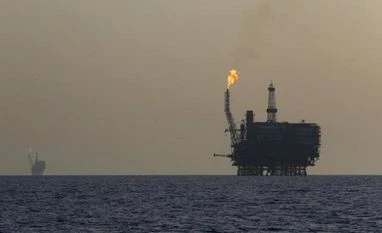 "Oil extends gains after Russia, Saudi Arabia sign pact")
Oil prices extended gains on Tuesday, buoyed after top producers Russia and Saudi Arabia agreed to cooperate on stabilising the oil market, but a lack of immediate action to rein in output capped gains.
London Brent crude for November delivery was up 22 cents at $47.85 a barrel by 0643 GMT, after settling up 80 cents on Monday.
The global benchmark on Monday hit a near one-week high of $49.40 after the Russia-Saudi news, but has since pared gains after Saudi Energy Minister Khalid al-Falih said there was no need now to freeze production. He added, however, that freezing output was one of the preferred possibilities.
NYMEX crude for October delivery did not settle on Monday due to US Labor Day holiday. It was trading roughly 30 cents higher from late Monday, up 94 cents at $45.38 a barrel. It rose as high as $46.53 on Monday, the highest since Aug. 30.
Russian Energy Minister Alexander Novak said Russia and Saudi Arabia were moving towards a strategic energy partnership and that a high level of trust would allow them to address global challenges.

The Organization of the Petroleum Exporting Countries and non-OPEC producers such as Russia will hold informal talks in Algeria later in September.
"The two nations' cooperation is understandable," said Kaname Gokon, a strategist with Okato Shoji Co Ltd. "But when oil output is reduced, other producers would receive the benefit. There is still a question whether they can cut production for a sustainable period."
Several OPEC producers have called for an output freeze to rein in the glut, which arose as supplies from high-cost producers such as the United States soared. Russia's Novak said outright oil production cuts may also be discussed in Algeria.
The last talk on output freeze collapsed in April as Saudi Arabia refused to sign on without Iran's participation.
Brent rallied to above $50 a barrel in late August, helped by growing talk of a coordinated production freeze, but prices have since fallen as few believe OPEC will act.
Iran said it would cooperate on the freeze once its output returned to 4 million barrels per day before sanctions, a level that could be reached within two or three months.
That could lay the groundwork for the output freeze deal possibly at OPEC's meeting in late November, rather than a meeting this month in Algeria, Gokon added.
Don't miss the most important news and views of the day. Get them on our Telegram channel
First Published: Sep 06 2016 | 12:30 PM IST