


'The Elements of Power' uncovers the dirty truth behind clean-energy EVs
Electric vehicles promise a green future, but the dirty reality of battery supply chains raises a harder question: climate solution-or the next environmental and human cost?
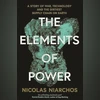 "THE ELEMENTS OF POWER: A Story of War, Technology, and the Dirtiest Supply Chain on Earth")
THE ELEMENTS OF POWER: A Story of War, Technology, and the Dirtiest Supply Chain on Earth
Listen to This Article
THE ELEMENTS OF POWER: A Story of War, Technology, and the Dirtiest Supply Chain on Earth
By Nicolas Niarchos
Published by
Penguin Press
461 pages $32
Also Read

 "aa")
 "Allahabad High Court")
 "Delhi")
 "branded residence, housing, real estate")
 "Rapido")
Peter S Goodman
No object is marketed with a greater sense of messianic promise than the electric vehicle. Here, we are told, is the corrective to centuries of environmental catastrophe as the price of material gain. Here is the antidote to climate change.
Yet that framing has always sat uneasily alongside a troubling reality: Extracting and processing the raw materials needed to make the electric car’s central element — the batteries — entails its own environmental destruction, along with the exploitation of workers.
The journalist Nicolas Niarchos is intent on confronting us with this tension, transporting us on a world tour of its uncomfortable implications. His book, The Elements of Power: A Story of War, Technology, and the Dirtiest Supply Chain on Earth, is a deeply reported revelation of the human costs of mining the minerals on which those batteries depend, from cobalt in the Democratic Republic of Congo to nickel in Indonesia.
His account is grounded in colonial history and extended into the present, with Chinese companies and migrant workers cast as the contemporary iterations of the Belgians who tore up Congo and the Dutch who (principally) occupied the archipelago now known as Indonesia, their violent adventures undertaken in pursuit of buried treasure.
More broadly, he unravels the supply chain for lithium-ion batteries powering a vast range of consumer electronics, from the iPhone to laptop computers, extending accountability to American brands like Apple and Tesla.
Niarchos is an intrepid and curious correspondent. He introduces us to so-called artisanal miners in Congo, people who risk their lives and meagre fortunes in a harrowing effort to harvest valuable rocks from the earth. He takes us to the Indonesian island of Sulawesi, where Chinese companies and migrant workers have turned an isolated stretch of coastline into a teeming hive of processing plants for nickel mined at enormous scale, and where farmers decry the despoliation of the land.
He examines the development of the lithium-ion battery industry in Japan. He tells the story of how China transformed from a poor country full of bicycles into the world’s leading source of electric vehicles.
Unfortunately, this trove of material is served up with scant attention to narrative. The result is a book that is frequently a bewildering slog. We are everywhere and nowhere, deprived of an overarching argument for why we must understand the 1970s oil crisis, the market reforms of the Chinese premier Deng Xiaoping or the chemistry of the cathode. The experience is like struggling to put together a complicated jigsaw puzzle without getting to look at the image on the box.
Supply chains are complex and vast, linking people and companies separated by borders and oceans. Their examination requires carefully executed journalistic strategies to engage the reader. We need a product to follow on its path to the marketplace, or well-developed characters through whom we vicariously glean insights as they grapple with a problem. We need a crucial question to chew on — a mission for our journey.
At bare minimum, we need a narrator who tells us why we are going where we are going, and what we hope to grasp when we get there. Niarchos abdicates that fundamental duty, yanking us from here to there and back again absent any discernible organising principle. He withholds judgment, leaving us to sift through ambiguous implications as we try to assemble a coherent takeaway from an often overwhelming barrage of facts.
His rendering of how China emerged as the leader in electric vehicles properly puts the focus on effective industrial policy, and, especially, on the distribution of subsidies to Chinese buyers to get the market going. China alone has expended the brainpower and capital to assemble the supply chain for a truly mass-market electric vehicle industry. Laying out the messiness of that undertaking is a worthy objective, but it does not obviate the need to deal with bigger questions: Is this industry part of the solution to climate change, or its own new plague?
Niarchos does not wrestle with how China’s labour and environmental standards might be improved or whether, as he intimates throughout, we should simply fear China’s expanding reach. He delivers a public service in dispensing with the tempting idea that we should simply cease the extraction of minerals, given the damage. “To meet climate goals that will make a dent in global warming, we need to massively invest in environmentally responsible mining,” he concludes.
What might that look like? The supply chain Niarchos investigates is full of perils and heartbreak — legitimate terrain for a book. But we are left unenlightened about whether the current battery revolution is the beginning of something useful, or just another wrong turn.
The reviewer is the global economic correspondent for The Times and author of How the World Ran Out of Everything: Inside the Global Supply Chain ©2026 The New York Times News Service
More From This Section
 "Tiny experiments: How to live freely in a goal-obsessed world")
 "Eclipsing the West: China, India and the forging of a new world")
 "A Short History of the Gaza Strip")
 "We Are Eating the Earth: The Race to Fix Our Food System and Save Our Climate")
 "FLY, WILD SWANS: My Mother, Myself and China")
Don't miss the most important news and views of the day. Get them on our Telegram channel
First Published: Jan 25 2026 | 10:58 PM IST