


Centre bans paraquat dichloride herbicide over human health concerns
The plant protection chemical has already been banned in more than 70 countries for various reasons, the most prevalent of which is its adverse impact on human and animal health
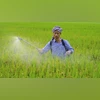 "Farmers, Farmer, agriculture, fertilizers")
Listen to This Article
The Centre has issued a draft order proposing a ban on the widely used herbicide paraquat dichloride, citing concerns over its adverse impact on human health, a continued history of poisoning incidents and the absence of a specific antidote.
Stakeholders have been asked to submit objections to the draft ban order by August 13, according to an official notification.
Paraquat dichloride has already been banned in more than 70 countries, largely because of concerns over its impact on human and animal health.
Industry sources said paraquat dichloride is a non-selective herbicide used to control weeds and grasses in agricultural and non-agricultural areas, and plays an important role in modern weed-management systems.
In India, paraquat dichloride (24 per cent soluble liquid) is widely used in crops such as tea, coffee, cotton, paddy, sugarcane, maize, rubber, grapes, wheat and other plantation crops. It is a contact herbicide that rapidly desiccates weeds by damaging plant cell membranes within hours of application.
Also Read

 "fertiliser, agriculture")
 "kharif")
 "In this image received on July 8, 2026, Union Agriculture Minister Shivraj Singh Chouhan with Afghanistan acting Minister of Agriculture, Irrigation and Livestock Mawlawi Ataullah Omari during a bilateral meeting, in New Delhi. (PIB via PTI Photo)")
 "Climate change drought, famine")
 "fertiliser subsidy, urea prices, fertiliser reforms, ICRIER, fertiliser imports, El Nino, kharif season, National Fertilisers, DAP, fertiliser sector")
According to 2023-24 trade data, the technical material used to manufacture paraquat is imported in bulk consignments of 17,000-35,000 kg from Taiwan, China and the United Kingdom. Based on commonly adopted field recommendations, a single bulk consignment can support weed-management operations across nearly 21,000-44,000 acres.
Several leading companies in India's agrochemical sector market paraquat formulations.
Reacting to the proposed ban, Kalyan Goswami, director general of the Agro Chem Federation of India, said the move would pose significant operational and economic challenges for the agricultural sector.
“We shall be reaching out to the authorities to engage in further dialogue to explore balanced solutions that address safety without compromising the livelihoods of our farmers,” Goswami said.
He said paraquat, considered the third most widely used herbicide globally, remains important for rapid weed control across multiple crops by helping farmers tackle labour shortages, reduce manual weeding costs, and support timely land preparation and conservation agriculture.
“Most severe poisoning cases involve intentional ingestion rather than regulated agricultural use. Although no specific antidote exists, this is not unique, as several agrochemicals rely mainly on preventive handling and supportive treatment,” Goswami added.
The industry also said paraquat is used as a pre-plant or pre-emergence treatment, post-emergence herbicide, harvest aid and post-harvest desiccant. Given its toxicity profile, it is already classified as a Restricted Use Pesticide, with no products registered for homeowner or residential use.
More From This Section
 "Kharif crops, agriculture, farming, farmers, soyabean, sowing")
 "Shivraj Singh Chouhan, Minister of Agriculture and Farmers Welfare of India")
 "d-agri-new")
 "S Mahendra Dev, chairman of the Economic Advisory Council to the Prime Minister")
 "kharif sowing 2025, arhar acreage, urad acreage, soybean sowing India, cotton sowing delay, pulses import impact, paddy sowing increase, monsoon farming India, groundnut acreage growth, pest attack on cotton")
Topics : Agriculture Fertiliser health Farming
Don't miss the most important news and views of the day. Get them on our Telegram channel
First Published: Jul 14 2026 | 6:59 PM IST