


Govt to prepare state-specific agri roadmaps based on soil, water, climate
Shivraj Singh Chouhan says will use satellite-based remote sensing to provide relief from recent rains
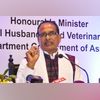 "Shivraj Singh Chouhan, Shivraj Singh, Shivraj")
Chouhan’s statement came after the first regional agriculture conference organised in Jaipur today. Large tracts of farmland across North and Central India have been impacted due to the recent unseasonal rains. He said farmer IDs would also come in handy in this. (File photo:PTI)
Listen to This Article
Agriculture Minister Shivraj Singh Chouhan today assured farmers that the Centre is scientifically assessing their crop losses due to the unseasonal rains using satellite-based remote sensing, enabling state governments to provide relief under the disaster relief fund and ensure quick settlement of insurance claims.
Chouhan’s statement came after the first regional agriculture conference organised in Jaipur today. Large tracts of farmland across North and Central India have been impacted due to the recent unseasonal rains. He said farmer IDs would also come in handy in this.
Chouhan, at the conference, batted for state-specific crop planning, a nationwide Farmer ID system, and an aggressive push towards self-reliance in oilseeds and pulses.
He said the country would be divided into five agro-climatic zones, with tailored agricultural roadmaps for each state based on soil, water, climate and resource conditions. The move marks a shift from the earlier one-size-fits-all national conferences for Kharif and Rabi seasons, which he said limited detailed consultations.
A key pillar of the new framework is the rollout of a unified Farmer ID, expected to be operational within three months. The ID will integrate access to fertilisers, seeds, crop insurance and compensation, ensuring targeted and transparent delivery of benefits.
Also Read

 "NBFC, NBFCs")
 "gold, jewellery")
 "IT Rules")
 "mining minerals mines")
 "Sandeep Ghosh, Group Country Manager, India & South Asia, Visa")
The minister said a Madhya Pradesh-style fertiliser distribution model—based on land and crop data—would be scaled nationally, reducing queues, curbing black marketing and enabling even tenant farmers to access inputs with landowner consent.
He also directed states to quickly create farmer IDs for all so that fertiliser sales could be linked to the same. Chouhan said the government is also doubling down on oilseed self-sufficiency under the National Edible Oil Mission–Oilseeds.
India’s oilseed output touched a record 43 million tonnes in 2024–25, up from 40 million tonnes a year earlier, while productivity rose to 1,412 kg per hectare from 1,314 kg.
Building on this, the Centre has earmarked ₹10,103 crore to expand cultivation area from 29 million hectares to 33 million hectares, raise productivity to 2,112 kg per hectare, and increase production to 69.7 million tonnes.
More From This Section
 "urea, farmer, fertiliser")
 "wheat")
 "Ethanol")
 "mustard")
 "fertilisers, urea")
Don't miss the most important news and views of the day. Get them on our Telegram channel
First Published: Apr 07 2026 | 9:21 PM IST