


Govt, NITI Aayog to revise toll fee framework amid overcharging complaints
PAC seeks time-bound completion of study, full audit of NHAI amid plaints
 "toll plaza, fastag, fast tag, tolling fee")
The PAC said that the ministry should discourage subcontracting beyond one level — contractor to one subcontractor.
Listen to This Article
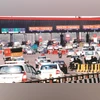
Amid rising cases of toll being charged on national highways (NHs) even after the end of the concession period, the Ministry of Road Transport and Highways (MoRTH) has initiated a study with central policy think tank NITI Aayog to revise the user-fee determination framework, it has informed the Public Accounts Committee (PAC) of Parliament.
In its report, the PAC, chaired by Congress Member of Parliament (MP) K C Venugopal, said that collecting toll beyond the concession period creates a regime of “perpetual tolling”, asking for an overhaul of the process.
“The Committee notes that the ministry has acknowledged this and initiated a study with NITI Aayog to revise the user-fee determination framework, including base rates, inflation indexing, and concession structures. The Committee recommends that the ministry pursue the proposed study — being initiated through NITI Aayog in collaboration with reputed academic institutions — and ensure that it is time-bound and result-oriented,” the PAC said in its report “Levy and regulation of fees, tariffs, user charges, etc. on public infrastructure and other public utilities”.
According to the fine print of the deliberations between the Committee and the ministry, the former was told that the contours of the study have been finalised.
“This issue had come up in the last PAC hearing also… So, after about 17 years now, we will be re-looking at the base rates too,” a ministry representative told the PAC, adding that it has requested NITI to engage institutions like IITs and IIMs for this study.
Also Read

 "biking, motorcycles, motor bikes")
 "Bridge Collapsed, Bridge, Gujarat Bridge Collapsed")
 "Mathura: Vehicles ply on the Delhi-Agra National Highway amid fog, in Mathura, Thursday, Nov 14, 2024. (Photo: PTI)")
 "Nitin Gadkari, Nitin, Gadkari")
 "Nitin Gadkari, Nitin, Gadkari")
“The Committee desires that toll collection on any highway stretch must be rationalised and substantially reduced once capital and routine maintenance costs have been recovered. Any continuation of tolls beyond this point should be permitted only if clearly justified and approved by the proposed independent oversight authority. The Committee also urges that all existing contracts and publicly funded toll plazas allowing tolling beyond cost recovery must be reviewed in light of these principles to safeguard user interest and uphold the principle of equity in public infrastructure usage,” the Committee said.
Allegations of excessive toll collections on NHs have been a thorn in the government’s side recently, with citizens and opposition parties alike questioning the toll rationale in view of substandard highway quality on several stretches.
“The Committee, therefore, recommends that the ministry establish a tariff authority, on the lines of the Airports Economic Regulatory Authority (AERA) in the civil aviation sector, to ensure transparency and fairness in toll fixation, collection, and regulation. This authority should be mandated to review and determine periodicity of toll revisions based on certain parameters,” the PAC said.
The Committee also called out the ministry on the practice of subcontracting in NH projects. Subcontracting is when the primary developer assigns or outsources part of the obligations and tasks under a contract to another party.
“The Committee notes that in the ministry’s own submissions, much of the road infrastructure is executed by subcontractors, who might not be accountable under the primary contract framework. The Committee notes that this unchecked layering of contractors and subcontractors, particularly in engineering procurement construction, Build Operate Transfer, and Hybrid Annuity Mode projects, has led to diffusion of accountability, where the Authority has limited leverage to enforce quality standards or timely delivery,” it said.
The PAC said that the ministry should discourage subcontracting beyond one level — contractor to one subcontractor.
“If further subcontracting is absolutely necessary, it should only be allowed with special approval from the National Highways Authority of India (NHAI). NHAI must ensure that all subcontractors are registered, get prior approval, and are clearly documented,” it said.
The Committee also recommended a third-party audit of NHAI’s workings, which should evaluate the effectiveness of the Authority’s organisational structure, the functioning of its different verticals, the adequacy of internal controls, and the degree of compliance with statutory and regulatory frameworks.
More From This Section
 "Supreme Court, SC")
 "artificial intelligence")
 "bankruptcy, IBBI")
 "Bowbazar jewellery market, gold prices Kolkata, gold sales drop India, wedding season gold demand, retail gold prices India, gold price impact on shopping, gold jewellery sales slowdown, gold prices breach ₹1 lakh, lightweight gold jewellery demand,")
 "IBC, RBI, Reserve Bank of India, CIRP, Insolvency and Bankruptcy Code")
Don't miss the most important news and views of the day. Get them on our Telegram channel
First Published: Aug 13 2025 | 8:46 PM IST