


IEW 2025 : India on track to meet 2030 energy goals, says PM Modi
India will reach 20 per cent ethanol blending by October, Modi said
 "Modi, Narendra Modi")
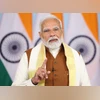
The prime minister said India has 500 million metric tonnes of sustainable feedstock | (Photo: PTI)
Listen to This Article
India is on track to meet its 2030 energy goals, and will achieve 20 per cent blending in ethanol by October this year, Prime Minister Narendra Modi said on Tuesday.
“Many of our energy goals are aligned with the 2030 deadline. By 2030, we aim to add 500 gigawatts of renewable energy capacity. The Indian Railways has set a target of achieving net-zero carbon emissions by 2030. Our goal is to produce five million metric tonnes of green hydrogen annually by 2030,” Modi said in a recorded message at the inaugural session of the India Energy Week 2026, the government's premier energy event.
The Prime Minister said India has the necessary resources, innovation, political stability and strategic geography to become a major producer of energy.
Noting that the country is currently blending 19 per cent ethanol, which has led to foreign exchange savings, substantial revenue generation for farmers, and a significant reduction in CO2 emissions, Modi said, “We are on track to achieve a 20 per cent ethanol mandate before October 2025.”
Earlier, the target to achieve 20 per cent base fuel blending was set to be achieved by 2030, but it was later revised and stated to be achieved by the end of 2025.
Also Read

 "Hardeep Singh Puri, Hardeep Singh, Hardeep")
 "Modi, Narendra Modi")
 "India Energy Week (IEW 2025)")
 "Juniper Green Energy")
 "solar panel")
E20 petrol (petrol blended with 20 per cent ethanol) is also now available at over 15,600 outlets in the country. Meanwhile, the government had also launched E100 fuel in March 2024. It includes 93-93.5 per cent ethanol blended with 5 per cent petrol and 1.5 per cent co-solvent, which is a binder.
The Prime Minister said India has 500 million metric tonnes of sustainable feedstock.
Elsewhere in the renewable space, solar energy generation capacity has expanded 32 times in the past 10 years, Modi said. India is the third largest solar power country in the world, while also raising its non-renewable generation three times.
The PM also raised the issue of solar Photovoltaic cells manufacturing in India. The latest budget has given the push to ensure India can quickly act on battery and storage policies, he said.
Modi said India's sedimentary basin has a lot of untapped hydrocarbons, with many already been identified and several remaining unexplored.
Currently, an estimated 10 per cent of India's 3.36 million sq km wide sedimentary basin is under exploration, and the government plans to increase this to 16 per cent by 2025-end. However, this is far below the government's target of India's exploration acreage to 1 million sq km by 2030.
India is currently the fourth largest petroleum refining hub, which is expected to rise further, the PM said. The government believes refining capacity utilisation will grow from 256 million tonnes to 309 million tonnes by 2028.
More From This Section
 "LNG, Gas")
 "Iron ore")
 "Prestige Ocean Towers")
 "Building on its case to transform India's state-owned ports into self-reliant commercial entities, the Ministry of Ports, Shipping and Waterways is considering expanding the autonomy of major ports in making decisions regarding capital expenditure (c")
 "fertiliser")
Don't miss the most important news and views of the day. Get them on our Telegram channel
First Published: Feb 11 2025 | 12:03 PM IST