


Is India next luxury superpower? Hublot CEO bets on strategy, innovation
At BS Manthan, Hublot CEO Julien Tornare delved into what it takes to build a global luxury powerhouse, why authenticity and innovation matter, and whether India can create its own LVMH
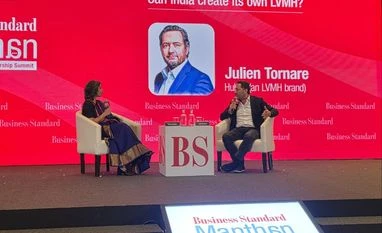 "Hublot CEO Julien Tornare")
Hublot CEO Julien Tornare speaking during a fireside chat at BS Manthan on Friday, February 28. (Photo: Business Standard)
Listen to This Article
India is on the brink of a luxury boom. But success depends on strategy, innovation, and time in market, believes Hublot CEO Julien Tornare.
Speaking at BS Manthan, Business Standard’s annual thought leadership summit in New Delhi, Tornare shared his insights on what makes a luxury brand truly global, how India can build its own LVMH, and why balancing heritage with modernity is crucial in the evolving luxury landscape.
But, in the first place, does luxury matter? “No, you don’t need luxury,” Tornare admits. “By definition, luxury is about feeling accomplished and happy. You don’t need a watch when you can check the time on your phone. But luxury provides emotion, pleasure, and a sense of achievement. That’s why it matters,” he said. Read: BS Manthan Live Updates
Recipe for a global luxury brand
India is no stranger to discussions about establishing a global luxury presence. Prominent voices, including Uday Kotak, founder and director of Kotak Mahindra Bank and India’s G20 Sherpa and former Niti Aayog CEO, Amitabh Kant, have highlighted the need for India to create its own Louis Vuitton or LVMH equivalent. But what does it take to build a world-renowned luxury brand?
“LVMH is a powerhouse, now owning 75 brands across a highly diversified portfolio,” Tornare said, adding, “Successful brands thrive on authenticity and the ‘country of origin’ effect. When people think of high-end shoes, they think of Italy. For fashion, it’s France or Italy. For luxury watches, it's Switzerland. These associations create credibility and desirability.”
India as a luxury market: The road ahead
“India is an important market for us and many other luxury brands,” Tornare said. “But it’s more about timing. Louis Vuitton entered India 22 years ago. Hublot was among the first watch brands to arrive 20 years ago, and we’ve been patient. The right retail environment for luxury is evolving, with more high-end shopping malls coming up. But beyond infrastructure, a brand needs to establish itself early to gain a competitive edge — just like we did in China decades ago,” he said.
What can India learn from Hublot’s success?
At just 45 years old, Hublot is a relatively young brand that has established a unique identity in the Swiss watch industry. What can India learn from its success? “Many Swiss watch brands lean heavily on their heritage,” Tornare explained.
“Hublot is different. We focus on innovation and the future of watchmaking. Every brand must appeal to younger generations, and that requires staying relevant. India, with its rich heritage, must balance tradition with innovation,” he said.
He further cited Hublot’s pioneering work with materials like coloured ceramic, sapphire, and magic gold. “When I visited India, people told me the market still prefers traditional gold. That’s fine. But as preferences evolve, innovation will become a key driver,” Tornare added. Also Read: BS Manthan: Electronics industry faces 'Y2K' moment, says Dixon's Vachani
Building India’s global luxury presence
India boasts a rich heritage of craftsmanship in textiles and jewellery, yet achieving global recognition remains a challenge. To shine on the world stage, “two things matter: tourism and global exposure,” Tornare said.
“People visit India for culture, history, and food — not necessarily for luxury shopping. Cities like Dubai, Singapore, and London attract shoppers with world-class retail experiences. India needs to develop similar spaces. The Indian diaspora worldwide can also play a role in promoting Indian luxury brands,” he said.
He also pointed to South Korea’s success in exporting its culture through K-pop and television, which has boosted demand for its luxury brands. “India has the potential to do something similar,” Tornare added.
Institutional support and challenges
Many Indian luxury brands, like Sabyasachi and Tarun Tahiliani, are recognized by their designer names rather than as global institutions. A structured backing could make a difference, as Tornare believes institutional support is crucial.
“LVMH has established brands over decades by leveraging synergies within its group. In India, major players like Reliance and Aditya Birla Fashion are investing in luxury. However, high taxes on luxury goods remain a barrier. Lowering these could encourage both global and homegrown brands to flourish,” he said.
When asked if government support for luxury is realistic, he pointed to global precedents. “Yes, governments do support luxury. High tariffs can deter brands, but strong local branding can encourage Indians to buy at home and abroad, just as China achieved over time.”
Hublot’s vision for India
Meanwhile, Tornare views India as a high-potential market for future growth. “If I had to pick the top two markets for future growth, India would be one of them. That’s why I’m here just eight months into my role. I want to strengthen our presence — not just for Indian customers shopping abroad, but right here in India," he added.
More From This Section

 "Bhupender Yadav in Manthan")
 "Amitabh Kant at BS Manthan")
 "Amitabh Kant at BS Manthan")
Topics : luxury watches Luxury brands Promoting luxury Luxury market luxury goods LVMH Louis Vuitton Gucci BS Web Reports
Don't miss the most important news and views of the day. Get them on our Telegram channel
First Published: Feb 28 2025 | 5:29 PM IST