


We strive to be holistic growth partners of SMEs: Kavi Arora
Interview with CEO, Religare Finvest Limited
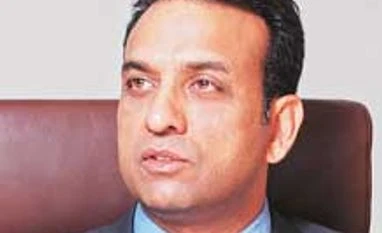 "Kavi Arora")
Kavi Arora
Religare Finvest Limited (RFL), a subsidiary of Religare Enterprises Limited, is a small and medium enterprise- financing-focused non-banking finance company. Through its network of 25 branches, RFL provides debt capital to SMEs. The company also runs a retail capital market-financing business, which includes loans against marketable securities. RFL's Chief Executive Officer, Kavi Arora, in an interview with Komal Amit Gera, discusses current trends in SME lending and lays out a roadmap for the company's future. Edited excerpts:
How do you assess the credit-worthiness of SMEs?
In our SME financing segment, we have tried to build a robust loan portfolio while minimising and managing credit risks. We employ strict risk management standards to reduce credit risks and maintain asset quality, and we have developed robust recovery processes. We do credit appraisal at each level in the organisation. The credit decisions are approved at branch, regional and central head office level. Each division independently appraises the applicants' established business and earnings and approves the credit application for loans.
Also Read

We utilise advance statistical tools like customer behaviour scorecards for early identification of potential risks in our portfolios and to take corrective actions as required. The reports provide detailed information on various portfolio segments and ascertain the risks. In addition, periodic collection reviews are conducted on delinquent customers and segments to identify and evaluate any problem areas, to drive collection efficiencies and future acquisitions.
What are the various verticals under which you lend?
We continue to be a dedicated SME-focused debt capital provider and our bouquet of offerings consists of working capital, loans against property, loans against marketable securities, and employee stock option financing.
What are RFL's focus areas?
We continue to maintain a granular focus on providing growth capital to SMEs, as we believe that SMEs are the backbone of our economy and there is a huge funding gap to the extent of '26 trillion, according to an estimate by the International Finance Corporation. In this endeavour, we strive to be holistic growth partners and handhold SMEs and family-managed businesses in their growth journey, instead of just remaining a capital provider for them.
We also believe in optimising returns while maintaining the quality of our loan book and in delivering superlative return on equity to all our shareholders, including external shareholders who have endorsed our business model. (We have two private equity funds, Jacob Ballas and Avigo Capital, which have invested in Religare Finvest.) We also focus on building a direct-to-customer coverage programme, while leveraging our footprint and presence by closely working with regulators, trade bodies and associations and other collaborative institutions; and on developing and up-skilling our existing staff to achieve these objectives.
Do you provide start-ups with funds?
No, we do not fund start-ups, unless they are promoted by existing entrepreneurs who stand as co-applicants or guarantors to the loan.
How did market uncertainty and exchange rate volatility affect your business?
The market slowdown or the macroeconomic environment ultimately affects everyone in the business. Our lending business is to provide growth capital to SMEs and they do get impacted, as the slowdown has resulted in an increased working capital cycle for everyone, thus increasing interest costs for SMEs and depleting their margins. This can start impacting their capability to repay their debt in time. The construction equipment and heavy commercial vehicle segments have been specifically stressed for repayment, and our lending to these segments has been restricted.
The Union ministry of micro, small and medium enterprises has been aggressively promoting development initiatives for new clusters and upgradation of existing clusters. Do you try and create any synergies with them?
We try to participate in policy advocacy and actual implementation of new schemes through our membership in industry
associations. Our people visit the clusters to gain insights into the needs of SMEs and provide debt to small players, as per their needs.
Do you have plans to expand your branch network?
SMEs in India are located in clusters and are largely concentrated in 15-20 locations. As per our assessment, 75 per cent of the market opportunity lies in 15 locations. We are covering 85 per cent of the total business opportunity with our present footprint. We are aiming at the diversification of our portfolio, rather than geographical expansion, and that suits the needs of SMEs and lending institutions.
Don't miss the most important news and views of the day. Get them on our Telegram channel
First Published: Mar 17 2014 | 10:48 PM IST