


Pink: The male gaze defeated
Pink paints a nuanced picture of the feudal perspective with which women are viewed in India
 "Pink: The male gaze defeated")
Shoojit Sircar's Pink brings the male gaze out into the open in all its regressive, ugly powerfulness. In the first half, the movie is a document of the omnipresence of the male gaze in society. The movie, set in Delhi, depicts the demands of this gaze on women, on the way they should dress and behave.
The male gaze thrives on impunity. As feminist writer V Geetha had written in the aftermath of the December 2012 gang-rape: "Sexual violence always crosses the line but it is not therefore a singular or exceptional act. It has a family resemblance to more quotidian acts, which are seldom viewed, experienced or even understood as such. The scanning of women's bodies, marking them, with numbers, adjectives, the reducing of a being to an object of appraisal, stalking, surveillance... These acts of scanning and marking define male public behaviour, set standards for maleness, make for levels of male bonding and comradeship." ("On Impunity", Economic & Political Weekly.)
In the movie, three independent women, Minal (Taapsee Pannu), Falak (Kirti Kulhari), and Andrea (Tariang), are put at the mercy of a criminal justice system that is always tilted against them. The women are molested by upper class men, but stand trial for attempt to murder because of their decision to resist. The most touching scenes in the movie are those of companionship between the three, even when those close to them lose faith. It is also one of the few movies where one of the lead characters hails from Meghalaya.
They are held guilty for having gone to a rock concert, for having accompanied men they barely knew to a resort, for having had consensual sexual relationships outside marriage in the past, and for wanting to live independently, despite having a family living in the same city.
These "crimes" were reason enough for the men to think the women were willing to have sex with them. However, Minal hits Rajvir Singh (Angad Bedi) with a bottle when he tries to rape her and this then becomes a crime, because she resisted.
A case of attempted murder is filed against the women. The writers depict the patron-client network that the Indian state is in all its brutality. The proximity of Singh to power - his uncle is a politician - helps the men concoct a case against the women of having solicited sex. Every attempt is made to break them, including trying to force the women's landlord to evict them, kidnapping Minal and molesting her for a second time in a car.
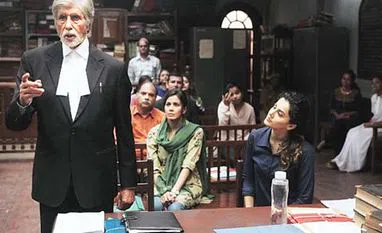
However, a retired lawyer, Deepak Sehgal (played brilliantly by Amitabh Bachchan), who lives in the neighbourhood and is battling mental illness takes an interest in the case and decides to help the women.
Sehgal shifts the focus back on to the male gaze even as the prosecution lawyer, played by Piyush Mishra, makes every detail of the women's life public in an attempt to break their resistance. Mishra is fantastic as the belligerent prosecution lawyer, who makes you revolt.
Towards the end, Bachchan castigates Singh for displaying a feudal mindset. However, these mindsets are not necessarily confined to feudal structures and continue to exist in capitalist societies. And yet, it is capitalism that provides the women in the movie the space to work and earn their livelihood and live independent lives.
Sehgal's closing argument that "no means no", delivered brilliantly, ends the matter and the judge finds the men guilty.
More From This Section

Don't miss the most important news and views of the day. Get them on our Telegram channel
First Published: Sep 17 2016 | 12:16 AM IST