


'Strangers in the Land' traces Chinese workers' rise and expulsion in US
But you can't paint a complete picture of America without this story, and The New Yorker journalist Michael Luo tells it persuasively in this book, a granular account of Chinese migration to US
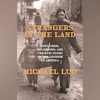 "STRANGERS IN THE LAND: Exclusion, Belonging, and the Epic Story of the Chinese in America")
STRANGERS IN THE LAND: Exclusion, Belonging, and the Epic Story of the Chinese in America
Listen to This Article
By Steve Inskeep
The story of Chinese Americans really gets going with one of the great early episodes of globalisation. The discovery of gold in California in 1848 brought tens of thousands of fortune seekers from around the world, including some from China.
STRANGERS IN THE LAND: Exclusion, Belonging, and the Epic Story of the Chinese in America
Author: Michael Luo
Publisher: Doubleday
Pages: 542
Price: $35
Also Read

 "ANANDA: An Exploration of Cannabis in India")
 "PRATAP: A Defiant Newspaper")
 "UNIT X: How the Pentagon and Silicon Valley Are Transforming the Future of War, OWNED: How Tech Billionaires on the Right Bought the Loudest Voices on the Left, PROFITS & PERSECUTION: German Big Business in the Nazi Economy and the Holocaust")
 "The Feminisms of Our Mothers")
 "HBR DAILY LEADER: Everyday Wisdom for Exceptional Leadership")
What happened next is the sort of history that many schools, states and the Trump administration have lately deemed dangerous and divisive. Chinese people and their descendants helped to build the country while enduring generations of abuse.
But you can’t paint a complete picture of America without this story, and The New Yorker journalist Michael Luo tells it persuasively in Strangers in the Land, a granular account of Chinese migration to the United States.
In an even-handed style that yields neither a woke polemic nor a sanitised past, he traces the lives of immigrants to a country that actively drew them in and then tried to push them out.
Luo, a former investigative reporter for The New York Times, relentlessly accumulates facts from old newspapers, court records and immigration cases. Parts of the story are hard to uncover, even though the outlines are well known. School children can tell you, for example, that in the 1860s the builders of the first transcontinental railroad recruited Chinese men to lay tracks through the snowy Sierra Nevadas. They outworked everyone else during this high point of America’s national development. But not even the finest scholars can figure out who most of these hammer-swinging people were. While railroad bosses took pride in them, they couldn’t tell the foreigners apart, and didn’t write most of their names on the payroll.
Despite such obstacles, Luo finds an incredible number of characters. Although he describes the book as “the biography of a people,” it succeeds through its little biographies of individuals — a range of quirky and fascinating figures, both Chinese and white, who drive the narrative. We follow entrepreneurs like the “Chinese courtesan” Ah Toy, an immigrant to San Francisco who sold sex-starved prospectors the chance to “gaze on her countenance” and saved enough gold dust to go into business as a madam.
On the other side of the country, we meet Yung Wing, the first Chinese student at Yale. By the time this enthusiast for America returned to China, he had almost forgotten his native language. Then the Chinese government, eager for Western knowledge and technology, sent Yung back in the 1870s with dozens more students in tow. Americans welcomed the scholars into their homes — until China cut short Yung’s mission, fearing the students had grown too comfortable with the local customs and religion.
I read this book while covering the early moves of the second Trump administration and also while reporting in China, and kept finding parallels to current events. In the 19th century, American capitalists welcomed Chinese labourers — the railroad magnate Collis P Huntington said, “It would be all the better for us and the State if there should be a half million come over” — but many politicians described their arrival as an “invasion.”
Some constituents assumed that Chinese migration was a form of slavery. Chinese workers were stereotyped as “coolies,” controlled by the Chinese bosses who contracted out their work. Luo casts doubt on this idea, but reports that Chinese labourers were sometimes used against their white counterparts. Opponents of Chinese migration claimed to be taking a progressive stance for free labour.
Those opponents transformed the country’s concept of border security. In early American history there was no class of people called “illegal immigrants,” because few laws governed movement to the United States.
That changed specifically for the Chinese. By the mid-1880s, only certain kinds of people — merchants, teachers and students — were allowed to disembark from the ships. Even they were barred from citizenship.
Critics said the flow of Chinese migrants abetted human trafficking. Enticed by promises of marriage, some women, especially in the 1860s and 1870s, were brought to San Francisco for prostitution. If husbands didn’t come to pick them up, they were presumed to be prostitutes. A US Supreme Court justice ultimately intervened in favour of the women, ruling that a state could not legislate immigration.
The Chinese American population did not grow significantly until Congress passed the Immigration and Nationality Act of 1965, which overturned the old rules and made it possible for Chinese Americans to begin bringing over their relatives. But descendants of the earlier arrivals are among us today. Luo’s book recounts the family story of Connie Young Yu, a historian from California. Her ancestors include a railroad worker from the 1860s, a woman who was separated from her children by immigration authorities in 1924 and a veteran of World War II.
In the 1870s, the Supreme Court Justice Stephen J Field reasoned that the recently passed 14th Amendment, guaranteeing “equal protection of the laws” to “any person,” applied to immigrants. Years later, in an 1889 decision, Justice Field called the Chinese “strangers in the land” and wrote that the federal government had the right to expel them to resist “foreign aggression”.
Then there is Frederick Douglass. Fresh from the fight against slavery, he said the Chinese newcomers had “the right of locomotion; the right of migration; the right which belongs to no particular race; but belongs alike to all and to all alike.”
Not everyone agreed that there was a “right of migration” then, and the concept is definitely out of style now.
©2025 The New York Times News Service
More From This Section
 "book")
 "Book")
 "book")
 "Policing and Violence in India: Colonial Legacies and Contemporary Realities")
 "HAYEK'S BASTARDS: Race, Gold, IQ, and the Capitalism of the Far Right")
Topics : Book reading BOOK REVIEW BS Reads China
Don't miss the most important news and views of the day. Get them on our Telegram channel
First Published: May 04 2025 | 10:05 PM IST