


Paid EMIs but got no home? SC steps in to probe builder-bank scams in NCR
The Supreme Court has ordered a CBI investigation into builder-bank frauds affecting homebuyers in NCR, particularly focusing on stalled housing projects and failed subvention schemes.
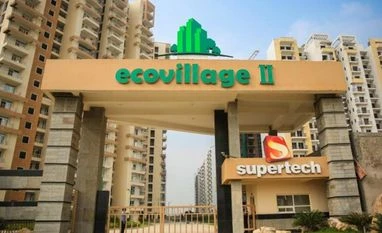 "Supertech Eco Village 2")
(Photo: Zricks)
Listen to This Article
In a major win for homebuyers, the Supreme Court of India has ordered the Central Bureau of Investigation (CBI) to probe several top builders and their partner banks in the National Capital Region (NCR) after uncovering what it called an "unholy nexus" that defrauded thousands of homebuyers.
The order comes after years of complaints from consumers who were lured into subvention schemes—where banks disburse home loans directly to builders while buyers await possession—only to be saddled with EMIs for properties that never materialized.
The probe will begin with high-profile cases involving Supertech Ltd, a developer already facing multiple consumer complaints. It will then expand to other cities like Mumbai, Bengaluru, and Kolkata.
A bench of Justices Surya Kant and N Kotiswar Singh took into account an affidavit filed by CBI and directed the UP, Haryana DGPs to give a list of DSPs, inspector, constables to the agency to constitute a special investigation team (SIT).
What’s the issue?
Also Read

 "Lutyens' Delhi")
 "Prestige Estates, Prestige Group")
 "realty sector, real estate, housing")
 "Supertech Eco Village 2")
 "Ashish Deora Aurum PropTech")
At the center of the controversy is a financing method called the subvention scheme. Here’s how it worked:
- Builders promised buyers that they would pay EMIs on home loans until possession of the flat.
- Banks disbursed full or large portions of the loan upfront to builders.
- But when the projects got delayed—or never got built—builders stopped paying EMIs, and buyers were left to repay loans on incomplete homes.
- This left many people paying both EMIs and rent, or worse—servicing loans for properties that don’t even exist.
What Supreme Court has ordered:
The apex court directed the CBI to initiate seven preliminary inquiries involving major developers like Supertech and financial institutions operating in Noida, Greater Noida, Gurugram, and surrounding NCR areas. The alleged fraud involves:
- Diversion of home loan disbursements by builders
- Delays or non-completion of housing projects
- Banks failing to conduct due diligence while disbursing funds
- Additionally, the court called for a Special Investigation Team (SIT) to include police officials from Uttar Pradesh and Haryana, and appointed nodal officers from the RBI and Ministry of Housing to monitor the probe.
- The investigation will begin in Delhi-NCR and expand to other metros.
- Monthly progress reports will be submitted to the Court for accountability.
Between 2018 and 2019, many builders defaulted on their promise to pay the EMIs. In particular, projects like those from Supertech were either stalled or severely delayed. As a result, banks began demanding EMIs from the homebuyers, even though the homes were not completed or handed over.
Some buyers faced coercive actions (like notices, loan recovery threats) for non-payment, despite not getting possession. This created a financial double burden: no home, but loan EMIs to pay.
"The Subvention scheme was mostly implemented through loans arranged via a tripartite agreement among the bank/financial institution, the homebuyer(s), and the builder/developer. Although these projects were launched between 2013-2015, most builders and developers began defaulting on EMI payments between 2018-2019. Consequently, banks started demanding payments from homebuyers under the Subvention Scheme, and failure to pay led to coercive actions against them, even though the units were incomplete and not ready for possession. Apart from the Report submitted by the CBI, the Hon’ble Supreme Court extensively relies on the report of Mr. Rajiv Jain, Amicus Curie which delineates the scope of CBI investigation regarding the patent nexus between the 8 Banks and SuperTech," said Srisatya Mohanty, Advocate on Record, Supreme Court of India.
How this affects homebuyers financially
1. EMIs Without a Home
Many buyers under subvention schemes are now servicing loans without receiving possession. Banks have shifted the burden onto buyers after builders defaulted, leaving individuals stuck paying both rent and EMIs.
2. Credit Score Damage
If a buyer defaults under this pressure, it hurts their creditworthiness, potentially impacting future loan eligibility.
3. Locked Capital
For many, the down payment and EMIs represent a large portion of their life savings. Capital is stuck in non-delivered assets, with limited liquidity or exit options.
The top court further directed the CEOs/administrators of Greater Noida Authority, Noida Authority, secretary, Ministry of Housing and Urban Affairs, the Institute of Chartered Accountants of India and RBI to notify one nodal officer from among their senior-most officers within a week to extend necessary assistance to the SIT.
The apex court previously said thousands of homebuyers were affected by the subvention scheme, where banks paid 60 to 70 per cent of the home loan amount to the builders without projects being completed within the stipulated time.
The apex court had then ordered the CBI to submit a roadmap on how it planned to unravel the “builder-banks nexus” which duped thousands of homebuyers in the NCR and proposed to go into the root of the matter.
The top court was hearing a batch of petition filed by several homebuyers, who booked flats under subvention plans in various housing projects in NCR region especially Noida, Greater Noida and Gurugram, alleging that they were being forced by banks to pay EMIs despite no possession of flats.
The petitioners demanded a detailed probe into Supertech’s projects and the role of various banks that loaned over Rs 5,000 crore under the subvention scheme for its multiple housing projects.
For context, the flats were invested in under a subvention scheme, in terms whereof, after the developers started defaulting on EMIs of sanctioned bank loan amounts, the banks initiated action against homebuyers.
As per the homebuyers, the loan amounts were illegally disbursed directly into the accounts of the builders/developers in violation of RBI guidelines. It was alleged that the homebuyers were used as a medium to get the loans sanctioned and the amounts transferred from the banks to the builders/developers.
The Supreme Court has emphasized the importance of safeguarding the interests of homebuyers who have been affected by the alleged fraudulent practices of builders and banks. The Court has expressed its commitment to ensuring that those found guilty are held accountable.
"This intervention by the Supreme Court reaffirms the fundamental principles of due process and statutory compliance in insolvency resolution, while highlighting the urgent need for lending institutions to maintain rigorous oversight and financial discipline in large-scale funding arrangements. The Court’s directive is a step toward ensuring that institutional failures and potential misconduct in fund disbursement and end-use are thoroughly investigated and brought under regulatory scrutiny," said Abdullah Qureshi, Associate Partner, IndiaLaw LLP.
How does the SC decision impact home buyers?
"Supreme Court's interference has protected the rights of the homebuyers wherein they were being burdened with loan repayments for the properties which they never received due to the projects being delayed or defaults by the builders. It aims to uncover and address potential malpractices by the banks and builders.
This investigation could lead to increased transparency and accountability in the real estate sector. It may result in stricter regulations and oversight, ensuring that financial institutions and developers adhere to fair practices. Ultimately, this could protect future homebuyers from similar predicaments and restore trust in the housing market," said Alay Razvi, Managing Partner, Accord Juris.
More From This Section
 "Gold jewellery")
 "Mutual funds (MFs) managed a record Rs 66.2 trillion in assets during the July-September quarter, marking a 12.3 per cent increase over the previous three-month period — the highest quarterly jump in MF assets in at least five years.")
 "Income Tax Department reopens cases, fake purchase tax evasion, GST fake invoice crackdown, IT assessment reopening India, input tax credit fraud India, fake invoice scam businesses, entry operators GST India, tax evasion trading electronics construc")
 "Asian markets, stock market trading")
 "mutual fund")
Topics : Real Estate
Don't miss the most important news and views of the day. Get them on our Telegram channel
First Published: Apr 30 2025 | 10:08 AM IST