


Could high-skill immigration increase under Donald Trump's leadership?
The key question is straightforward: When the MAGA wing is in conflict with pro-business conservatives or the tech community, who will win? The answer is uncertain
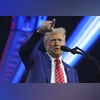 "Donald Trump,Trump")
Listen to This Article
Donald Trump has not yet taken office, but a fissure has already opened in his political coalition. The rift began when Mr Trump selected Sriram Krishnan, an American of Indian descent and ally of Elon Musk, as a senior White House adviser on artificial intelligence. Mr Krishnan had previously advocated lifting caps on green cards, and his appointment triggered an anti-immigrant backlash on social media.
At the heart of the dispute is the opposition of the “Make America Great Again” nativist faction, including Steve Bannon and Laura Loomer, to increasing legal immigration to the United States, which the Trump coalition’s tech wing, including Elon Musk, supports. Mr Trump himself weighed in, expressing his support for high-skill immigration. High-skill immigrants fuel innovation -- the driver of long-term economic growth. They generate more patents than natives. Moreover, immigrant and native innovators have been found to increase one another’s productivity, which suggests that combining pools of knowledge is an important component of scientific discovery and invention.
The entrepreneurial contributions of high-skill immigrants are crucial to long-term prosperity. A recent study by economists Michel Beine, Giovanni Peri, and Morgan Raux found that increasing the share of foreign-born master’s students at US universities led to the creation of more startups in the country. These outcomes benefit all Americans, which is why, in a recent Bipartisan Policy Center report outlining a potential “grand bargain” that addresses several policy areas at once, my co-authors and I argue for expanding high-skill immigration. Congress should shift the focus of the US immigration system away from family reunification and toward employment. In recent years, more than half of all green cards have gone to immediate family members of US citizens, with extended family members comprising the second-largest category of recipients. Fewer than one in six green cards are issued for employment purposes. In our report, we propose doubling the number of employment-based green cards issued annually. A simple step in this direction would be to stop sending away foreign-born graduates of US universities. In 2023, foreigners earned more than one-third of all doctorates in the US in science and engineering disciplines, including 45 per cent of doctorates in physics, and more than half of doctorates in computer science and economics. But only a small fraction of them were allowed to stay in the country after graduation.
Casting out these scientists just when they can start making important contributions to social and economic life is an act of economic self-sabotage. In September, Mr Trump told Marc A Thiessen, a columnist for The Washington Post: “If you spend four years in college [and are foreign born], I think you should get a green card as part of your diploma.” He went on to say that, “There are many cases where these young people go back to India, they go back to wherever they come from,” when they could have been contributing to the US economy. There are reasons to be sceptical that Mr Trump will increase legal immigration in his second term, including the record of his first term. The first Trump administration sought to halve the number of green cards issued annually, nearly doubled the citizenship application fee for green-card holders, and denied visas to immigrants who could not prove that they had health insurance. And Mr Trump’s early ban on immigration from seven Muslim-majority countries, xenophobic rhetoric about foreigners, and horrific family-separation policy at the border suggest a deep animosity toward immigrants. Still, we should not dismiss Mr Trump’s explicit statements in support of increasing high-skill immigration and giving green cards to foreign-born graduates of US universities.
From an economic perspective, another reason for optimism is that the immigration policies from Mr Trump’s first term focused mainly on stemming illegal, not legal, immigration. True, Mr Trump’s main adviser on the issue, Stephen Miller, is hawkish on legal immigration as well. But pro-business officials in the first Trump White House held Mr Miller and his allies at bay. There is broader significance here. Mr Trump himself is less of a Trumpian populist than many of his MAGA supporters, including some incoming officials in his administration. On several key economic issues — Mr Trump’s views hew much closer to those of traditional Republicans than to those espoused by the nationalist-populists who are ascendant in his political movement.
Also Read

 "Food, Indian Food, Thali, Meal")
 "Jharkhand elections, voting, evm, vote, counting day")
 "Mahakumbh success vital for Brand Uttar Pradesh, $1 trillion economy goal")
 "Cars")
 "The pager and walkie-talkie explosions in Lebanon on two days in mid-September added a new and very scary dimension to the conflict in West Asia. At least 40 people died, and thousands were injured. It was perhaps a matter of luck that none of the co")
The key question is straightforward: When the MAGA wing is in conflict with pro-business conservatives or the tech community, who will win? The answer is uncertain. But for now, score a point for the tech entrepreneurs — and for the long-term prosperity of American workers and families.
The author is director of economic policy studies at the American Enterprise Institute.
Disclaimer: These are personal views of the writer. They do not necessarily reflect the opinion of www.business-standard.com or the Business Standard newspaper
More From This Section
 "Rupee")
 "Budget")
 "economy")
 "economy")
 "Ground water")
Topics : BS Opinion Donald Trump US President
Don't miss the most important news and views of the day. Get them on our Telegram channel
First Published: Jan 17 2025 | 11:33 PM IST