


There are enormous opportunities for responsible businesses to grow: Paul Polman
Interview with CEO, Unilever
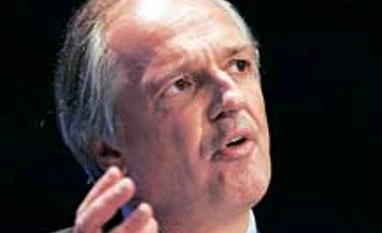 "Paul Polman")
Our brands are the main tools through which we deal with the world's biggest problems such as climate change and food security, Paul Polman tells Karen Christensen
Describe how some of the world's wickedest problems touch Unilever's brands.
We operate in 190 countries, so our supply chain touches the two billion people who use our products every day- seven out of ten households, globally. On a macro level, some of the biggest challenges we face are poverty eradication, unsustainable consumption patterns and increasingly, political and social instability. Of course, these things are linked to issues like food security, climate change and high levels of unemployment. All of these major risks have a direct influence on us. If a society isn't functioning well, we cannot service it effectively.
Our brands are the main tools through which we deal with these issues, and they provide us with enormous opportunities. Take the issues around water. Many parts of the world are or will soon be enormously water-stressed. For instance, the prognosis is that we will not be able to develop our business in many parts of India because there simply will not be enough safe water for people to brush their teeth and wash their hair and all the other things they do with our products. To tackle this, we created a product called Pureit for the Indian market. It is the lowest-cost and most efficient water purification system in the world, and it is one of our fastest-growing products.
Sanitation is a huge issue. Due to infectious diseases, one out of 20 children born in the world today won't make it past the age of five. We have been tackling this issue via Lifebuoy soap, with a widespread hand-washing campaign that helps children live healthier lives. Open defecation is another major issue: 2.4 billion people do not have access to proper plumbing. To tackle this, we have built 4,00,000 toilets and launched the Domestos toilet cleaning system. All of a sudden, we are not just selling a toilet cleanser, we are tackling a wider problem. Elsewhere, issues of food security and sustainable agriculture are directly linked to our Knorr brand, which we use to develop jobs for small-hold farmers.
As the world faces these challenges, there are enormous opportunities for responsible businesses to grow using innovative business models. When I joined Unilever six years ago, about 35 per cent of our business was in the far East; today it is more like 55 per cent, and in a few years it will be 70 per cent. We have embraced the opportunity to get involved in finding solutions to these issues.
One of your goals is for Unilever products to be 100 per cent sustainably sourced; when will this be achieved?
Unilever founded the sustainable agriculture initiative and our people have worked for many years on marine stewardship to foster sustainable fisheries. Despite all of this work and despite being ranked number one on the Dow Jones Sustainability Index in 2009 we realised that we were only sourcing 14 per cent of our agricultural raw materials sustainably. Thanks to a renewed focus on this area, four years later, that had increased to 48 per cent. Think about it: that's more than three times the level of sustainability that it took us 100 years to achieve. This has been incredibly motivating to our people, because it shows you what is possible.
Which area of your business is proving to be the greatest hurdle to achieving your goal?
With some commodities, like palm oil, we are very close to being 100 per cent sustainably-sourced, and with tomatoes, we are close to 80 per cent. So we have more or less ticked off the main materials we work with. It is in some of the other areas that we need to work closely with industry coalitions to transform markets. That doesn't happen overnight, but we are seeing some progress.
On a macro-economic level, there are a few issues. The first is, we need more leadership, because many of these issues require transformations beyond what any one company can achieve. A company like ours can act within its own circle of influence, but when it comes to an issue like illegal deforestation, which is responsible for 16 per cent of global warming, we need industrial framework changes. Unfortunately, at the moment, it is very difficult to get governments to agree on things like putting a price on carbon.
The other key challenge is the way corporations approach accounting. In addition to financial results, we need to be accounting for environmental and social factors. For as long as a tree is worth more dead than it is alive, people will continue to misbehave. It has nothing to do with being pro- or anti-business or pro- or anti-capitalism: we need to put a value on things. Moving towards integrative reporting, which accounts for financial, environmental and social capital will help to unblock many of the bottlenecks we are encountering. Third thing that slows us down is the continued pressure on short-term performance, which makes it difficult to address longer-term issues. These issues take multiple years to solve and they require partnerships between the public and private sector. But achieving strong partnerships requires trust, which is difficult to generate.
You have noted the failure of governments and institutions to rise to the 'wicked' challenges faced by the world today. Why do you think that is, and what is the alternative?
Obviously, the world is not an easy place. If you look at the recent European elections, 75 per cent of the Parliament is brand new. If, every four years or so, 75 per cent of my company was new, I am certain Unilever would not be as successful as it is today. The essence of it is this: when we designed Bretton Woods and global institutions like the World Trade Organization and the IMF, the world's economy was heavily centered around North America and Europe. As a result, most of these institutions are more reflective of 'the old world.'
I would never say that governments are incapable, but increasingly, they have a hard time internalizing global challenges to their local constituents. What I advocate is that businesses might actually be in a better position to take the initiative towards creating global, long-term frameworks. But governments must also be at the table. In the past, we expected governments to take the initiative, but we are entering a time where the initiative needs to come from responsible business.
You talk about putting "a moral framework of dignity and respect" in place "for the voices that can't be heard." What will this framework look like?
The first element has to do with the fact that trust is lacking in today's society. Be it around executive pay or tax affordance or issues of planetary boundaries and overuse of materials, trust in business is very low. In his book, Seven Habits of Highly Successful People, Stephen Covey said, "you cannot talk yourself out of things that you've behaved yourself into." As business people, we shouldn't be defensive about any of this, but we do have to try to bring back ethical values and have our organisations be more purpose-driven.
Reprinted with permission from Rotman Management, the magazine of the University of Toronto's Rotman School of Management. www.rotmanmagazine.ca
Describe how some of the world's wickedest problems touch Unilever's brands.
We operate in 190 countries, so our supply chain touches the two billion people who use our products every day- seven out of ten households, globally. On a macro level, some of the biggest challenges we face are poverty eradication, unsustainable consumption patterns and increasingly, political and social instability. Of course, these things are linked to issues like food security, climate change and high levels of unemployment. All of these major risks have a direct influence on us. If a society isn't functioning well, we cannot service it effectively.
Our brands are the main tools through which we deal with these issues, and they provide us with enormous opportunities. Take the issues around water. Many parts of the world are or will soon be enormously water-stressed. For instance, the prognosis is that we will not be able to develop our business in many parts of India because there simply will not be enough safe water for people to brush their teeth and wash their hair and all the other things they do with our products. To tackle this, we created a product called Pureit for the Indian market. It is the lowest-cost and most efficient water purification system in the world, and it is one of our fastest-growing products.
Sanitation is a huge issue. Due to infectious diseases, one out of 20 children born in the world today won't make it past the age of five. We have been tackling this issue via Lifebuoy soap, with a widespread hand-washing campaign that helps children live healthier lives. Open defecation is another major issue: 2.4 billion people do not have access to proper plumbing. To tackle this, we have built 4,00,000 toilets and launched the Domestos toilet cleaning system. All of a sudden, we are not just selling a toilet cleanser, we are tackling a wider problem. Elsewhere, issues of food security and sustainable agriculture are directly linked to our Knorr brand, which we use to develop jobs for small-hold farmers.
As the world faces these challenges, there are enormous opportunities for responsible businesses to grow using innovative business models. When I joined Unilever six years ago, about 35 per cent of our business was in the far East; today it is more like 55 per cent, and in a few years it will be 70 per cent. We have embraced the opportunity to get involved in finding solutions to these issues.
One of your goals is for Unilever products to be 100 per cent sustainably sourced; when will this be achieved?
Unilever founded the sustainable agriculture initiative and our people have worked for many years on marine stewardship to foster sustainable fisheries. Despite all of this work and despite being ranked number one on the Dow Jones Sustainability Index in 2009 we realised that we were only sourcing 14 per cent of our agricultural raw materials sustainably. Thanks to a renewed focus on this area, four years later, that had increased to 48 per cent. Think about it: that's more than three times the level of sustainability that it took us 100 years to achieve. This has been incredibly motivating to our people, because it shows you what is possible.
Which area of your business is proving to be the greatest hurdle to achieving your goal?
With some commodities, like palm oil, we are very close to being 100 per cent sustainably-sourced, and with tomatoes, we are close to 80 per cent. So we have more or less ticked off the main materials we work with. It is in some of the other areas that we need to work closely with industry coalitions to transform markets. That doesn't happen overnight, but we are seeing some progress.
On a macro-economic level, there are a few issues. The first is, we need more leadership, because many of these issues require transformations beyond what any one company can achieve. A company like ours can act within its own circle of influence, but when it comes to an issue like illegal deforestation, which is responsible for 16 per cent of global warming, we need industrial framework changes. Unfortunately, at the moment, it is very difficult to get governments to agree on things like putting a price on carbon.
The other key challenge is the way corporations approach accounting. In addition to financial results, we need to be accounting for environmental and social factors. For as long as a tree is worth more dead than it is alive, people will continue to misbehave. It has nothing to do with being pro- or anti-business or pro- or anti-capitalism: we need to put a value on things. Moving towards integrative reporting, which accounts for financial, environmental and social capital will help to unblock many of the bottlenecks we are encountering. Third thing that slows us down is the continued pressure on short-term performance, which makes it difficult to address longer-term issues. These issues take multiple years to solve and they require partnerships between the public and private sector. But achieving strong partnerships requires trust, which is difficult to generate.
You have noted the failure of governments and institutions to rise to the 'wicked' challenges faced by the world today. Why do you think that is, and what is the alternative?
Obviously, the world is not an easy place. If you look at the recent European elections, 75 per cent of the Parliament is brand new. If, every four years or so, 75 per cent of my company was new, I am certain Unilever would not be as successful as it is today. The essence of it is this: when we designed Bretton Woods and global institutions like the World Trade Organization and the IMF, the world's economy was heavily centered around North America and Europe. As a result, most of these institutions are more reflective of 'the old world.'
I would never say that governments are incapable, but increasingly, they have a hard time internalizing global challenges to their local constituents. What I advocate is that businesses might actually be in a better position to take the initiative towards creating global, long-term frameworks. But governments must also be at the table. In the past, we expected governments to take the initiative, but we are entering a time where the initiative needs to come from responsible business.
You talk about putting "a moral framework of dignity and respect" in place "for the voices that can't be heard." What will this framework look like?
The first element has to do with the fact that trust is lacking in today's society. Be it around executive pay or tax affordance or issues of planetary boundaries and overuse of materials, trust in business is very low. In his book, Seven Habits of Highly Successful People, Stephen Covey said, "you cannot talk yourself out of things that you've behaved yourself into." As business people, we shouldn't be defensive about any of this, but we do have to try to bring back ethical values and have our organisations be more purpose-driven.
Reprinted with permission from Rotman Management, the magazine of the University of Toronto's Rotman School of Management. www.rotmanmagazine.ca
More From This Section

Don't miss the most important news and views of the day. Get them on our Telegram channel
First Published: Mar 23 2015 | 12:10 AM IST