


Just 70 Delhi eateries have valid open dining licences amid 1,500 outlets
Despite an estimated 1,500 restaurants and cafes operating open dining spaces across Delhi, only around 70 hold valid MCD licences, with officials citing high permit and renewal costs as main reason
 "Restaurant")
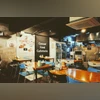
Officials acknowledged that the high fee, along with adverse weather conditions, had made the policy less attractive to restaurants and cafes | Photo: Pexels
Listen to This Article
The Municipal Corporation of Delhi (MCD) currently has around 70 valid licences for open dining spaces, even as nearly 1,500 restaurants and cafes are estimated to be operating such spaces across the city, officials said.
Officials and restaurant associations attributed the low number of valid licences largely to the high cost of obtaining and renewing permits.
According to MCD data, applications under the open dining policy have increased over the years after the policy was introduced in 2022. The figure dipped marginally to 202 in 2024-25 before climbing to 329 in 2025-26, the highest since the policy was introduced.
In the current financial year, 150 licences have been issued so far. However, the officials said the higher number of applications has not translated into an increase in valid licences, as many establishments either do not complete the licensing process or fail to renew their permits after expiry due to the high fee.
The MCD charges ₹200 per square foot for open dining spaces and ₹500 per square foot for four-star and above establishments, in addition to the regular restaurant licence fee of ₹25,000.
Also Read

 "Spain's Lamine Yamal and Argentina's Lionel Messi will go head-to-head on Sunday")
 "air pollution, delhi pollution")
 "Delhi voter list revision, Delhi SIR electoral rolls, voter ID address update, Election Commission Delhi, ordinary residence voter registration")
 "Rekha Gupta")
 "office leasing, office spaces")
"The restaurant licence fee is ₹25,000, irrespective of whether a restaurant has 50 seats or 100 seats. But the open dining fee is calculated separately based on the area. For example, if the open dining area is 200 square feet, the fee comes to ₹40,000," an MCD official explained.
For the hospitality industry, however, the cost of the licence does not always make commercial sense, particularly as open-air dining can be used only for a limited part of the year due to Delhi's weather and pollution.
"Most of the people who have not taken the open-air licence have not done so because of the very high cost. The return does not justify the cost," Manpreet Singh, treasurer of the National Restaurant Association of India, said.
Singh said a more reasonable fee could encourage establishments to come under the formal licensing system, bringing more businesses within the regulatory framework and increasing revenue for the government.
Despite the rise in applications, officials said compliance remains low, and the civic body is preparing to intensify inspections and seal establishments operating open dining spaces without valid permission.
The officials said owners of unauthorised establishments would also be liable to pay three times the applicable licence fee as a penalty.
"The steep penalty for unauthorised operations would act as a deterrent against establishments continuing to operate without permission," an official said, adding that the provision was mandated under MCD rules.
The open-air dining policy was first launched by the erstwhile South Delhi Municipal Corporation in September 2020 and was later adopted by the North Delhi Municipal Corporation. The unified MCD finalised the policy on November 4, 2022.
The policy allows restaurant and cafe owners to operate dining spaces in open areas, on rooftops and terraces.
Cooking is not permitted in these areas, while operators are required to ensure that their activities do not cause a nuisance to neighbours. Establishments serving alcohol must ensure that the area is properly covered.
A separate fire NOC is not required under the unified MCD policy.
Officials acknowledged that the high fee, along with adverse weather conditions, had made the policy less attractive to restaurants and cafes.
Singh said the commercial viability of an open dining space was also affected by the limited period during which it could be used comfortably.
"In Delhi, open dining spaces can be used comfortably for only a few months. December and January are affected by pollution, after which it becomes hot, and then there is the rainy season. If a high fee is charged for a facility that can be used for only two or three months, the cost becomes difficult to justify," he said.
He added that the fee structure should initially be made more reasonable to encourage compliance and bring more establishments into the formal system.
(Only the headline and picture of this report may have been reworked by the Business Standard staff; the rest of the content is auto-generated from a syndicated feed.)
More From This Section
 "d-industry1")
 "movies")
 "Pralhad Joshi, Pralhad, Manthan 2026, Manthan")
 "PLI scheme, manufacturing, Smartphone market")
 "IAMAI has launched the E-Commerce Council of India, bringing together leading digital commerce firms to drive policy dialogue, research and ecosystem growth.")
Don't miss the most important news and views of the day. Get them on our Telegram channel
First Published: Jul 18 2026 | 3:17 PM IST