


We're positive on listing in India: Vittorio Colao
Interview with Group CEO, Vodafone
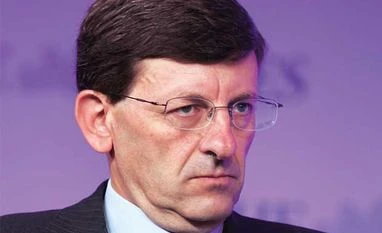 "Vittorio Colao")
For the £42-billion British telecom company Vodafone Plc, India is among the "five big pillars worldwide", according to Group Chief Executive Officer Vittorio Colao. On his biannual visit to India on Monday, he interacted with media on a host of issues. Edited excerpts:
Has the ease of doing business improved in India in the past year or so?
Yes, we are seeing a new India. Things have started moving, like norms on spectrum sharing and trading are out, there is no aggressive tax stance (any longer), and that's all positive. Macro-level changes may not yet be visible in all micro, everyday activities but they are visible in enough parts of our business to give us hope.

On IPO (initial public offering) plans in India…
We are positively inclined towards it and some preparatory work is underway for the IPO but we cannot give a timeline for it (as yet). The IPO will depend on various factors like state of financial markets, and we're yet to take a final call on it.
Is India still a growth market for Vodafone?
Yes. The penetration of smartphones is only around 26 per cent on all subscribers, so there is huge room for growth. We have invested around Rs 80,000 crore in India till now, and we do almost Rs 8,500 of capital investments every year. The prospects of 4G (fourth-generation services) are very bright here. Our investment, whether in India or Greece is even, year-on-year, and we don't invest in cycles. Spectrum sharing and trading will give us more room to maneuver. We look at the payments (bank business) as our core business as it rides on our network. We're the backbone.
What is Vodafone's stand on net neutrality?
We are for no discrimination in terms of access, et al. But, we are for segmentation to be allowed, as that will help telcos offer specialised services, in healthcare for instance.
Is cost of spectrum too high in India?
I have to say it's too expensive. That said, auction is the best way to apportion it. As the country moves towards more data consumption, the need will be for higher speed and lower latency. Policymakers should look at giving out more spectrum with longer term horizon.
Status on the ongoing Rs 20,000 crore tax dispute with the government…
Some recent (court) outcomes have been positive, but on our main tax case, there is not much to talk about, but were engaged with the process.
On call drops and rates…
Solutions to address call drops have to address a host of issues, from spectrum, access to tower sites, right of way.
We are working with the regulator and the government and things should change in six months or so. Spectrum sharing and trading, that has been allowed recently, too will help operators deliver better quality to consumers by helping optimise available spectrum more efficiently.
More From This Section
Don't miss the most important news and views of the day. Get them on our Telegram channel
First Published: Oct 15 2015 | 12:43 AM IST