


Emphasise quality of business rather than quantity: M D Mallya
Interview with Chairman and Managing Director of Bank of Baroda
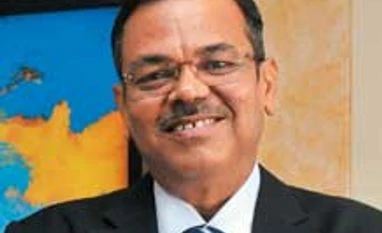)
M D Mallya, who was chairman and managing director of Bank of Baroda for nearly five years until his retirement in November 2012, says the biggest challenge for banks is the slowdown in growth. The retail thrust that the bank initiated some years ago helped it in these difficult times, Mallya said in an interview to Krishna Pophale and Manojit Saha
Congratulations on becoming the Business Standard Banker of the Year 2011-12. You had earlier won the award for 2009-10 also. Compared to 2009-10, how were things different for banks in 2011-12?
The economic slowdown started in 2008-09, and globally there were a lot of developments. It was a very challenging year because of apprehensions about the impact on India and how banks would do in this period.
In 2008 the bigger challenge was the question, what would be the impact on the financial system in India and consequently on banks. Particularly for those banks which had a substantial overseas presence, the challenge was to protect overall asset quality. Liquidity was also a challenge then.

However, now the main challenge is growth. Loan demand, particularly from the corporate sector, is sluggish because of the uncertain economic environment.
What was your strategy in 2011-12 to mitigate these challenges?
Our strategy was to build a strong retail franchise on both the liabilities as well as assets side. The essence of doing business in difficult times is to build a strong retail franchise, but this was an initiative we took early not in response to what was happening. We started expanding the branch network in 2009, where the whole focus was to convert branches into sales and marketing offices.
The back office functions have been taken out of the branches and centralised processing units were formed for that function. As a result, branch staff is able to attend to customers and they will also be able to ensure that marketing is done. So, branches have become the sole touch points for customers.
We found that customers maintained transaction accounts with us but the cream of the business was with other banks. So, we adopted a strategy of getting more and more of the share of the wallet to our bank. To some extent we have succeeded. In four years we added 13 million customers. The customer base increased from 35 million to 48 million. More importantly, we wanted quality. It was not a numbers game, but whether the new customer is able to give us business in both liabilities and assets that mattered.
Another advantage for Bank of Baroda is the strong franchise of overseas branches. Therefore, when domestic growth is less it can be compensated by overseas operations, and when international growth is less it can be compensated by domestic operations. The whole planning has been to grow wholesomely.
Apart from retail what are the thrust areas?
Out thrust has been equitable across all verticals. Apart from retail, the thrust was on small and medium enterprises and on mid-corporates. We opened a separate vertical for mid-corporates, because our share in that segment was not up to the expected level. We also opened about 15 branches for mid-corporate loans.
In the last couple of years banks have faced asset quality pressures. What were your strategies to contain slippages in 2011-12?
As far as containing slippages is concerned, vigorous monitoring and vigorous follow-up is necessary, which has been already implemented. Credit monitoring has to be the focal point, in good times as well as bad times.
Do you think overall sentiment has affected loan approval decisions by banks?
It has not affected the loan approval decision mechanism. Investment decisions are not taking place. If investment decisions are less, proposals coming to the banking system are less. In retail, if overall income levels are coming down or overall propensity to save has come down, then obviously the spend will come down.
Corporates are making a beeline for debt restructuring. There is a view that the corporate sector is taking undue advantage of the CDR cell and banks to not restructure loans of small borrowers. How far is this true?
Restructuring decisions are based on continued viability. There are guidelines which are prescribed by RBI for this. I dont think any bank engages with CDR just to defer NPAs. If you look at the performance history of the CDR cell, there are many accounts which have been turned around. So, this is not right criticism. We are very flexible on all types of restructuring. So many retail loans have been restructured. To say that retail customers have not benefitted and only the corporate sector has benefitted is not right. For a bank, all customers are the same.
Unlike other banks, your provision coverage ratio is well maintained. Is that a conscious decision?
It is a very conscious policy. We provide whatever is required and in some cases more than what is required. For example, the Reserve Bank wants provision on substandard assets to be 15 per cent but we provide 20 per cent -- five per cent more than required. Our delinquencies are lower historically. That is the reason why the high PCR hasnt dented our profits.
Do you think 2013-14 will be better for banks compared to this year?
It should be better. I hope inflation comes down, growth increases, credit picks up, and the net interest margin increases. Its a forward looking optimistic assessment.
Banks have faced challenges in mobilising low-cost deposits. What has been the reason?
It has been quite difficult for a couple of reasons. Firstly, interest rates remain high. Therefore, the tendency to keep money in fixed deposits will be more, because of higher returns. Secondly, the income level has not gone up much, the savings rate has come down and the capital market is not doing well. If the equity market was good the current and savings account deposit flow would have been good.
You have been the chairman of two public sector banks. What would be your three key messages to future public sector bank chief executives?
Firstly, banking has to be done with prudence. We need to emphasise on the quality of the business we do rather than the quantity. Number two, we should devote more time towards HR, and we need a strong force of motivated people. Lastly, I would say we should be more innovative, use more technology, and connect with the customer and delight him.
Don't miss the most important news and views of the day. Get them on our Telegram channel
First Published: Jan 31 2013 | 12:16 AM IST