


Scope for PE deals to rise if capital markets continue to remain weak: Arundhati Bhattacharya
Interview with MD & CEO, SBI Capital Markets
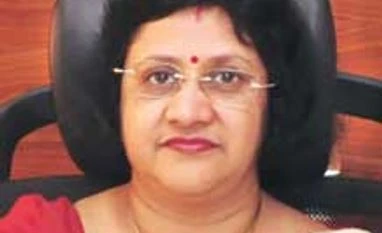)
SBI Capital Markets is focusing on opportunities in the non-infrastructure space. Its Managing Director and CEO Arundhati Bhattacharya talks to Somasroy Chakraborty about the competition in investment banking and the company's plans. Edited excerpts:
Investment bankers in India often complain that the intense competition has led to wafer-thin margins. How do you plan to overcome this challenge?
There indeed is increased competition in the investment banking field, but this is limited to plain-vanilla transactions and those in the SME (small and medium enterprise) space. SBI Capital Markets plays a dominant role when it comes to structured finance and large projects, and this is primarily driven by the value we bring to the table. We continue to be the leaders in this space.
We are also building our expertise in the M&A (merger and acquisition) domain, which has so far been largely dominated by multi-national banks; we have completed some marquee deals during the year despite stiff competition from others.

Many foreign banks have reorganised their internal structure and trimmed workforce to maintain profitability in the current uncertain environment. Have you taken any such steps?
SBI Capital Markets is not trimming the workforce. However, we have restructured internally to bring in more focus on various non-infrastructure segments including health, information technology, pharma, logistics and education. This has enabled us to capture the opportunities that emanate from these industries.
What are your hiring plans?
Currently, we are hiring as usual at the entry level. In case of lateral recruitments, we will look at supplementing our current talent pool in niche areas of expertise where we need to strengthen our capabilities.
SBI Capital Markets is involved in many cases that were referred to the Corporate Debt Restructuring (CDR) cell. Bankers often complain that you are too lenient while deciding the loan restructuring packages. Do you agree?
CDR is a well-defined and structured process with set rules and regulations to guide the entire exercise. Restructuring conditions are set out by the CDR cell and are overseen by the Reserve Bank of India.
As such, we facilitate the CDR mechanism only for cases where we believe there is inherent value in the business and it is stressed on account of temporary market conditions, which are beyond the control of the sponsors.
We expect the worst is over for Indian industry, which was reflected in the January IIP (index of industrial production) numbers. Some sectors are still under pressure. However, given the nature of the economy, which is driven by internal consumption, most of them will emerge stronger and generate value for stakeholders. There will still be a small percentage, which may not achieve projections.
What are your expansion plans?
We perceive tremendous opportunities in the non-infrastructure space for advisory, M&A, sourcing of private equity (PE) or strategic stake sales. Each of these opportunities is being looked at closely.
There are also many prospects for refinancing or restructuring advisory. We are strengthening our relationships with mid-cap clients who are typically in the non-infrastructure space. Particularly for PE, we propose to create a special vertical focused on meeting the requirements of mid-sized corporations.
We believe that if the capital markets continue with the current nervous sentiments, the scope for PE deals will increase. In the near-term, we are looking to increase our international reach. We have a subsidiary in the UK and recently received a licence from the Monetary Authority of Singapore to open a subsidiary in that country.
We are also looking at working closely with various foreign banks and investment banks for showcasing opportunities for Indian clients abroad and helping Indian entrepreneurs extend their global reach.
Don't miss the most important news and views of the day. Get them on our Telegram channel
First Published: Mar 15 2013 | 12:46 AM IST