


Bihar elections 2025: How the 2000 Jharkhand split reshaped Bihar's economy
Bihar polls 2025: 25 years after the 2000 split, Bihar is still coping with the loss of Jharkhand's mineral base, relying on agriculture, central funds, and migration
 "Bihar Youth")
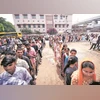
As Bihar votes in 2025, the same old questions remain: how to create jobs, reduce migration, and attract investment without the mineral wealth and industries that vanished 25 years ago | (Photo: PTI)
Listen to This Article
As Bihar heads into the 2025 Assembly polls, the impact of its November 15, 2000, bifurcation still looms. The split carved out Jharkhand from southern Bihar, which today accounts for roughly 40 per cent of India’s mineral resources. Bihar retained fertile plains but lost most mineral-based industry and royalty streams.
The upcoming election comes 25 years after the split that continues to define Bihar’s economy and politics.
How the bifurcation happened
The demand for a separate Jharkhand was rooted in tribal identity and resource control. At the time, the National Democratic Alliance (NDA) government was in rule under the leadership of then Prime Minister Atal Bihari Vajpayee.
Parliament passed the Bihar Reorganisation Act in August 2000, and the new state took effect on November 15, 2000.
Jharkhand received the mineral-rich districts: Dhanbad, Bokaro, Jamshedpur (East Singhbhum), Hazaribagh, Ranchi, and Dumka. This included coalfields and steel hubs.
Also Read

 "bihar liquor ban")
 "Gyanesh Kumar")
 "voting")
 "Farmers, Farmer, agriculture")
 "NDA Bihar")
Bihar retained the Gangetic plains with agricultural strength but little heavy industry. After the split, Bihar’s Assembly strength reduced to 243 seats from 324 in undivided Bihar.
Economic impact on Bihar
The immediate loss was structural: mining, steel, and core engineering hubs shifted to Jharkhand; Bihar lost three-fourths of its industrial units and nearly 60 per cent of its revenue base. What remained was a state of fertile plains, high population, but weak industry.
Bihar’s post-2000 growth leaned on agriculture, construction, and services. According to the Economic Survey 2024-25, the state’s gross state domestic product (GSDP) grew 9.2 per cent at constant prices. Yet, per-capita income was only ₹62,356 at current prices, which is less than one-third of the national average.
Fiscal stress has eased somewhat, though. The gross fiscal deficit declined to ₹35,660 crore in 2023-24 from ₹44,823 crore in 2022-23. The structure of the economy is shifting as well; industry now contributes 21 per cent of GSDP, slightly higher than agriculture’s 20 per cent, though this is driven mainly by construction rather than manufacturing.
Bihar still depends heavily on central transfers, with just 27.7 per cent of revenue generated from its own sources, and its per capita capital expenditure of ₹8,973 remains among the lowest in India.
ALSO READ| Bihar election dates announced: Polling on Nov 6, 11, result on Nov 14
Migration and poverty in Bihar
Migration is the most visible outcome. Census and National Sample Survey Office data show Bihar is India’s largest supplier of migrant labour. By 2011, nearly 8 million Biharis lived outside the state, up from 5.5 million in 2001, according to a report by the Nagarlok Journal of Geographical Inquiry (NGJI). Most left in search of work, reflecting a lack of opportunities locally.
Poverty remains high at 33.8 per cent according to a 2019-21 NITI Aayog report, the worst in India. Inequality has widened between urban Patna and rural hinterlands. While remittances can sustain households, it does not create local jobs.
By the numbers (2023-24)
Bihar GSDP (current prices): ₹8.54 trillion
Bihar GSDP growth (constant): 9.2 per cent
Per capita GSDP (current): ₹62,356
Sectoral shares (constant): Agriculture 20 per cent, Industry 21 per cent, Services 59 per cent
State debt: ₹3.32 trillion (38.9 per cent of GSDP)
Per capita capex: ₹8,973
Poverty rate: 33.8 per cent (2019-21)
Population: 130.7 million (2023 est.)
Political fallout post Bihar bifurcation
The Assembly polls in February 2000 produced a hung government. The Rashtriya Janata Dal (RJD) emerged as the single largest party but fell short of the numbers needed to form a government.
With backing from the Bharatiya Janata Party (BJP) and its allies, Nitish Kumar (then with the Samata Party) was sworn in as chief minister on March 3, 2000. His government lasted just seven days. The RJD, supported by the Congress, opposed him, while many independents also refused support. Facing certain defeat in a floor test, Kumar resigned, and Rabri Devi of the RJD returned as chief minister.
The February 2005 elections could not give the state a strong government, leading to another election in October. This is when Nitish Kumar won the elections with the support of BJP and formed the government. Since then, Nitish Kumar has managed to remain chief minister by alternating alliances between the BJP and RJD, and positioned himself as a champion of development and clean governance.
Special category demands for Bihar
Since the bifurcation, state governments have pressed for “special category status” to compensate for the loss of industrial capacity. Bihar’s finances became more reliant on central transfers and centrally sponsored schemes. Even today, JD(U) leaders, including Nitish Kumar, continue to demand special category status. The Centre, however, has resisted, preferring to give social welfare packages and programmes instead.
Shift in voter base and political identity
The creation of Jharkhand also significantly altered the state's voter balance. Since the bifurcation, Bihar’s politics became more heavily dominated by caste coalitions. Agrarian concerns replaced tribal demands, with increasing contest between RJD’s social justice plank and Nitish Kumar’s emphasis on governance. With the industry gone, Bihar’s leaders shifted focus to infrastructure, roads, schools, and law and order became priorities.
While Jharkhand became a competitive arena for the BJP, Congress, and the Jharkhand Mukti Morcha, Bihar turned inward, centering on regional parties and caste-based alliances.
Bottom line
As Bihar votes in 2025, the same old questions remain: how to create jobs, reduce migration, and attract investment without the mineral wealth and industries that vanished 25 years ago.
On October 6, the Election Commission of India announced that Bihar will go for polls in two phases, on November 6 and 11, with the result on November 14. The new 243-member Assembly must be in place before November 22.
More From This Section
 "election, vote, voting, election 2024, lok sabha voting")
 "New Delhi Election, Election, Vote, Voting")
 "Gyanesh Kumar")
 "ECI, election commission of india, election commission")
Topics : Bihar Election 2025 News Bihar Elections 2025 Bihar Assembly Bihar Assembly Elections Jharkhand BS Web Reports
Don't miss the most important news and views of the day. Get them on our Telegram channel
First Published: Oct 08 2025 | 7:14 AM IST