


Bihar elections 2025: What's at stake, who's competing, and why it counts
Caste equations, shifting alliances, and regional power bases will define Bihar's high-stakes 2025 election as major parties and smaller players vie for control of the 243-seat Assembly
 "New Delhi Election, Election, Vote, Voting")
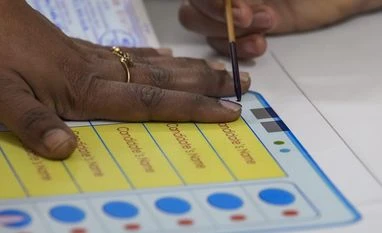
Bihar elections: As Bihar’s 2025 Assembly polls near, the state’s politics remains complex, rooted in historic alliances, caste calculus, regional patterns and emergent gender and class aspirations. (Photo: PTI)
Listen to This Article
As Bihar prepares for Assembly elections later this year, the state’s political landscape is being readied like a chessboard, with every block, every region, every demographic under strategic scrutiny. The 2025 polls come at a pivotal moment: Nitish Kumar, the most enduring face of Bihar politics in the 21st century, finds himself once again repositioned. The Bharatiya Janata Party (BJP) is out to reclaim lost ground. Meanwhile, the Rashtriya Janata Dal (RJD) under Tejashwi Yadav seeks to convert momentum into a mandate, and smaller players, including the CPI(ML), Congress, and regional outfits forming the INDI alliance, are eyeing specific pockets to punch above their weight. What makes Bihar unique is not just the political personalities, but the deeply regionalised and caste-segmented structure of its polity. To understand Bihar, one must understand its geography, its social structure, and its political past.
Who are the big players in Bihar Assembly polls 2025?
Janata Dal (United) [JD(U)] Historically led by Nitish Kumar, Bihar’s longest-serving chief minister, the JD(U) has formed the core of the alliance in Bihar for the last two decades. While its popularity has waned and it has shifted alliances, from NDA to Mahagathbandhan and back, the Nitish brand still resonates strongly, especially among Kurmi voters and selected EBC segments. His repeated realignments, however, have raised questions about where his political loyalties truly lie.
Bharatiya Janata Party (BJP) Long positioned as a junior partner in Bihar’s political landscape, the BJP is now aiming to assert its dominance independently post-2020. Its core Hindutva base, upper-caste support (notably Bhumihars, Rajputs), urban communities, and growing overtures to Pasmanda Muslims are all part of its refresh strategy. Riding on the Modi effect and raising the banner of a younger leadership, however, the party still lacks a cross-caste chief ministerial candidate with mass appeal.
Rashtriya Janata Dal (RJD) The largest vote-share earner in the 2020 Assembly, the RJD relies heavily on the combined support of Muslims and Yadavs. Tejashwi Yadav’s appeal among the youth and marginalised communities has sharpened the party’s focus on job creation. Still, its challenge lies in broadening its base beyond the MY belt, reaching out to Dalits and other backward castes.
Also Read

 "Chirag Paswan, Chirag, Paswan")
 "SBI, State Bank Of India")
 "china, china flag, Politburo")
 "Laurent GardinierLaurent Gardinier")
 "Iraq protests")
Indian National Congress A minor but pivotal partner in the Mahagathbandhan, Congress still holds strategic value in alliance arithmetic. Though its traditional influence over upper-caste Muslims and Dalits is diminishing, the party remains strong in specific districts like Kishanganj, Supaul, and Katihar, thanks to organisational depth and local networks.
Communist Parties (CPI, CPI(M), CPI(ML)) The CPI(ML) has made a comeback in central Bihar, especially in the Bhojpur and Arrah belt, where it won 12 seats in 2020. With a base among landless Dalits, deprived EBCs, and agrarian communities, it campaigns on labour rights, land reform, and social justice. Often seen as the Left’s moral compass, its continued influence reflects persistent regional discontent.
Smaller caste-based parties, like the Lok Janshakti Party (LJP), can tip close contests. Newer entrants, such as those led by Upendra Kushwaha or the JSP, could disrupt established calculations by pulling in votes across the ideological spectrum.
What is the electoral roll revision fiasco and how it may impact the Bihar polls?
The Special Intensive Revision (SIR) of electoral rolls in Bihar has sparked a fiery political and legal dispute ahead of the 2025 state assembly polls. At the heart of the controversy are rigid documentation requirements by the Election Commission- pushing millions of people, especially those registered after 2003, to show proof of birth and proof of residence, and for anyone born after 1987, parental documents, something many migrants, Dalits, and impoverished people do not have.
Critics warn of potential mass exclusion, fearing lakhs may lose their voting rights, particularly among rural and migrant populations. The process’s timing, during Bihar’s monsoon and migration season, and its rushed execution just months before polls have only added to the concerns. Initial refusal to accept common IDs like Aadhaar or ration cards sparked further backlash until the Supreme Court intervened, ordering the Election Commission to accept them. Also read: Exclusion errors: ECI must ensure genuine voters are not left out
Allegations by opposition parties suggest that the process aims to purge voters unlikely to support the ruling NDA, prompting protests, including a statewide shutdown led by national leaders. Legal challenges remain active, with the Supreme Court deferring the final voter list publication to at least July 28, 2025. The EC has acknowledged possible deletions exceeding 350 thousand names, potentially rigging close contests on many seats.
In Bihar, where past elections have been quite close, even a small share of voter removal could significantly matter and result in votes moving to one side of the ledger. Depending on the shifts in the voter list, changes in the voters’ list could work against the groups that tend to oppose the ruling party.
Regional battlegrounds: Where the vote is won
Magadh and Bhojpur (Central Bihar) These areas, covering Patna, Arrah, Gaya, are iconic arenas for upper-caste resurgence and Dalit assertion. The CPI(ML) carries considerable weight here, resting on a backdrop of caste-driven political violence. Meanwhile, BJP and JD(U) maintain hold among middle-caste urbanites and bureaucratic networks.
Seemanchal (Northeast Bihar) A Muslim-majority belt including Kishanganj, Araria, and Purnia, Seemanchal remains politically volatile. AIMIM’s breakthrough in 2020, winning five seats, reinforced the region’s distinct identity. However, after defections to RJD, AIMIM largely retained only Amour. Congress and RJD continue to court Muslim voters here through a secular narrative.
Mithila (North Bihar) A cultural stronghold anchored by Maithil Brahmins and Bhumihars, Mithilanchal remains a BJP-JD(U) bastion. Yet this region also grapples with floods, out-migration, and unemployment. With over 100 Assembly seats, it remains a decisive electoral zone thanks to its organisational discipline and caste loyalties.
Kosi & Anga (East–Southeast Bihar) These swing zones covering Saharsa, Madhepura, Bhagalpur reveal unpredictable caste dynamics. After figures like Sharad Yadav and Pappu Yadav, development and identity politics fight for prominence. The RJD’s influence is strong, but the BJP is steadily gaining ground.
Saran & Champaran (West–Northwest Bihar) This region embodies traditional RJD and JD(U) dominance via its Yadav population. However, urban hubs such as Motihari and Bettiah have shown increasing support for the BJP. The legacy of Gandhi’s Champaran Satyagraha still resonates symbolically.
Caste arithmetic: The backbone of Bihar politics
Bihar remains firmly defined by caste divisions. Key demographics break down roughly as follows: Extremely Backward Classes (EBCs) 36 per cent; Other Backward Classes (OBCs) including Yadavs 14.26 per cent, Kushwaha 4.21 per cent, Kurmi 2.87 per cent, Bania 2.31 per cent; Scheduled Castes 19.65 per cent; Scheduled Tribes 1.68 per cent; Upper Castes including Brahmin 3.65 per cent, Rajput 3.45 per cent, Bhumihar 2.87 per cent, Kayastha 0.60 per cent. Key EBC groups include Mallah 2.6 per cent, Teli 2.81 per cent, Nai 1.59 per cent and Nonia 1.91 per cent. Also read: EC launches new system for faster, accurate voter turnout reporting
Electoral alignments: RJD core: Yadavs (around 14-15 per cent) + Muslims (16-17 per cent). BJP base: Upper castes (12-15 per cent). Dalits: split between Mahadalits (JD(U)) and Paswans (LJP). EBCs (~30 per cent+): crucial swing bloc. Kurmis (3-4 per cent): JD(U) remains favoured.
Women voters: A quiet yet pivotal majority?
Women constituted about 49 per cent of the 7.64 crore electorate in the 2024 Lok Sabha elections. Nitish Kumar’s policies—ranging from panchayat reservation to bicycle incentives and prohibition—were clearly aimed at mobilising this demographic. Women voters in Bihar regularly match or exceed male turnout, making them a significant, though often overlooked, constituency. Their decisions tend to be shaped more by welfare, safety, and economic stability than allegiance to a specific party.
Alliances and trust issues: The double-edged sword
Coalitional politics in Bihar are notoriously fluid. Nitish Kumar’s repeated realignments have fostered suspicion among allies. Although the 2025 race sees the BJP-JD(U) renewing their pact, lingering mistrust casts a shadow. On the other side, the RJD-led Mahagathbandhan too struggles with internal coherence, especially among CPI(ML), Congress, and smaller regional outfits. The LJP’s fracture between Chirag Paswan and Pashupati Paras remains unresolved, complicating alliance dynamics further.
Key themes for the 2025 Bihar election
Jobs and migration: Mounting youth unemployment and rural migration
Caste census debate: Renewed identity mobilisation among EBCs and OBCs
Centre–state dynamics: BJP–JD(U) coordination under central policy and fund flows
Leadership vacuum: Uncertainty over post-Nitish faces in JD(U) and BJP
Polarisation vs welfare: Hindutva rhetoric versus historical tilt toward social justice
Prohibition politics: Alcohol ban’s complex gendered and social impact
Law and order: Crime rates, custodial deaths, and political violence under scrutiny
Development vs identity: Infrastructure and civic progress versus caste loyalty
Urban first-time voters: Aspirational youth moving beyond legacy loyalties
Welfare delivery: Real-world impact of central and state schemes
As Bihar’s 2025 Assembly polls near, the state’s politics remains complex, rooted in historic alliances, caste calculus, regional patterns and emergent gender and class aspirations. From caste coalitions to urban resurgence, from left-wing insurgency to Pasmanda overtures, the battle in Bihar is not just for seats; it’s for shaping its future story.
Topics : Nitish Kumar Bihar Election 2025 News Bihar Elections 2025 Bihar Elections BS Web Reports Tejashwi Yadav rjd BJP CPI (M)
Don't miss the most important news and views of the day. Get them on our Telegram channel
First Published: Jul 15 2025 | 5:36 PM IST