


Delhi election results: How can a leader become CM without being an MLA?
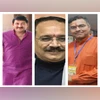
Delhi election results 2025: If speculation is to be believed, among the frontrunners are Parvesh Sahib Singh Verma, Virendra Sachdeva, and Manoj Tiwari, among others
 "Parvesh Manoj Virendra")
Delhi election results 2025: If speculation is to be believed, among the frontrunners are Parvesh Sahib Singh Verma, Virendra Sachdeva, and Manoj Tiwari, among others.
Listen to This Article
In line with the exit poll projections, the Bharatiya Janata Party (BJP) has secured a sweeping victory in the Delhi Assembly elections. Unlike its main rival, which fielded Arvind Kejriwal as its chief ministerial candidate, the BJP has triumphed without a declared face for the top post. Now, with the party making a comeback in the national capital after 27 years, several leaders are expected to throw their hat in the ring for the coveted chief ministerial position.
If speculation is to be believed, among the frontrunners are Parvesh Sahib Singh Verma, the BJP candidate from New Delhi who defeated Arvind Kejriwal; Virendra Sachdeva, Delhi BJP chief; and Manoj Tiwari, the BJP MP from North East Delhi, among others.
ALSO READ: Arvind Kejriwal concedes defeat in Delhi polls: 'Accept people's mandate'
Verma’s path to the chief ministership appears the most straightforward, given his victory in the New Delhi constituency. However, if the BJP high command opts for Sachdeva, who did not contest the election, or Tiwari, an MP, the route to power would require additional steps.
How can a leader become CM without being an MLA?
An individual who is not a member of the state legislature can be appointed as chief minister, provided they secure an MLA seat within six months of being sworn in. Failing this, they would have to step down from the position.
Also Read

 "Atishi marlena, Atishi, Delhi CM")
 "Parvesh Sahib Singh, Parvesh Verma")
 "adarsh nagar")
 "Arvind Kejriwal")
 "rohini")
Article 164(4) of the Indian Constitution states: “A minister who for any period of six consecutive months is not a member of the legislature of the state shall at the expiration of that period cease to be a minister.”
There have been several such instances in Indian politics. Notable recent examples include Yogi Adityanath and Uddhav Thackeray. Adityanath was an MP from Gorakhpur when he was appointed Chief Minister of Uttar Pradesh, while Thackeray held no constitutional post when he was sworn in as Maharashtra’s CM. In 2019, after the Shiv Sena (undivided) severed ties with the NDA and joined the UPA, it formed the Maha Vikas Aghadi alliance to govern Maharashtra, with Thackeray at the helm.
Precedents of CMs without seats
Similarly, in Uttarakhand, Pushkar Singh Dhami lost the Khatima constituency in the 2022 Assembly elections but was still appointed Chief Minister. He later contested the Champawat constituency, won, and retained his post by securing an assembly seat within six months.
In West Bengal, Mamata Banerjee was not an MLA when she first took office as Chief Minister in 2011 —she was an MP at the time. Later, in 2021, she contested the Nandigram Assembly seat but lost to BJP’s Suvendu Adhikari. However, as her party secured a majority, she was sworn in as Chief Minister again. In both instances (in 2011 and 2021), she won an assembly seat within the stipulated six-month period.
With the BJP yet to announce its choice for Delhi’s Chief Minister, all eyes are now on the party’s leadership to see who will lead the national capital in this new era.
More From This Section
 "BJP flag")
 "Amit Shah, Home Minister")
 "Kejriwal, Arvind Kejriwal")
 "BJP Flag, BJP")
 "Nirmala Sitharaman, Nirmala")
Topics : Parvesh Verma Arvind Kejriwal Yogi Adityanath Delhi Assembly Elections MLAs Member of Parliament Indian constitution indian politics AAP BJP Uddhav Thackeray
Don't miss the most important news and views of the day. Get them on our Telegram channel
First Published: Feb 08 2025 | 4:09 PM IST